
Last updated September 22, 2026
Full 25-point door and opener safety check with every visit - springs, cables, rollers, tracks, and your LiftMaster or Chamberlain opener included
You get a price before we start. It does not change when the truck arrives.

 Before
 After
After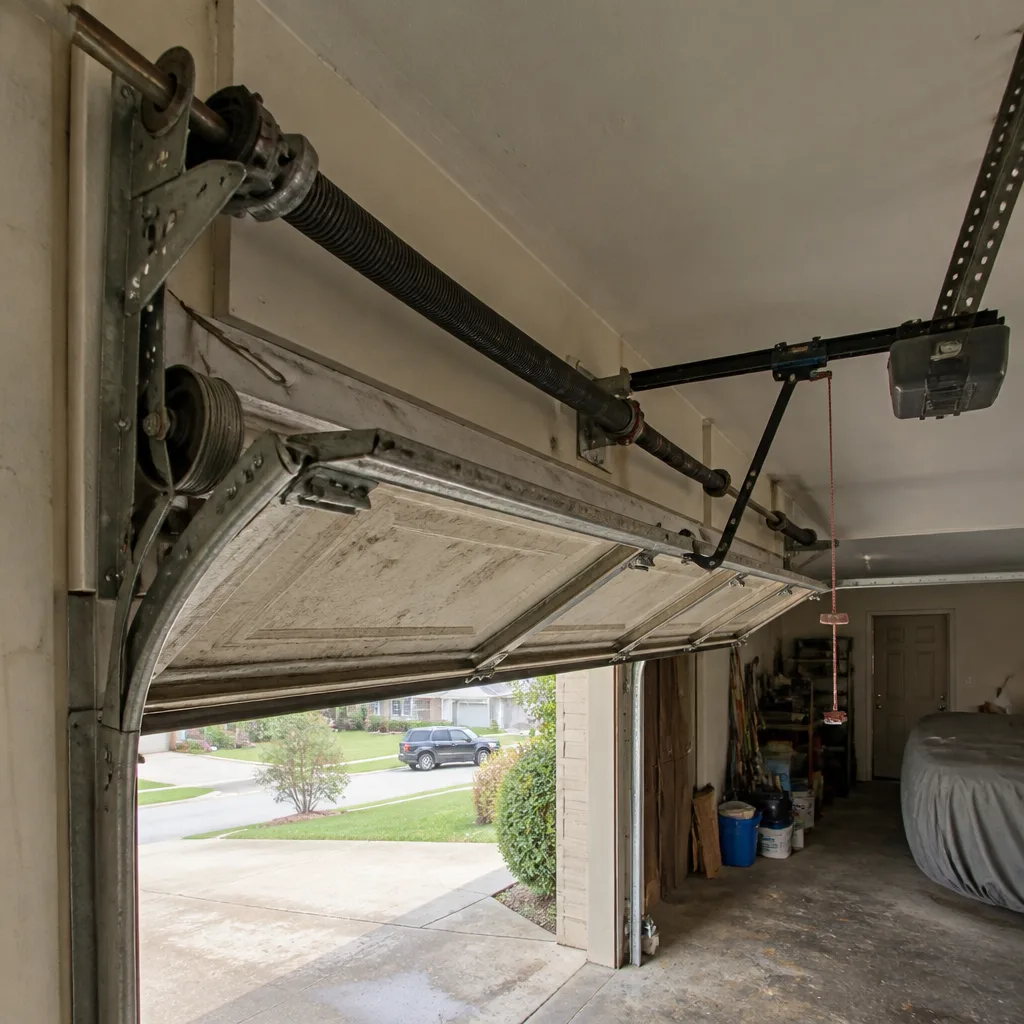 Before
 After
After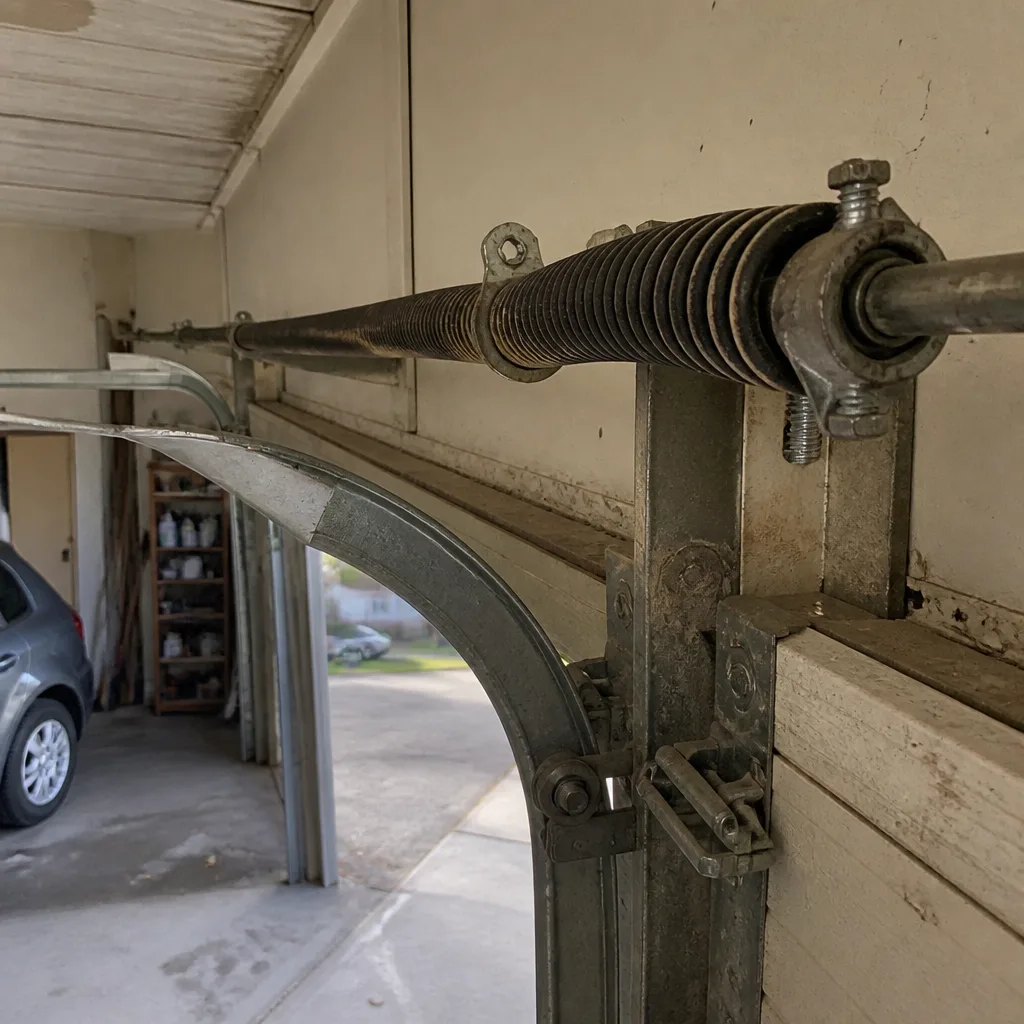 Before
 After
AfterSeasonal Garage Door Care for Stafford: Year-Round Homeowner’s Guide
Most garage door maintenance guides divide the year into four equal seasons. That calendar works in Ohio or Oregon. In Stafford, it fails. We see two aggressive weather bands - a humid, 95°F summer that stretches from May through September, and a brief but hard-freezing winter that can drop below 20°F in January - separated by two thin transitional months. The lithium-based lubricant that keeps a Stafford garage door quiet in January will attract dust and degrade faster in August humidity. The weatherstrip that seals against Gulf Coast rain in June may crack when a polar front arrives in February. This guide rebuilds the maintenance calendar around Stafford’s actual climate pattern, not a national template - for The Complete Guide to Garage Door in Stafford, see our dedicated resource.
Quick Answer
Stafford homeowners should perform garage door maintenance on three schedules: a pre-summer heat check in April, a pre-freeze inspection in November, and a two-task review during each shoulder month. Tasks shift with the dominant season - lubricant type, weatherstrip material, and opener thermal thresholds all change based on whether you’re preparing for 95°F humidity or a hard freeze.
Table of Contents
- Stafford’s Two Dominant Seasons and Their Mechanical Stresses
- Pre-Summer Task List: April Preparation for Heat and Humidity
- Pre-Freeze Task List: November Preparation for Hard Freezes
- The Shoulder Month Checklist: March and October
- Lubricant Selection by Temperature Band
- Opener, Weatherstrip, and Brand-Specific Considerations
- Common Mistakes to Avoid
- When to Call a Professional
- Frequently Asked Questions
 Before
 After
AfterStafford’s Two Dominant Seasons and Their Mechanical Stresses
Stafford sits at the western edge of the Houston metro, where Gulf moisture meets prairie temperature swings. The result is not four balanced seasons but two dominant ones with distinct mechanical signatures.
Summer (May-September): Sustained heat above 90°F, humidity regularly above 75%, and occasional monsoon rainfall from tropical systems. The mechanical stress is thermal expansion. Steel tracks lengthen slightly in heat. Rollers and hinges that were correctly tensioned in March may bind by July. Opener motors - especially older chain-drive units - run closer to their thermal threshold. The logic board, which controls the opener’s safety systems, is sensitive to heat buildup in attached garages that aren’t climate-controlled. In neighborhoods like Staffordshire and The Meadows, where many homes have west-facing garages, we’ve measured garage temperatures above 110°F in August.
Winter (December-February): Brief but genuine freezes, sometimes below 20°F for multiple nights. The stress is contraction and brittleness. Torsion springs - the coiled steel above the door that does the lifting - contract in cold, increasing cycle tension. The metal becomes less flexible, accelerating fatigue in springs already near their 10,000-cycle rating. Bottom seals and weatherstripping, especially PVC-based products, stiffen and lose their compression memory. In Stafford’s older subdivisions near Avenue E, we’ve replaced seals that cracked after a single freeze because the homeowner used a summer-rated product year-round.
The transitional months - March and October - are Stafford’s only mild periods. Each lasts roughly four to six weeks. They’re not seasons; they’re windows. The maintenance calendar should treat them as preparation periods, not as times to perform the same tasks you’d do anywhere else.
Pre-Summer Task List: April Preparation for Heat and Humidity
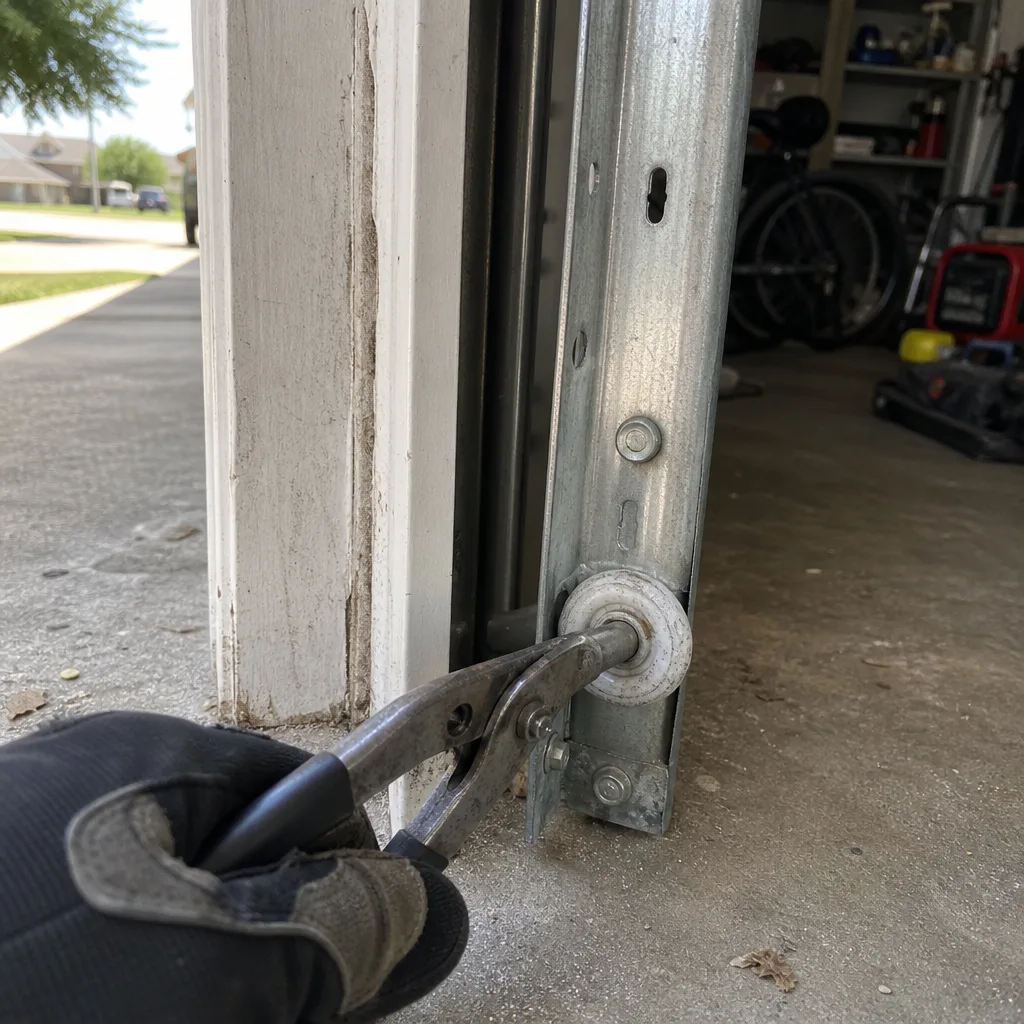
April is Stafford’s last reliable month before the heat arrives. The pre-summer check addresses three systems that will be stressed differently than in winter.
1. Opener Heat Threshold Verification
Every garage door opener has a thermal cutoff - a safety feature that stops the motor if internal temperature exceeds a set limit, typically around 140°F for residential units. In a west-facing Stafford garage in August, ambient air can push an older opener toward this threshold during normal operation.
Check the opener’s duty cycle rating, printed on the motor housing or in the manual. A standard 1/2-horsepower residential opener is rated for about 10-12 cycles per hour in 70°F ambient conditions. At 100°F ambient, that drops by 20-30%. If your household has teenagers or home-based workers who cycle the door frequently, you’re closer to the limit than the rating suggests.
For Garage Door Opener Repair & Installation in Stafford, we verify the thermal cutoff with a non-contact thermometer during operation. If the motor housing exceeds 130°F in April conditions, it will fail in July. We document this with a photo, per Clause 4 of The Haven Standard, and quote a replacement before the season turns.
2. Track Alignment Before Thermal Expansion
Steel expands approximately 0.00000645 inches per inch per degree Fahrenheit. A 16-foot vertical track, heated from 70°F to 110°F in a garage, lengthens by roughly 0.05 inches - small in absolute terms, but enough to misalign roller spacing if the track was already near tolerance.
Inspect the vertical track for plumb using a level. The gap between roller and track should be consistent top to bottom, typically 1/4-inch on each side. Check the horizontal track for level - sagging indicates a bent support bracket or loose lag bolt, both of which worsen under thermal cycling. Tighten all fasteners to the manufacturer’s torque specification. Do not lubricate the track itself; lubricant on the track surface collects dust in Stafford’s humidity and forms an abrasive paste.
3. Weatherstrip Inspection Before Monsoon Season
The bottom seal and perimeter weatherstripping are Stafford’s defense against two summer problems: wind-driven rain from tropical systems and humid air infiltration that raises the garage’s dew point. Inspect the bottom seal for compression set - if it no longer springs back to original shape when squeezed, it won’t seal against a driving rain.
Check the vinyl or rubber flap on the bottom seal for UV degradation. Stafford’s summer sun, especially on south-facing doors, can harden the material in 18-24 months. A fingernail test: if the flap cracks when pressed, replace it before June. We stock EPDM rubber seals for Stafford’s climate - they outperform PVC in both heat and the occasional freeze.
4. Lubricant Swap to Summer Formulation
See the lubricant section below for specific product guidance. The April task is removal: wipe old lubricant from hinges, rollers, and the torsion spring, then reapply the correct product for the temperature band.
- Disconnect the opener and run the door manually to identify binding points
- Inspect all rollers for cracked or flat-spotted wheels
- Check cable drums for fraying or rust - humidity accelerates both
- Test the auto-reverse system with a 2×4 board; the door must reverse within 2 seconds of contact
- Lubricate moving parts with summer-appropriate product
- Reconnect opener and test full cycle
Pre-Freeze Task List: November Preparation for Hard Freezes
Stafford’s freezes are brief but sharp. A single night at 18°F can crack a weatherstrip, snap a weakened spring, or freeze a door to the slab if the bottom seal has compressed. The November check focuses on flexibility and manual operation - the two systems that fail when materials stiffen - as covered in our DIY vs Professional Garage Door: The Stafford Homeowner’s Decision Guide.
1. Bottom Seal Flexibility Test
Remove the bottom seal from the retainer channel (most are T-slot or bead-type retainers). Bend a section through 90 degrees. If it cracks, whitens at the bend, or stays deformed, the polymer has lost its low-temperature flexibility. Replace with a cold-rated EPDM or silicone-blend seal before December.
In Stafford’s Quail Run and Colony Lakes areas, where homes built in the 1990s often have original aluminum retainer channels, check for corrosion at the joint between channel sections. Moisture wicks into the gap and freezes, expanding the aluminum and distorting the seal profile.
2. Manual Release Operation Check
The emergency release cord - typically red, hanging from the trolley carriage - disconnects the door from the opener so you can lift it by hand. Test it now, before you need it in a power outage. Pull the cord firmly; the trolley should disengage with a distinct click. Lift the door manually - it should move smoothly and stay open at waist height without drifting down. If it drifts, the spring balance is off, and the opener will strain when it reconnects.
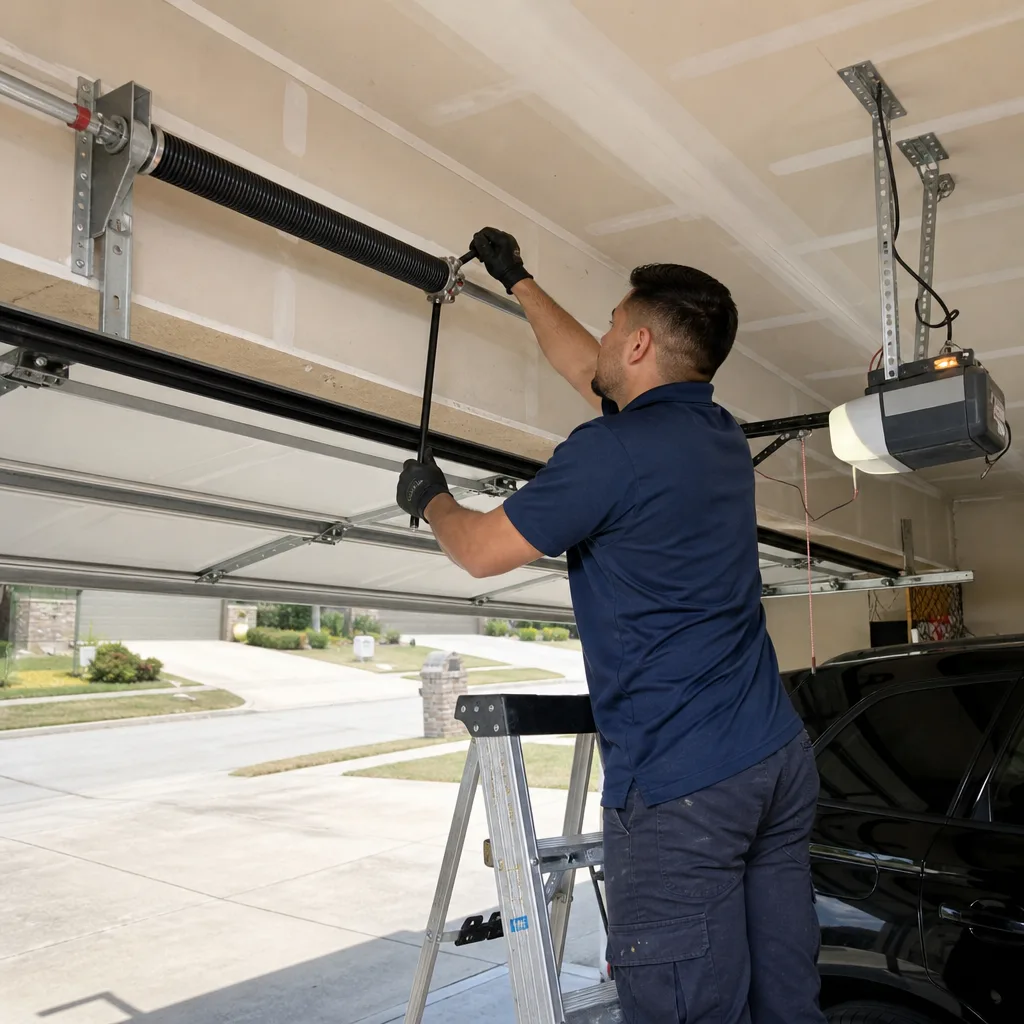
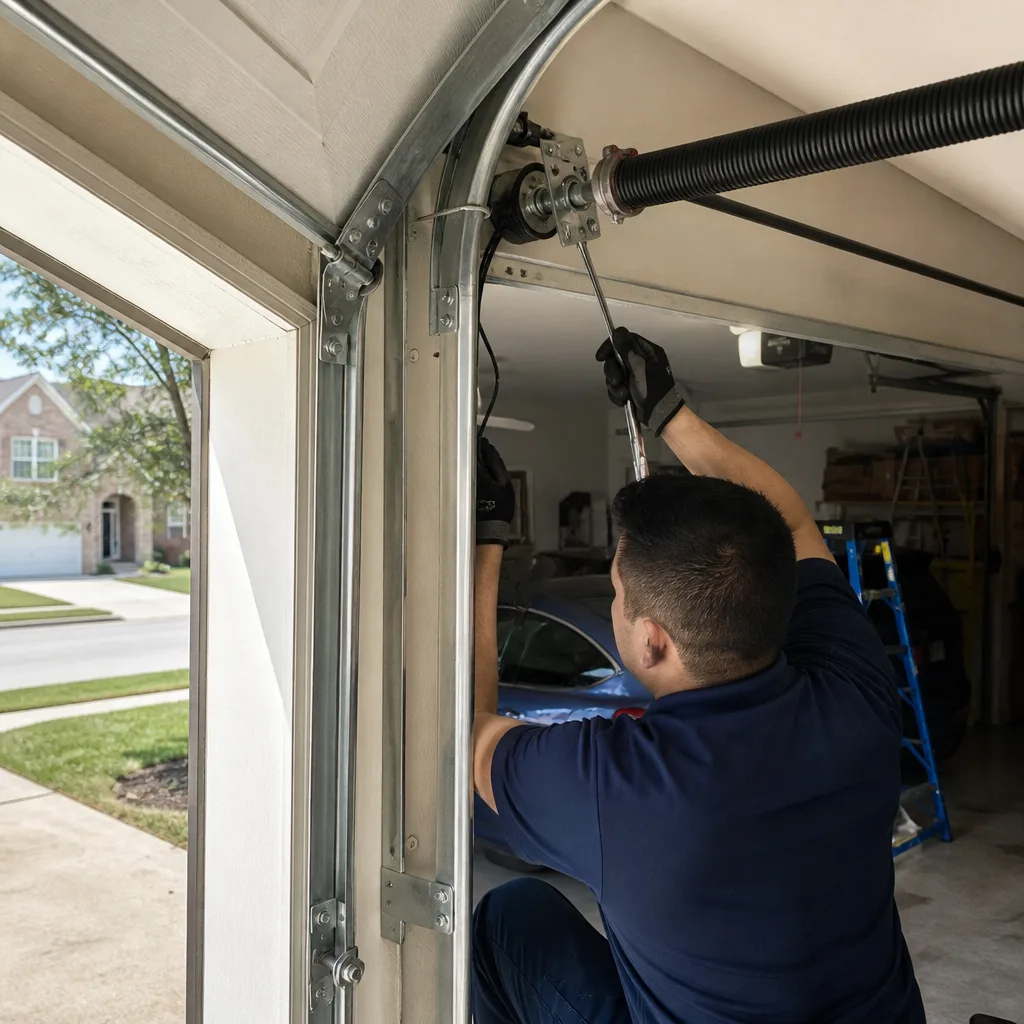
Safety note: Torsion springs store substantial mechanical energy. If the door feels heavy to lift manually, or if you see a gap in the spring coils, do not attempt adjustment. The spring is wound under tension and can cause serious injury. This is documented work, per Clause 4, with the technician photographing the spring condition before quoting replacement.
3. Battery Backup Verification
Since 2018, Texas has required battery backup on new garage door opener installations. If your opener has a battery backup, test it: unplug the opener and cycle the door once. The battery should deliver at least one full cycle, typically more. If the opener beeps or fails to move the door, replace the battery - they’re typically 12V sealed lead-acid units with a 3-5 year lifespan.
Stafford’s winter power outages are usually brief, caused by ice on distribution lines, but a garage door frozen shut with no battery backup means you’re waiting for CenterPoint Energy. In Garage Door Repair in Stafford calls after winter storms, we’ve found that homeowners who tested in November had functional doors; those who didn’t were trapped until power returned.
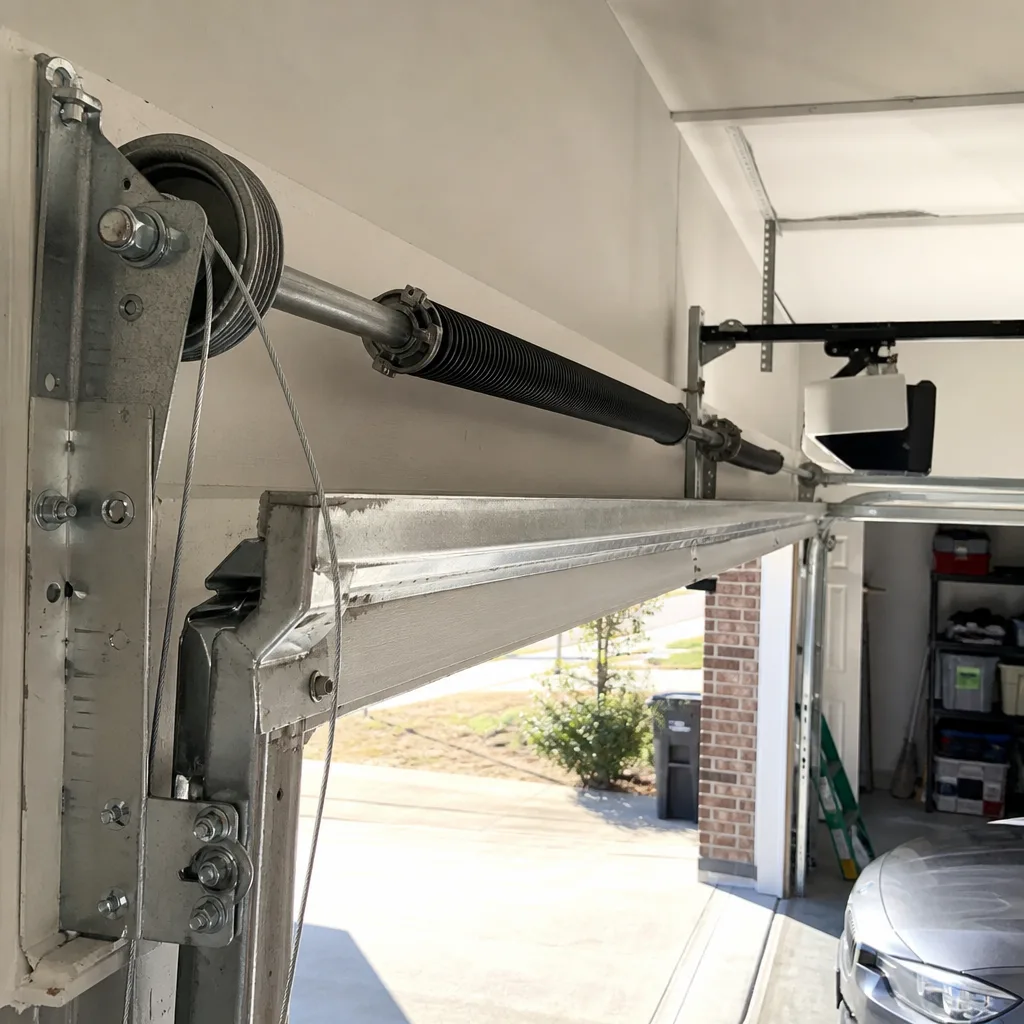
4. Torsion Spring Contraction Check
Cold contracts metal. A torsion spring that measures 0.25-inch wire diameter at 70°F will measure fractionally smaller at 20°F, increasing the stress per cycle. There’s nothing to adjust here - the spring is sized for the door weight - but November is the time to inspect for fatigue before contraction accelerates it.
Look for these failure indicators:
- A gap of 1/8 inch or more between coils when the door is closed (the spring should be tightly wound)
- Rust scaling or pitting on the wire surface
- A “set” in the spring - a section where the coils are visibly closer together, indicating the wire has stretched
If any are present, the spring is living on borrowed time. In Stafford, we’ve seen springs fail on the first freeze of winter because the contraction stress exceeded the remaining fatigue life. We photograph the condition, quote a replacement pair (springs should always be replaced in matched sets), and schedule before the temperature drops.
The Shoulder Month Checklist: March and October
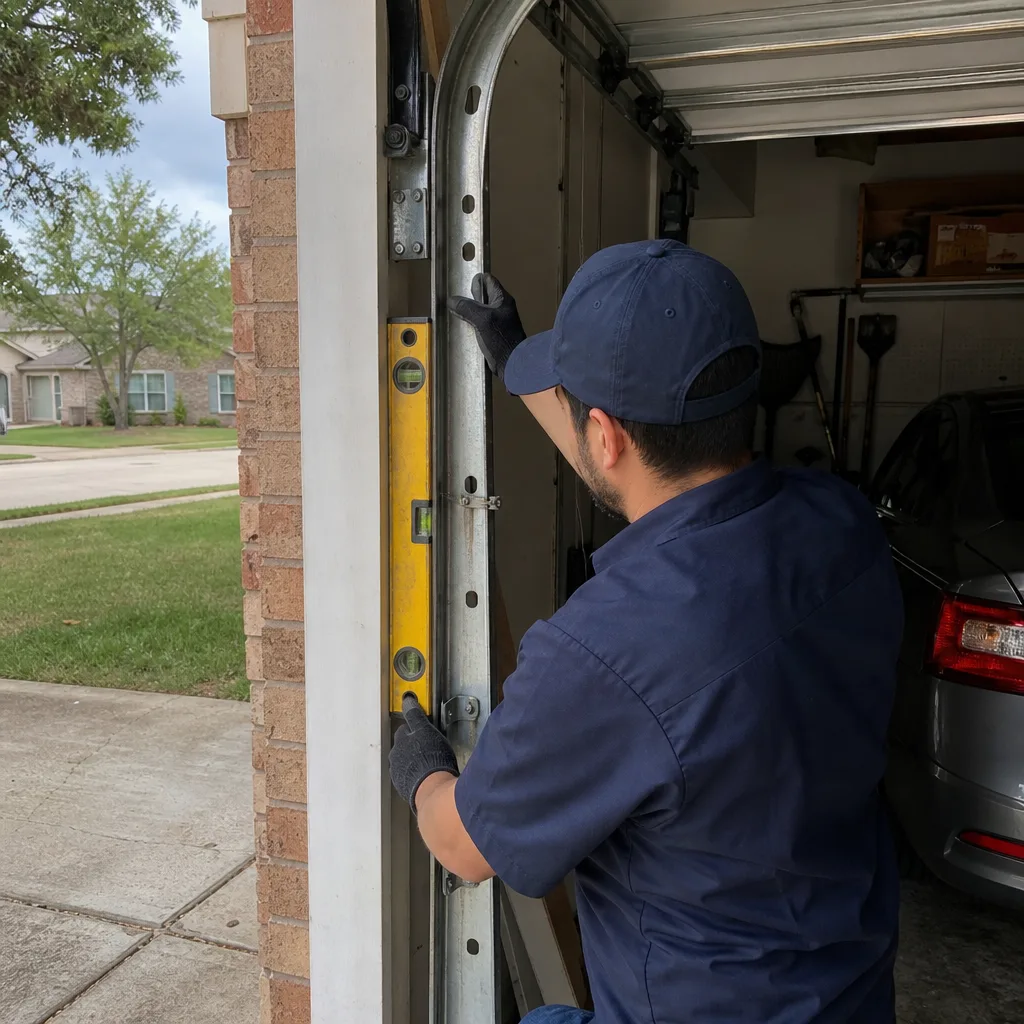
Stafford’s shoulder months are brief and unpredictable. March can bring 80°F days or a late freeze. October can be summer-hot or genuinely cool. These aren’t seasons for major maintenance; they’re verification periods. Two tasks, done once each shoulder month, catch problems that developed during the dominant season just passed.
March Check: Post-Winter Verification
- Inspect the bottom seal for freeze damage. Even if it passed the November flexibility test, a hard freeze may have caused micro-cracking. Look for daylight under the seal with the door closed - any visible gap means replacement.
- Check opener chain or belt tension. Cold contraction followed by spring warming can loosen drive components. A loose chain slaps the rail; a loose belt skips teeth. Both cause premature wear.
October Check: Post-Summer Verification
- Inspect roller bearings for dust infiltration. Summer humidity draws dust into bearing races, forming an abrasive slurry. Spin each roller by hand - gritty or rough rotation means the bearing is contaminated. Replace sealed nylon rollers if they’re noisy; they’re not serviceable.
- Verify opener force settings. Heat-expanded tracks in summer may have caused the opener to work harder. The force adjustment dials, usually on the motor housing, may have been nudged out of spec. Test the auto-reverse with a 2×4; if the door doesn’t reverse promptly, the down-force is set too high.
These are two-task months by design. The dominant seasons demand full preparation; the shoulders demand only confirmation that the preparation held.
Lubricant Selection by Temperature Band
This is where most national guides fail Stafford homeowners. They recommend “garage door lubricant” without specifying formulation, or they suggest white lithium grease year-round. The wrong lubricant in the wrong season creates problems that look like mechanical failure.
Summer Band (May-September): Low-Viscosity Synthetic with Anti-Dust Additives
Stafford’s summer humidity turns standard lithium grease into a dust magnet. Within weeks, the lubricant film is contaminated with airborne particles, forming an abrasive paste that accelerates wear in hinges and roller bearings.
Use a synthetic garage door lubricant with PTFE (Teflon) or similar dry-film additive. These products deposit a lubricating layer that doesn’t attract dust. Apply sparingly - a light film on hinge pins, roller bearings, and the torsion spring coils. Do not apply to the track, the chain (if chain-drive; use manufacturer-specified chain lube), or the opener rail.
Recommended product type: aerosol-dispensed synthetic with PTFE, rated for 0°F to 300°F. The high-temperature rating matters less than the low-temperature rating; you want a product that won’t thicken in January, even if you applied it in June.
Winter Band (December-February): Same Product, Verified Application
The lubricant that works in summer works in Stafford’s winter. The temperature range doesn’t drop low enough or long enough to require a different formulation. The November task is not swapping lubricant but verifying that summer’s application hasn’t been washed or worn away.
What does change: application points. The torsion spring, which may have been warm to the touch in August, is cold steel in January. The lubricant film is more critical because the metal itself is less forgiving. Reapply a light film to the spring coils if they appear dry.
What to Avoid
- WD-40 as a lubricant: It’s a water displacer and light solvent, not a lubricant. It evaporates, leaving no protective film.
- Heavy grease on tracks: Attracts dust, creates drag, and can cause the door to bind or the opener to overload.
- Motor oil or 3-in-1 oil: Too thin for hinge pins, drips onto the door or floor, and becomes a fire hazard near the opener motor.
Opener, Weatherstrip, and Brand-Specific Considerations
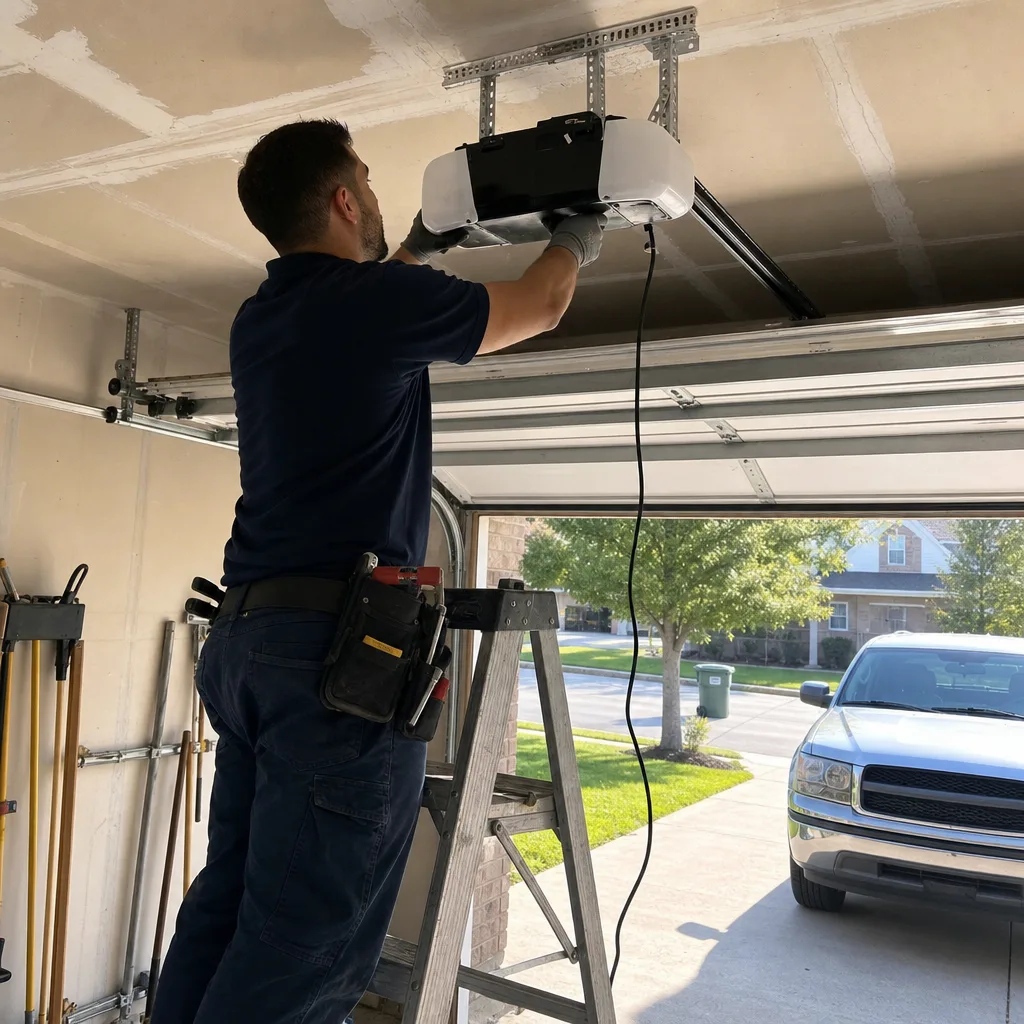
Stafford’s climate affects different equipment differently. Here’s what we’ve documented across the major brands we service.
Opener Thermal Performance
LiftMaster and Chamberlain belt-drive openers (models with DC motors and battery backup) generally handle Stafford’s heat well - the DC motor runs cooler than equivalent AC units. The MyQ logic board, however, is sensitive to voltage fluctuation during summer peak demand. If your garage is on a separate panel or subpanel, voltage drop under air conditioning load can cause erratic behavior. We document this with a multimeter reading, per Clause 4.
Genie chain-drive openers with the Intellicode system are robust but run warmer. In west-facing garages, we’ve replaced motors that exceeded thermal cutoff repeatedly in August. The fix is often improved ventilation, not opener replacement - but the documentation shows the customer what we found before quoting anything.
Craftsman openers, especially pre-2018 models without battery backup, are increasingly common in Stafford’s resale market. The drive gear, a nylon worm gear inside the motor housing, is a wear item that degrades faster in heat. A grinding noise during operation, especially in summer, often means the gear is stripping. We photograph the gear teeth through the inspection port before quoting replacement.
Door and Weatherstrip Compatibility
Clopay steel doors with Intellicore insulation are common in Stafford’s newer construction. The polyurethane foam core provides thermal separation, but the steel skins still expand and contract. Check the hinge screws annually - thermal cycling loosens them faster than in stable climates.
Amarr and Wayne Dalton doors often use proprietary bottom seal profiles. When replacing seals, match the retainer exactly. Universal seals that “sort of fit” leak in Stafford’s driving rain and crack in freeze because they’re under tension in the retainer channel.
Weatherstrip Material by Season
| Location | Summer Stress | Winter Stress | Recommended Material |
|---|---|---|---|
| Bottom seal | UV, humidity, monsoon rain | Freeze, contraction | EPDM rubber, cold-rated to -20°F |
| Perimeter seal (stop molding) | UV hardening | Brittle fracture | Vinyl with UV inhibitor, or EPDM |
| Threshold seal | Traffic wear, humidity | Freeze adhesion | Aluminum retainer with EPDM insert |
For Garage Door Installation in Stafford, we specify EPDM seals on every quote. The material costs more than PVC upfront. It costs less than one service call to replace a cracked seal in January.
Common Mistakes to Avoid
- Using the same lubricant year-round without checking formulation. In Stafford’s humidity, summer applications of white lithium grease become dust-laden paste by October. The door gets noisy, and homeowners assume mechanical failure when it’s just contaminated lubricant.
- Ignoring the manual release until the power fails. We’ve responded to emergency calls in Stafford’s winter outages where the homeowner had never pulled the red cord. In two cases, the release mechanism was corroded from humidity and wouldn’t disengage. Test it in November, not during the storm.
- Replacing only one torsion spring. Torsion springs are matched pairs. When one breaks, the other has the same cycle count and fatigue history. Replacing one guarantees a second service call. We always quote pairs, with the photo record showing both springs’ condition.
- Using a pressure washer on the door or weatherstrip. Stafford homeowners sometimes “clean” the garage door with a pressure washer. The force drives water into the bottom seal retainer, behind the perimeter molding, and into roller bearings. Humidity then can’t escape, accelerating corrosion and rot.
- Assuming a noisy door just needs lubricant. Grinding, popping, or squealing can indicate a failing roller, loose hinge, or cracked spring. Lubricant masks the symptom until the component fails catastrophically. We diagnose before lubricating - Clause 4 means the customer sees what we found.
- Neglecting the opener’s battery backup test. Texas law requires it on new installs, but there’s no enforcement mechanism for maintenance. A dead battery in January, when CenterPoint has ice-related outages, leaves you with a 200-pound door and no power assist.
- Buying universal weatherstrip from a big-box store. The “universal” seal that fits 10 retainers fits none of them well. In Stafford’s climate, a poor fit means water intrusion in summer and air leakage in winter. Match the profile exactly, or have us measure and supply the correct part.
When to Call a Professional
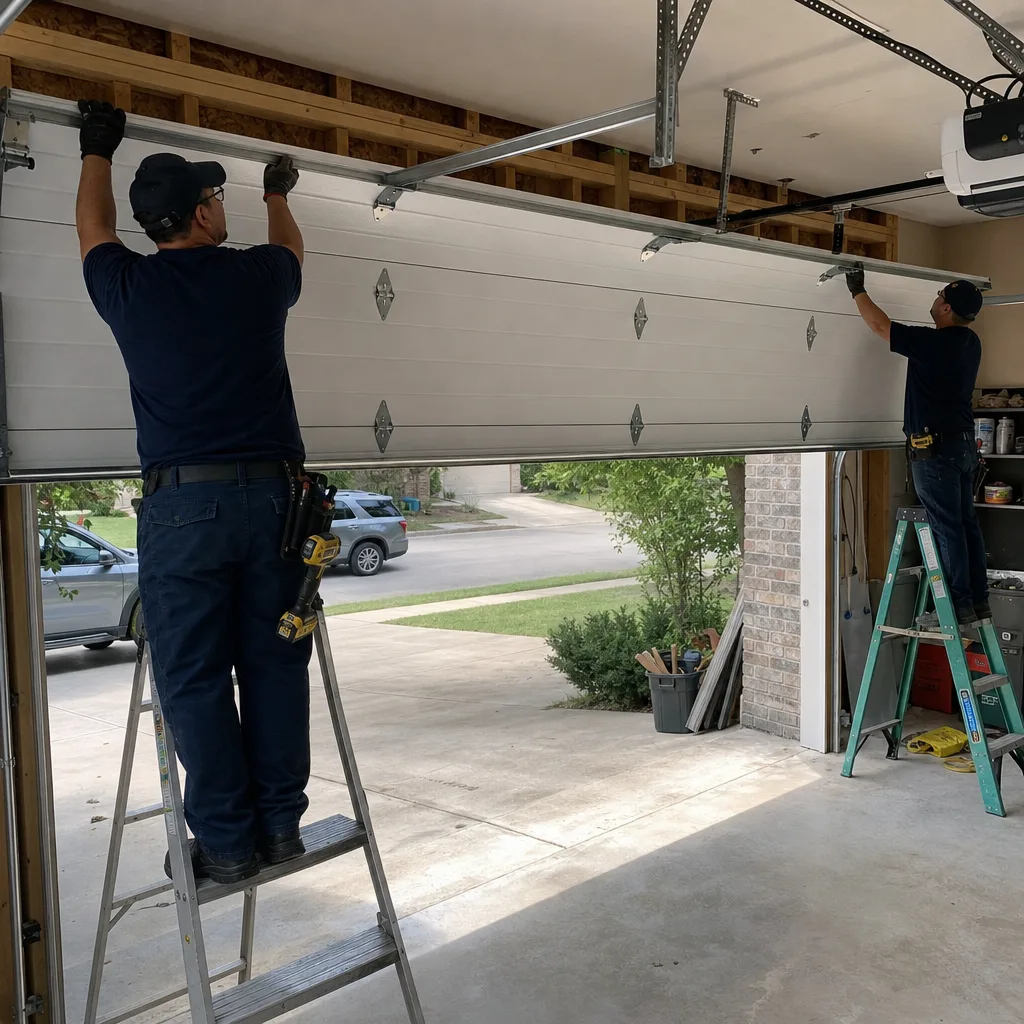
Some maintenance is homeowner work: visual inspection, lubricant application, auto-reverse testing. Some is not, and costs vary - see our Garage Door Cost Breakdown: The Stafford Homeowner’s Reference for 2026. Call a technician if you observe any of the following.
A door that won’t stay open manually indicates spring failure or misbalance. A gap in the torsion spring coils means the spring is broken or unwound - do not operate the door. A grinding noise from the opener motor housing suggests internal gear damage. Cables that are frayed, rusted, or off their drums are under tension and dangerous to handle. Any door that reverses erratically or fails the auto-reverse test has a safety system fault.
Servo Garage Doors Stafford offers free estimates in Stafford - call (346) 421-5125 - and visit our more guides & resources for additional maintenance help. Every visit includes a documented photo record of findings, a flat written price before any work begins per Clause 1 of The Haven Standard, and our 365-Day Done Right Promise. We service all major brands including LiftMaster, Chamberlain, Genie, Clopay, Amarr, Wayne Dalton, Craftsman, and Raynor.
Frequently Asked Questions
Lubricate moving parts twice yearly: in April before summer heat, and in November before winter freeze. Use a synthetic lubricant with PTFE or similar dry-film additive - standard white lithium grease attracts dust in Stafford’s humidity and becomes abrasive. Apply a light film to hinge pins, roller bearings, and torsion spring coils. Do not lubricate the track surface. Call (346) 421-5125 if you’re unsure which product to use - we carry the correct formulation on every truck.
Humidity itself doesn’t damage the opener motor, but it accelerates corrosion in the safety sensor wiring and can cause logic board failure if condensation forms inside the housing. The bigger risk is dust drawn into humid air, which contaminates lubricant and bearing surfaces. In Stafford’s summer, we see more opener strain from contaminated components than from direct humidity damage. A pre-summer inspection in April catches both issues before peak heat arrives.
Three common causes: the bottom seal has hardened and is freezing to the concrete slab; the torsion spring has contracted and increased the door’s effective weight, straining the opener; or the lubricant from summer has thickened or washed away, leaving metal-on-metal contact. The November pre-freeze check addresses all three. If your door is sticking now, don’t force it - the opener may strip its drive gear trying to overcome the resistance. Call for a diagnosis and a written quote before operating further.
Insulated steel with a thermal break performs best across Stafford’s temperature range. The steel skins handle thermal expansion better than aluminum, and the polyurethane core reduces heat transfer that can warp the door or stress the opener. Clopay’s Intellicore and similar insulated products are common in Stafford’s newer homes. For replacement, we measure the existing opening and quote the correct R-value for your garage’s exposure - west-facing doors in Staffordshire need more thermal protection than north-facing units in Colony Lakes.
A professional seasonal inspection and tune-up in Stafford typically runs $89-$149, depending on door size and opener type. This includes lubrication with the correct seasonal formulation, safety system testing, hardware torque verification, and a documented photo record of all findings. If we find a component that needs replacement - a worn roller, a fatigued spring - we photograph it, quote a flat written price per Clause 1, and perform the work only with your approval. Estimates are free; call (346) 421-5125 to schedule.
Not automatically. A functional door with good curb appeal and documented maintenance history is often sufficient. Replace if the door has significant damage, the opener lacks battery backup (required for new installations since 2018, and buyers’ inspectors flag it), or the style clashes with neighborhood norms. In Stafford’s 77477 and 77497 ZIP codes, we’ve seen sellers recover 85-100% of a mid-range replacement cost at closing, but the documentation of maintenance matters as much as the door itself. A door with a photo record of annual service outperforms a new door with no history.
Yes. We answer calls with a live person 24 hours a day, 7 days a week, including holidays. Emergency calls get a named technician and an on-the-way text with arrival tracking. We carry parts for all major brands on every truck, and we quote a flat written price before any work begins - even at 2 a.m. The 365-Day Done Right Promise applies to every repair. For emergency garage door service in Stafford, call (346) 421-5125.
The Bottom Line
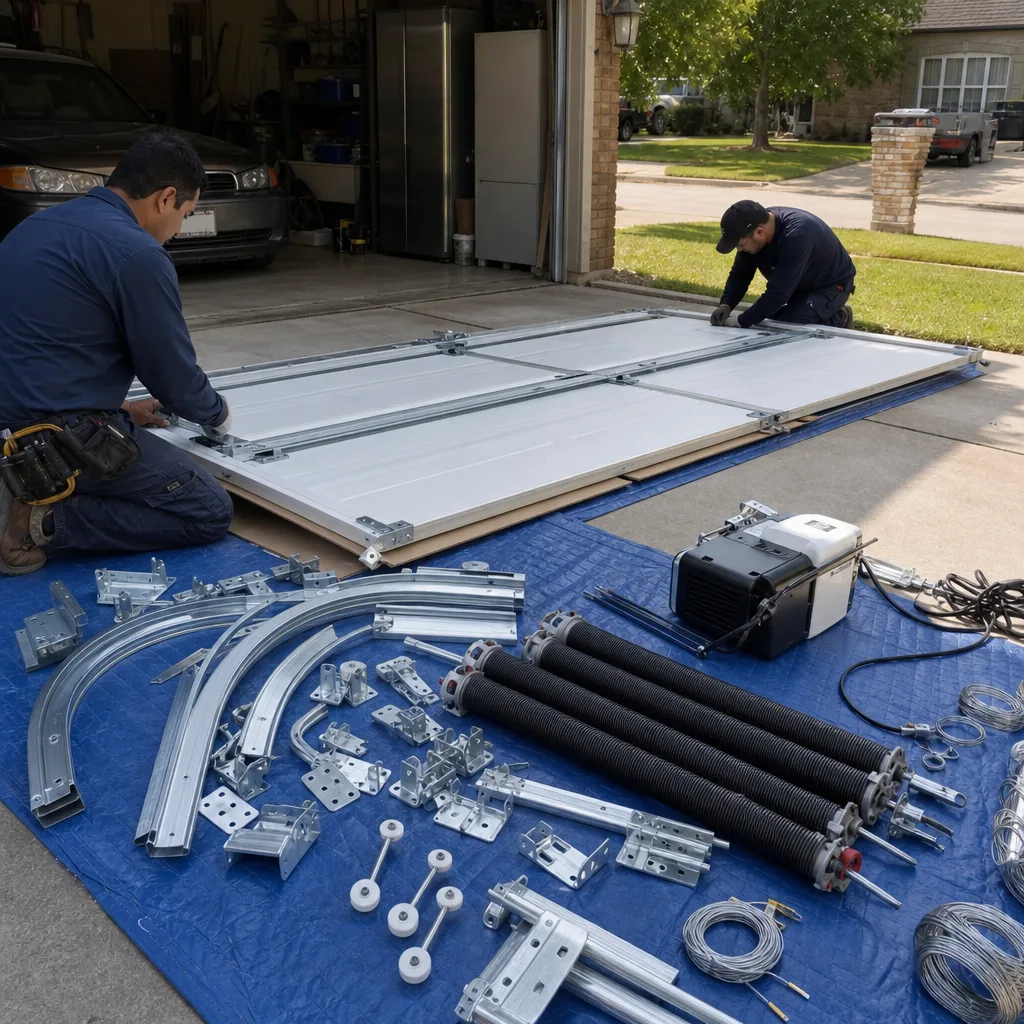
Stafford’s garage doors face two dominant seasons, not four equal ones. Summer’s thermal expansion and humidity demand a pre-April check focused on opener thresholds, track alignment, and dust-resistant lubrication. Winter’s brief hard freezes require a pre-November inspection of seal flexibility, spring condition, and manual release function. The shoulder months of March and October are two-task verification periods, not full maintenance cycles. The right product for the temperature band matters as much as the right timing. Document what you find, or hire a technician who will - a photo record of condition beats a verbal promise every time.
Written by Marcus Deller, Owner at Servo Garage Doors Stafford, serving Stafford since 2015.