
Last updated September 22, 2026
Full 25-point door and opener safety check with every visit - springs, cables, rollers, tracks, and your LiftMaster or Chamberlain opener included
You get a price before we start. It does not change when the truck arrives.
 Before
 After
After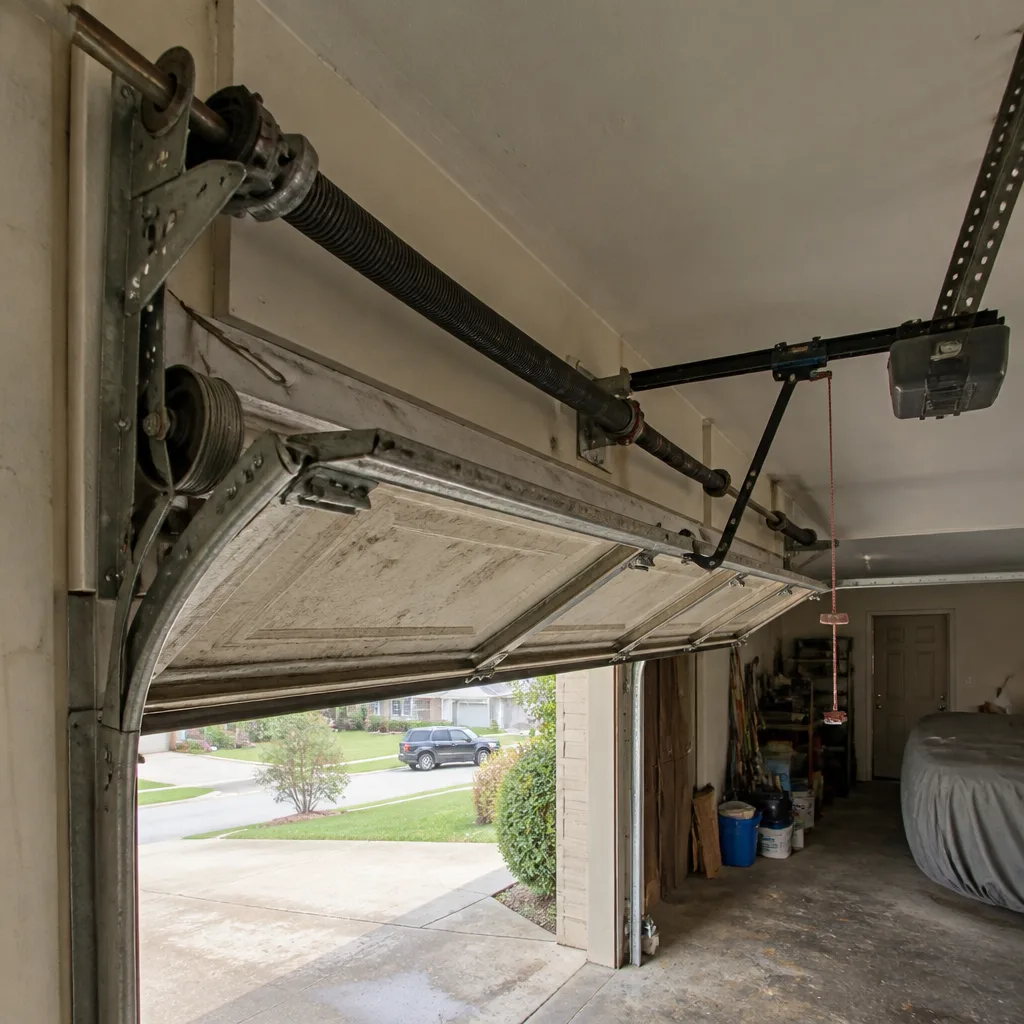 Before
 After
After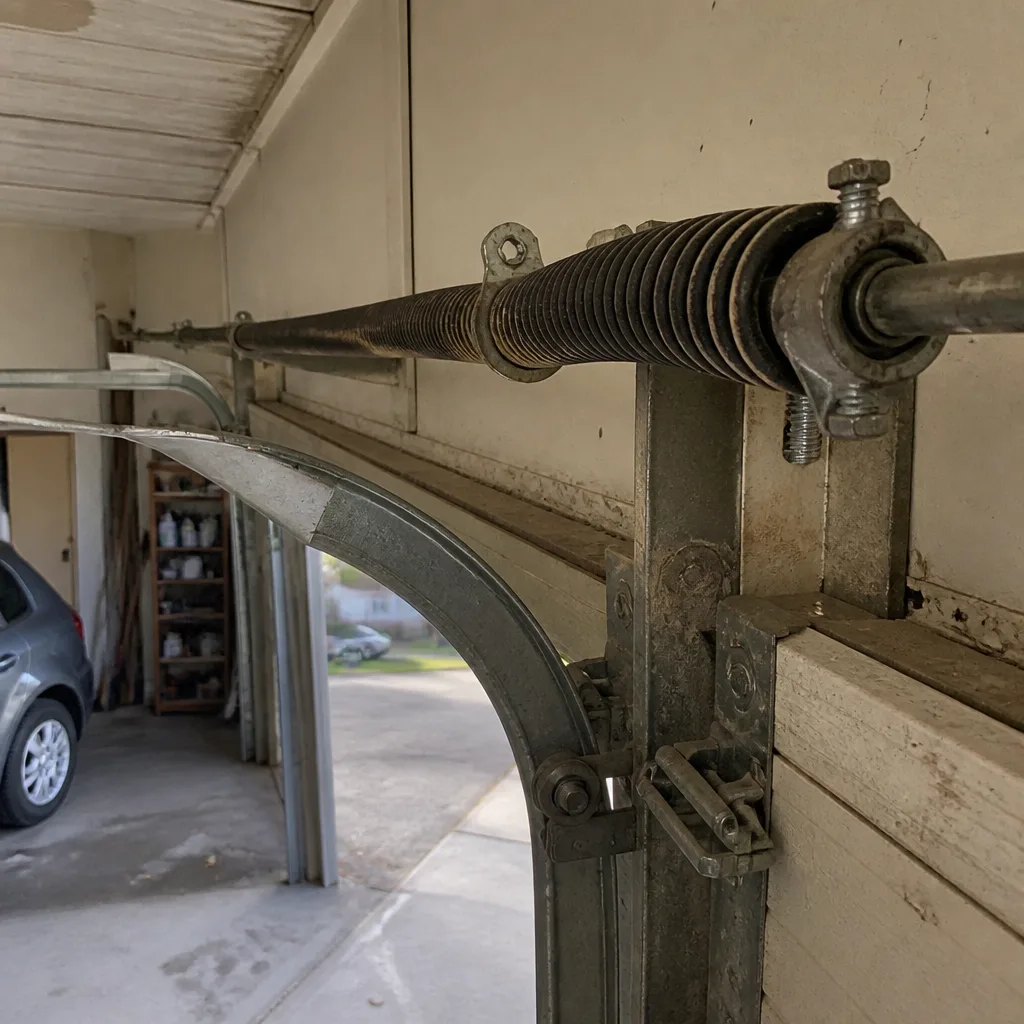 Before
 After
AfterDIY vs Professional Garage Door: The Stafford Homeowner’s Decision Guide
A torsion spring on a standard two-car door stores roughly 100 foot-pounds of torque. A winding bar slip during adjustment sends steel across your garage at projectile speed. This isn’t a skill gap; it’s a physics problem. In Stafford, where summer humidity swells wooden door panels and the clay-heavy soils of the Brazos River floodplain shift concrete slabs out of level, garage doors face stress patterns that don’t appear in generic DIY tutorials written for drier climates. This guide draws the decision line at stored energy, not mechanical aptitude. You’ll learn which tasks are genuinely safe to handle yourself, which ones require a trained technician regardless of your tool collection, and how to protect yourself from repeat billing when you do hire out. For related reading, see our Garage Door Repair Maintenance Checklist for Stafford Homeowners.
Quick Answer
Most Stafford homeowners can safely handle lubrication, weatherstrip replacement, sensor alignment, remote battery swaps, and manual release operation. Any task involving torsion springs, extension springs, or lift cables under tension should be performed by a licensed professional. The stored energy in these components creates injury risk that mechanical skill cannot eliminate.
Table of Contents
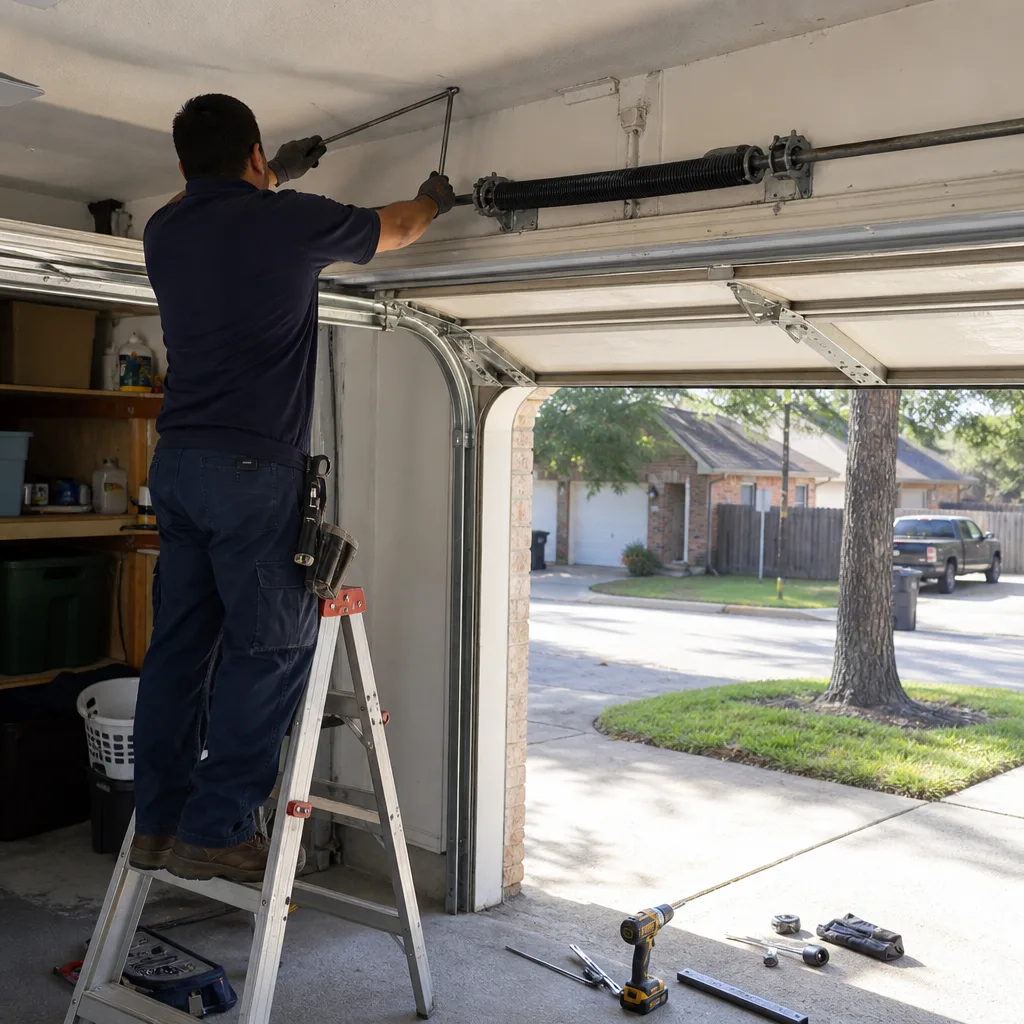
- The Stored Energy Boundary: Where DIY Ends
- Homeowner-Safe Tasks: What You Can Actually Do
- Real Cost Comparison: DIY vs. Professional in Stafford
- Why DIY Cable Replacement Often Costs More
- Documentation You Should Keep After Any Repair
- Stafford Climate, Soil, and Code Factors
- Brand-Specific DIY Limitations
- Common Mistakes to Avoid
- When to Call a Professional
- Frequently Asked Questions
 Before
 After
AfterThe Stored Energy Boundary: Where DIY Ends
The garage door industry has a term that doesn’t appear in homeowner manuals: stored energy. It refers to mechanical components that hold force even when the door appears stationary. Understanding this boundary matters more than owning the right socket set.
Here’s the complete list of stored-energy components on a standard residential garage door:
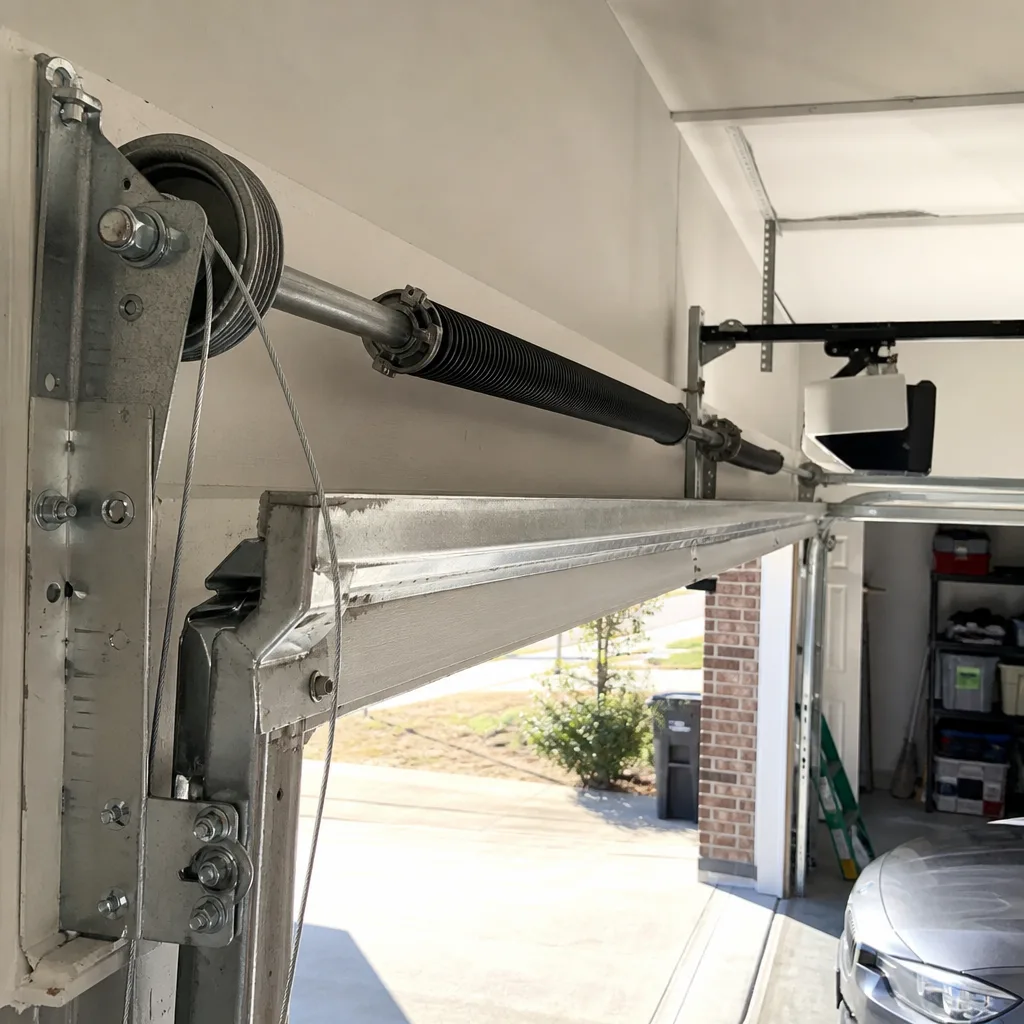
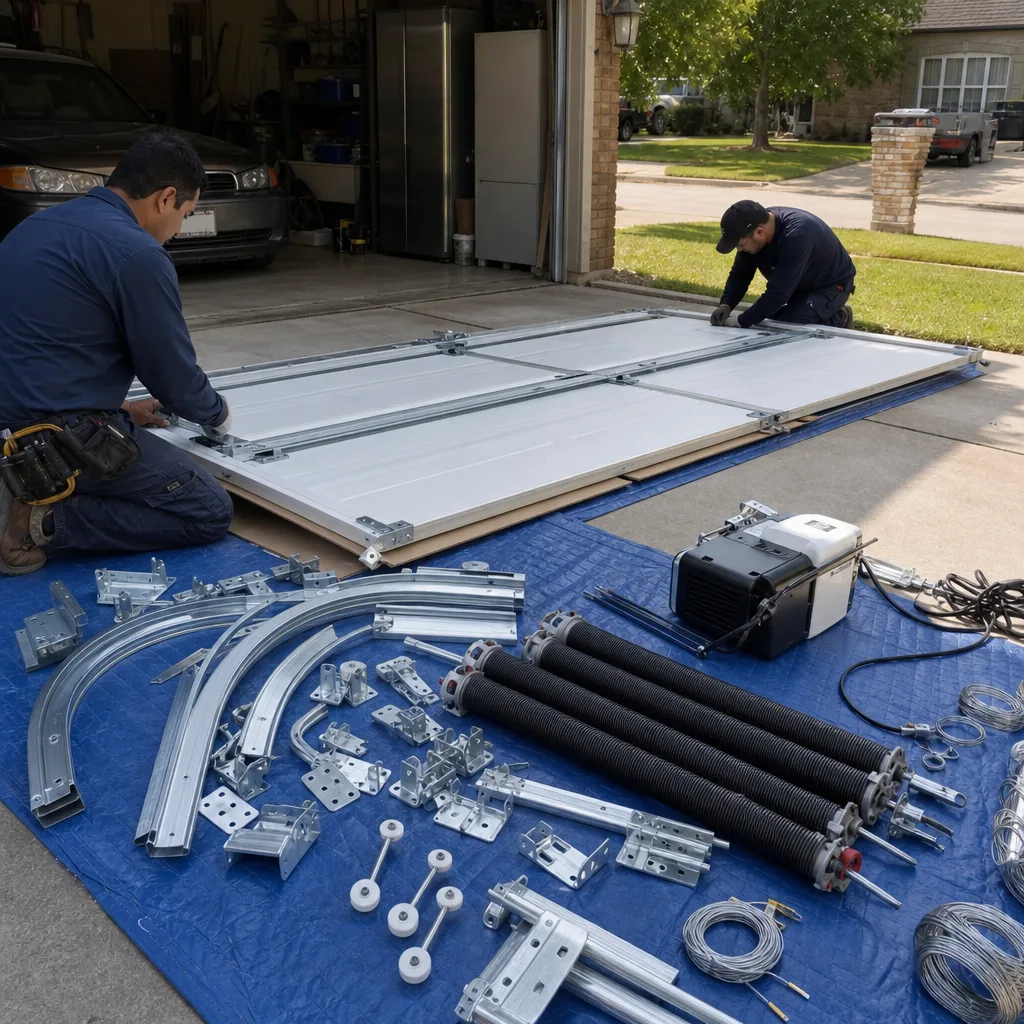
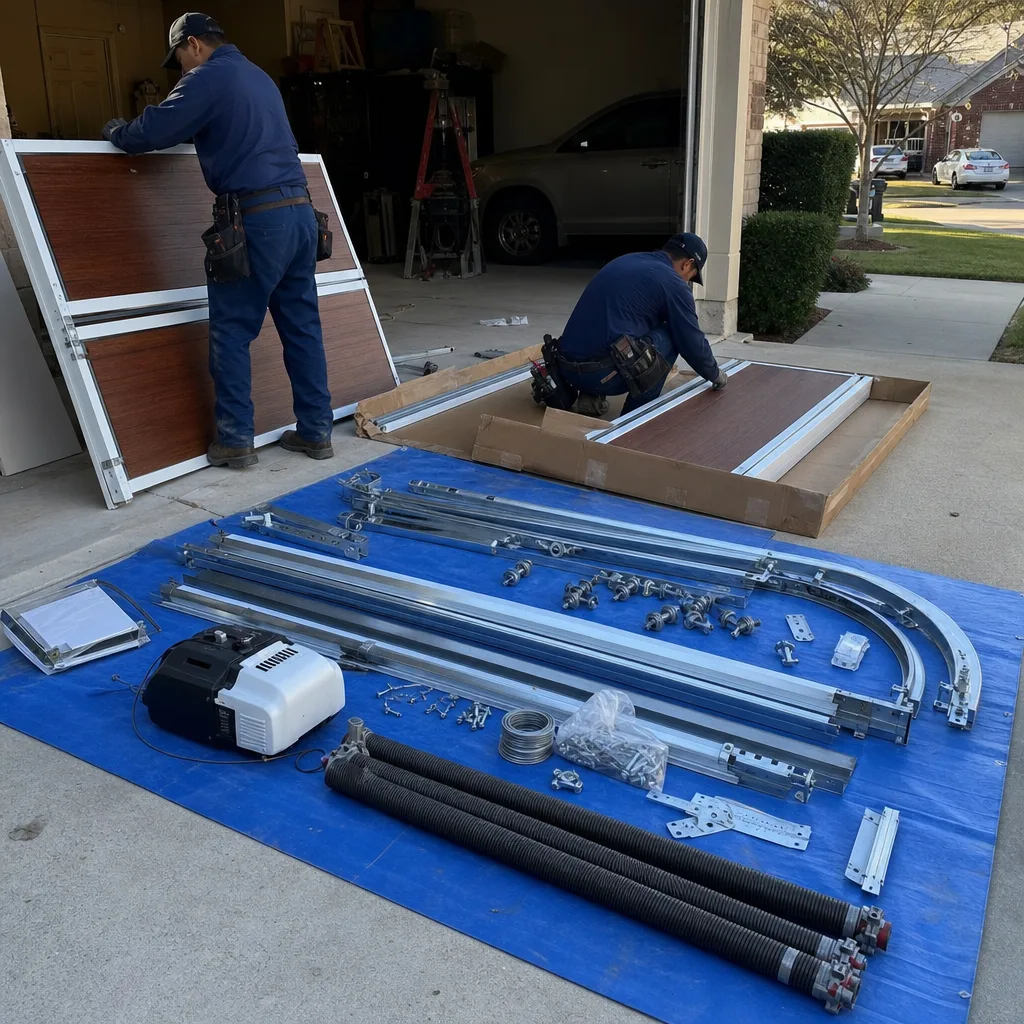
- Torsion springs: Mounted on a steel shaft above the door header, these springs are wound tight to counterbalance the door’s weight. A standard 16-foot wide door in Stafford’s Meadow Creek or Colony Lakes subdivisions typically uses a pair of 0.250-inch wire springs wound to 7.5-8.0 turns. The winding itself is what stores the energy.
- Extension springs: Found on older or lighter doors, these stretch along the horizontal track and hold tension even at rest. They’re common on pre-2000 homes in Stafford’s original neighborhoods near Avenue E.
- Lift cables: These wrap around drums at each end of the torsion shaft and remain under constant tension from the spring. A cable that appears slack has simply transferred its load to the opposite cable.
- Torsion shaft and drums: The entire assembly rotates under load whenever the door moves.
We draw the line here: any procedure that requires releasing, adjusting, or replacing a component under load belongs in the professional column. No exceptions based on experience level. We’ve responded to calls in Stafford where a mechanically skilled homeowner, someone who rebuilds engines or frames houses, attempted a spring adjustment using a tutorial video. The resulting injuries required emergency room visits. The physics don’t care about your resume.
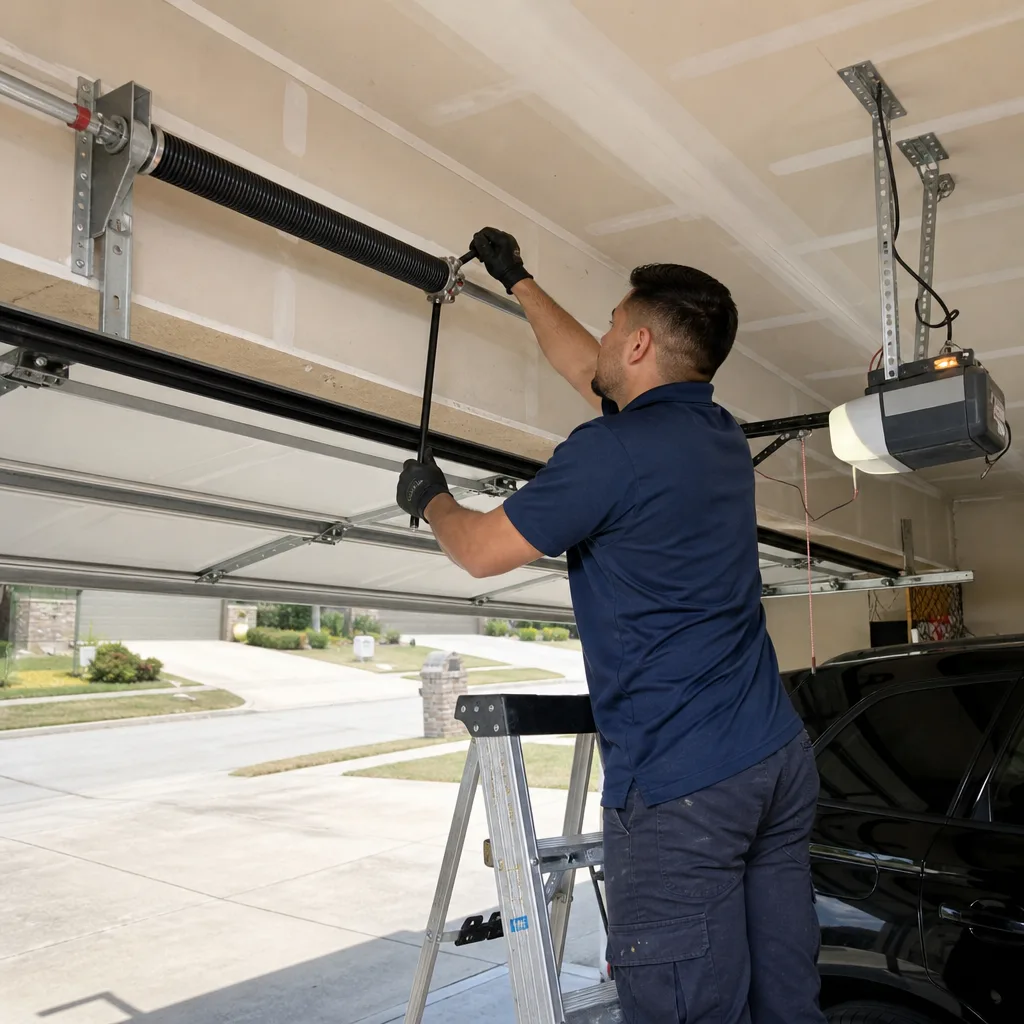
What makes this non-negotiable? Torsion springs are calibrated to a specific door weight. The winding process requires inserting solid steel bars into the cogs of a loaded spring while adding or releasing tension. A bar slip, a miscounted turn, or a spring with hidden corrosion can release that stored energy instantaneously. The bars become projectiles. The spring itself can unwind with enough force to break bones.
This boundary also protects your door. An incorrectly wound spring stresses the opener’s logic board, the trolley carriage, and the door panels themselves. We’ve replaced more openers in Stafford’s newer developments, like those along Murphy Road, where a DIY spring attempt led to stripped drive gears six months later. The homeowner saved $200 on the spring and spent $450 on the opener.
Homeowner-Safe Tasks: What You Can Actually Do
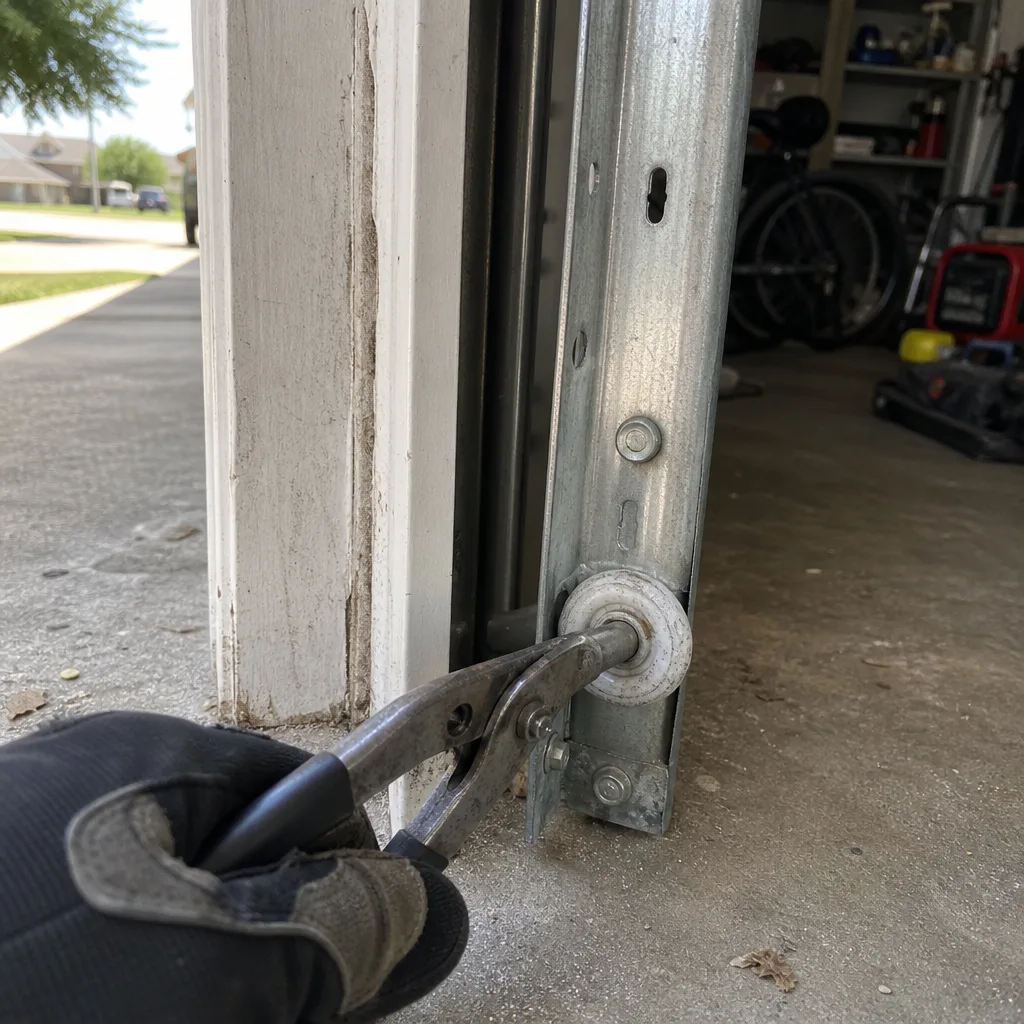
Below the stored-energy boundary, several maintenance and minor repair tasks are genuinely appropriate for Stafford homeowners. These involve no loaded components, require no special tools beyond a screwdriver and level, and carry injury risk comparable to changing a furnace filter.
Task 1: Lubrication
Apply silicone-based spray lubricant to the hinge pins, roller bearings, and the length of the torsion spring itself. Do not lubricate the track; the rollers need friction to stay seated. In Stafford’s humid subtropical climate, where summer dew points regularly hit 75°F, metal components corrode faster than in drier regions. A quarterly lubrication schedule prevents the squealing and binding we see most often in August service calls.
- Close the door and disconnect the opener using the manual release rope.
- Apply lubricant sparingly to each hinge where the pin meets the bracket.
- Hit the roller bearings, not the roller wheels themselves.
- Lightly coat the torsion spring coils. The spring is under tension, but you’re not touching the winding hardware; you’re applying spray from a safe distance.
- Run the door up and down manually to distribute.
Task 2: Weatherstrip Replacement
The bottom seal and side weatherstripping on a garage door are friction-fit or slide-in components. No tools beyond a utility knife and perhaps a flathead screwdriver are needed. Stafford’s combination of intense UV exposure and occasional street flooding (particularly in lower-lying sections near the Buffalo Bayou tributaries) degrades rubber seals faster than national averages. A deteriorated bottom seal lets water, pollen, and insects into the garage.
Task 3: Safety Sensor Alignment
Photo-eye sensors sit 4-6 inches above the floor on each side of the door. When the door reverses for no apparent reason or the opener light flashes in a diagnostic pattern, misaligned sensors are the most common cause. Clean the lenses with a soft cloth, check that both LED indicators glow steady (not flickering), and gently adjust the brackets until they face each other directly. A carpenter’s level helps, but isn’t required.
Task 4: Remote and Keypad Battery Replacement
LiftMaster and Chamberlain remotes typically use CR2032 coin cells; Craftsman units of recent manufacture often use the same. The keypad mounted outside the garage uses AA or 9V batteries. If the wall button operates the door but the remote doesn’t, the battery is the first suspect. No stored energy involved.
Task 5: Manual Release Operation
Every automatic opener has a red-handled rope hanging from the trolley carriage. Pulling it disengages the door from the opener drive, allowing manual operation during power outages. Practice this when the door is closed; releasing a moving door can damage the carriage. In Stafford’s hurricane season, when power loss lasts hours or days, knowing this procedure matters.
Real Cost Comparison: DIY vs. Professional in Stafford
The financial decision only makes sense with actual numbers. For a deeper look at pricing, see our Garage Door Cost Breakdown: The Stafford Homeowner’s Reference for 2026. Below is what homeowner-safe DIY tasks cost in materials versus what a technician charges for the same service call in the Stafford market.
| Task | DIY Material Cost | Professional Service Range (Stafford) | Time Investment (DIY) |
|---|---|---|---|
| Full lubrication service | $12-$18 (silicone spray) | $89-$129 as standalone call; often included with repair | 20 minutes |
| Bottom seal replacement (single door) | $25-$45 (seal + retainer if needed) | $140-$220 | 30-45 minutes |
| Side/top weatherstrip kit | $35-$65 | $160-$280 | 45-60 minutes |
| Safety sensor alignment | $0 | $89-$149 service call | 10-15 minutes |
| Remote battery replacement | $3-$6 | $89-$129 if rolled into service call | 2 minutes |
| Keypad battery replacement | $4-$12 | $89-$129 if rolled into service call | 5 minutes |
The pattern is clear: for tasks below the stored-energy boundary, DIY saves money if you value your time at or below roughly $75 per hour. The savings disappear if you misdiagnose the problem. We’ve arrived at Stafford homes where a homeowner replaced a $12 remote battery twice, then bought a new remote, before realizing the issue was a failing logic board in the opener itself.
Above the stored-energy boundary, cost comparison becomes misleading. A torsion spring pair costs $40-$80 online. The winding bars, vise grips, and winding chart add another $50-$100 if you don’t own them. The emergency room copay, if something goes wrong, averages $250-$500 in the Houston metro area. The value of intact fingers and eyesight is harder to quantify but generally considered high.
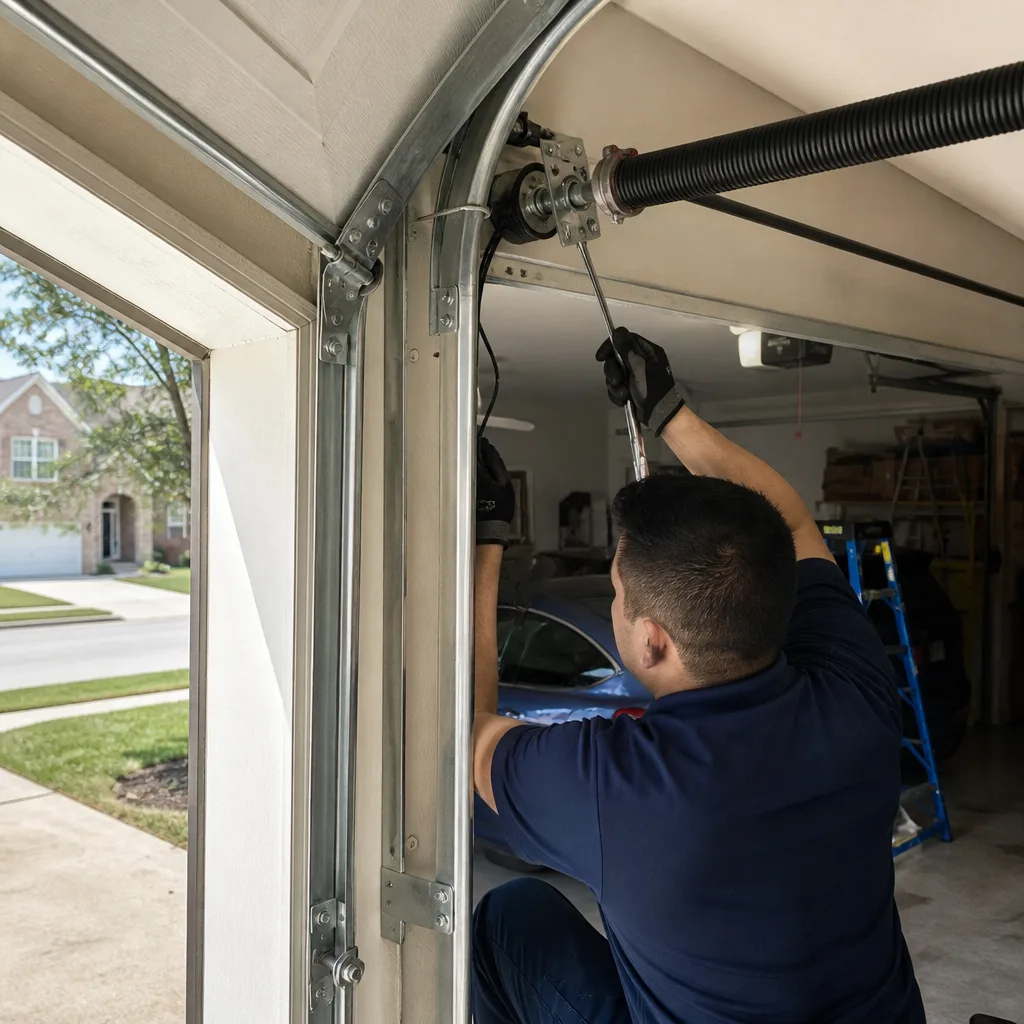
More realistically: a professional spring replacement in Stafford runs $180-$340 for standard residential doors, including the springs, labor, and warranty. The price is quoted and agreed before any work starts, per Clause 1 of Servo Garage Doors Stafford‘s operating standard. The technician brings calibrated springs (wire diameter and length matched to your door weight, not generic), installs them, and balances the door. The 365-Day Done Right Promise covers the work.
Why DIY Cable Replacement Often Costs More
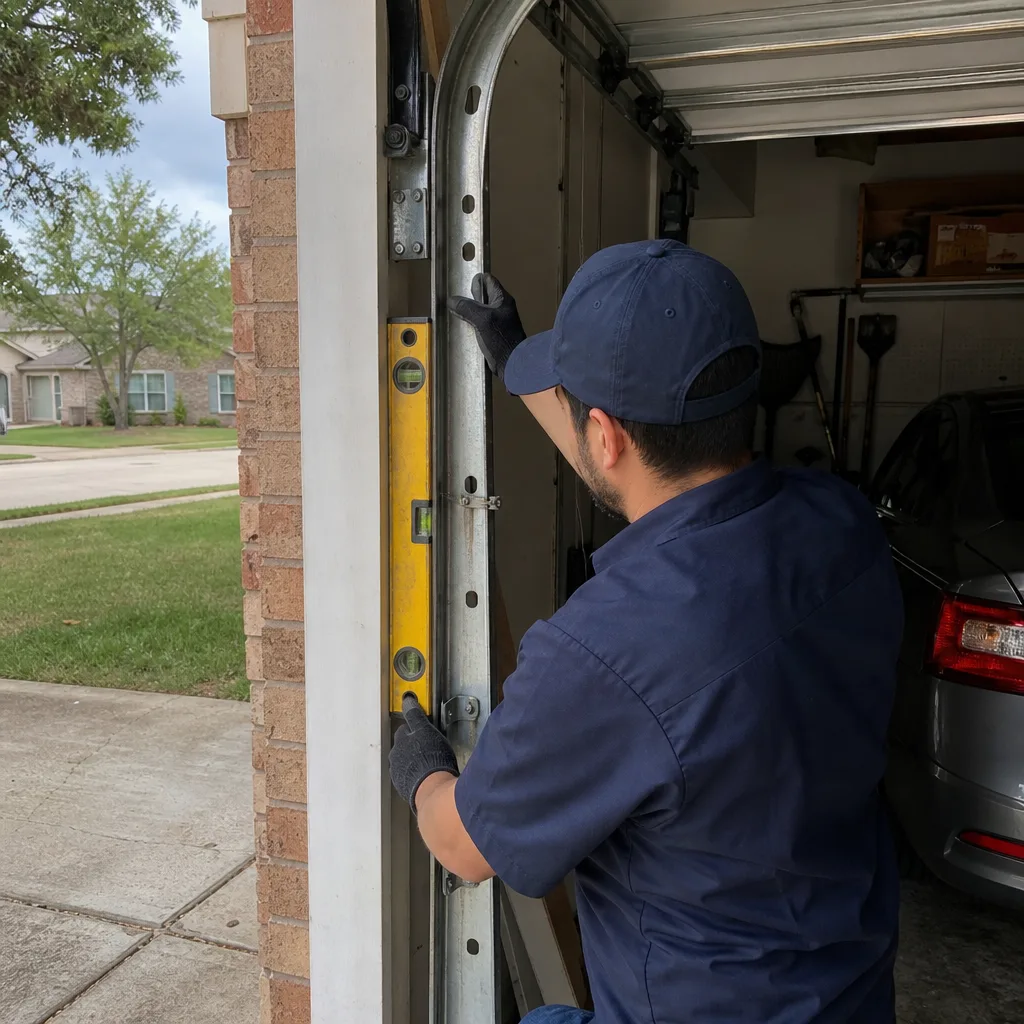
Cable replacement tempts capable homeowners because the part itself is inexpensive, typically $15-$30 per cable. The procedure appears straightforward: remove the old cable from the bottom bracket and drum, thread the new one, and reattach. What the tutorials omit is the precision required in cable drum alignment.
Here’s what happens in practice. The lift cables wrap onto drums that are keyed to the torsion shaft at a specific angle. If one drum sits even slightly forward or back of its mate, the cables wind at different rates as the door travels. The door lifts unevenly. The rollers bind in the track. Within weeks or months, the door develops a twist that stresses the hinges, the opener’s trolley carriage, and ultimately the door panels themselves.
We’ve corrected this secondary failure multiple times in Stafford, particularly in the Sugar Land-adjacent subdivisions where homeowners are more likely to own comprehensive tool sets. The original cable replacement was a $20 part. The correction requires:
- Re-leveling the door in the opening
- Resetting both cable drums to identical positions on the shaft
- Re-tensioning the torsion spring to match the corrected geometry
- Inspecting for panel damage or hinge stress from the uneven travel period
The total cost to correct a DIY cable replacement typically runs $280-$420 in the Stafford market. The original professional cable replacement would have cost $160-$220, including the adjustment and balance verification. The false economy is stark.
There’s also a safety dimension. A cable under tension, even a partially unwound one, can whip when released. The bottom bracket where the cable attaches is itself under spring load. We’ve seen homeowners attempt to remove a cable without first securing the door in the open position with locking pliers or a clamp. The door drops. The results range from damaged vehicles to crushed hands.
Documentation You Should Keep After Any Repair
Whether you DIY the safe tasks or hire a professional for everything, documentation protects you from repeat billing and warranty disputes. This is particularly relevant in Stafford’s resale market, where home inspections routinely flag garage door deficiencies and buyers request repairs from the seller.
After any professional service, you should receive and retain:
- Photograph of the failed component: At Garage Door Repair in Stafford, Clause 4 of The Haven Standard requires the technician to photograph the failed part before quoting a replacement. You receive this photo as evidence of what actually failed. If the same component fails again within the warranty period, the photo proves it was replaced, not merely adjusted.
- Part number on the invoice: Generic descriptions like “spring” or “opener” are insufficient. The invoice should specify wire diameter, length, and wind direction for springs; model number and manufacture date for openers; and part numbers for logic boards, trolley carriages, or limit switches. This prevents a technician from installing a lighter-duty part than specified.
- Written warranty scope: The 365-Day Done Right Promise should appear in writing, with clear terms. What does “done right” mean? What triggers a callback? Is labor included or only parts? Verbal assurances evaporate when the original technician leaves the company.
- Written scope of work: Clause 1 requires a flat, written price and written scope before any work begins. This document is your protection against scope creep. If the technician discovers additional issues during the repair, the written scope requires a new written amendment, not a verbal “while I’m here.”
- Final photo record of completed work: The documented photo record delivered at job completion shows installed components, proper routing of cables, and clear safety sensor alignment. If a subsequent failure occurs, this record establishes the condition of the system when the technician left.
For DIY tasks, create your own documentation. Photograph the old weatherstrip before removal. Note the part number of the replacement seal. Keep receipts with dates. When you sell your Stafford home, this paper trail demonstrates maintenance diligence to inspectors and buyers.
Stafford Climate, Soil, and Code Factors
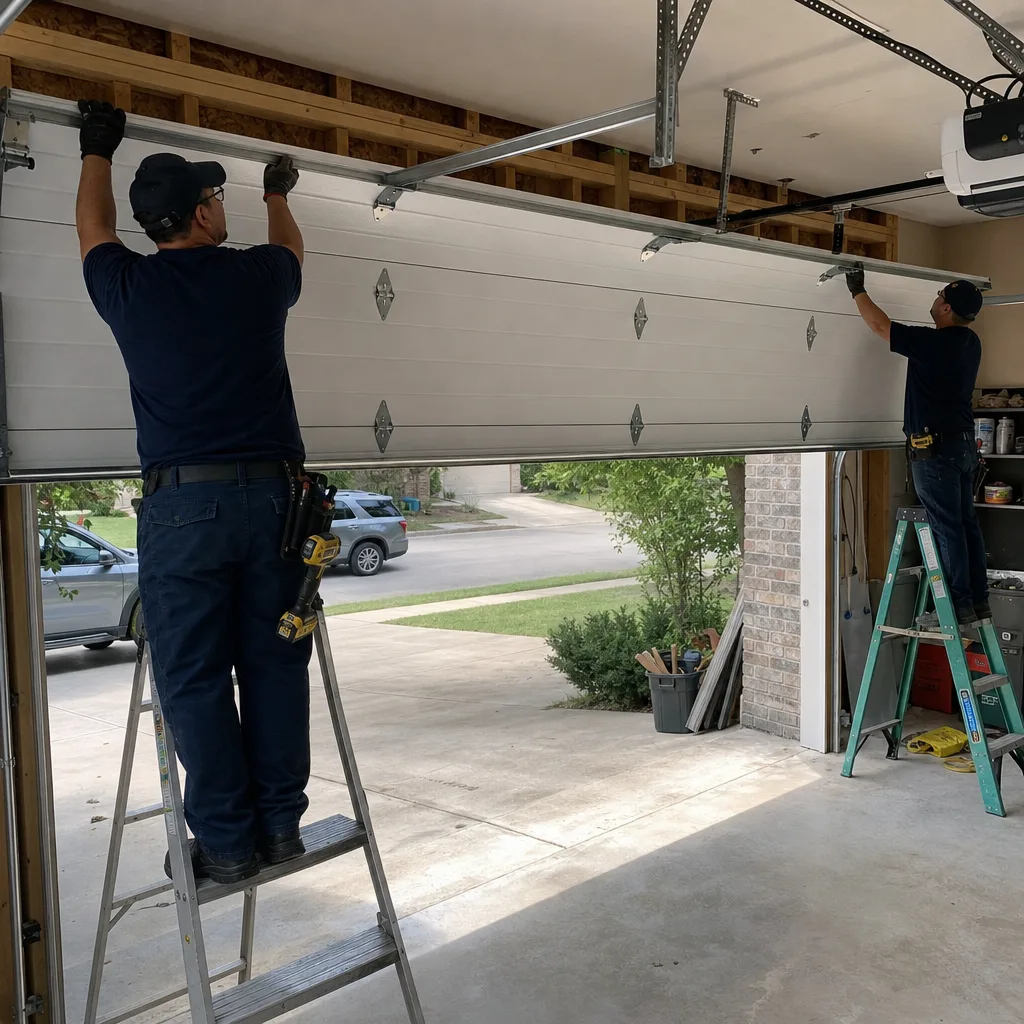
Generic garage door advice ignores local conditions that accelerate wear and complicate repairs. Stafford sits at the western edge of the Houston metropolitan area, with specific environmental and regulatory factors.
Humidity and corrosion: Average annual relative humidity in Fort Bend County exceeds 75%. Steel components, particularly torsion springs and cables, corrode from the inside out. A spring that appears sound externally may have internal corrosion reducing its cycle life. Professional technicians in Stafford account for this by selecting springs with higher cycle ratings or corrosion-resistant coatings. DIY spring purchases from national retailers rarely specify these variants.
Soil movement: The clay soils of the Brazos River floodplain expand and contract dramatically with moisture changes. Concrete garage slabs shift, door openings go out of square, and frames rack. A door that operated smoothly in March may bind in August after soil shrinkage. Diagnosing whether binding is a track problem, a spring balance issue, or a foundation shift requires measurement tools and experience. We’ve realigned tracks in Stafford’s Quail Run and The Meadows subdivisions where the root cause was slab movement, not component failure.
Wind load requirements: Stafford falls within Texas wind zone areas where building codes specify wind-rated garage doors for new construction and replacement. A DIY door installation that ignores the wind load rating may fail inspection or, worse, fail structurally during a severe weather event. For details on local requirements, see Garage Door Permits, Codes & Inspections in TX: What You Need to Know. Professional installers verify that the door, track system, and hardware meet or exceed local requirements.
Power reliability: CenterPoint Energy’s grid in the Stafford area experiences more frequent outages than national averages, particularly during hurricane season and summer peak demand. This makes battery backup openers, available on LiftMaster and Chamberlain models, a practical consideration. Installation of a battery backup unit involves electrical connections and opener programming that cross into professional territory for most homeowners.
Brand-Specific DIY Limitations
Different manufacturers design their systems with varying degrees of homeowner accessibility. Understanding these distinctions prevents frustration and damage.
LiftMaster and Chamberlain (same parent company, overlapping designs): These openers use a self-diagnostic system that flashes the overhead light in specific patterns to indicate faults. The error code chart is printed on the opener housing or available online. Homeowners can identify whether a problem is a safety sensor issue (one flash), a trolley carriage obstruction (two flashes), or a logic board failure (five flashes) before calling for service. However, the force limit adjustments, which control how much resistance triggers reversal, require a technician’s understanding of door balance. Incorrect adjustment creates a safety hazard or premature opener wear.
Craftsman (older vs. newer models): Pre-2010 Craftsman openers, still common in Stafford’s older neighborhoods, use analog force adjustment screws and lack the diagnostic LED systems of modern units. Parts availability is declining. A homeowner attempting repair on a 15-year-old Craftsman may find that replacement logic boards are discontinued, making professional assessment of repair-vs.-replace economics valuable.
Raynor: Raynor systems, particularly the Admiral and Pilot series, use proprietary rail geometries and trolley designs. Generic replacement parts often don’t fit correctly. We’ve seen DIY attempts with universal trolley carriages that bind on Raynor’s curved rail sections, damaging the drive screw. Brand-specific training matters for these systems.
For any opener brand, Garage Door Opener Repair & Installation in Stafford requires matching the replacement component to the specific model and manufacture year. The part number on the opener label, not the brand name alone, determines compatibility.
Common Mistakes to Avoid
- Using a screwdriver as a winding bar: Torsion spring adjustment requires solid steel winding bars inserted fully into the cogs. A screwdriver shaft is the wrong diameter, the wrong material, and the wrong length. We’ve documented the aftermath in Stafford emergency rooms. The bars cost $15 at any welding supply store; the ER visit costs 20 times that.
- Lubricating the track: Rollers need controlled friction to stay seated in the track rails. Oiled or greased tracks cause rollers to climb out of the vertical section during travel, derailing the door. Lubricate the roller bearings, the hinge pins, and the spring coils only.
- Ignoring the door weight when ordering springs: Online spring retailers ask for door dimensions and track type, but many homeowners guess at the weight. An undersprung door strains the opener; an oversprung door travels too fast and impacts the floor. Professional technicians weigh the door with the springs released, or calculate from panel thickness and material.
- Replacing one spring in a pair: Torsion springs are installed in matched pairs. When one breaks, the other has endured identical cycle loading and is near failure. Replacing a single spring guarantees a second service call within months. We always replace torsion springs in pairs, documented with matching part numbers on the invoice.
- Disconnecting the opener without securing the door: The manual release rope disengages the trolley from the drive, but the door is still under spring tension. A heavy door in the open position will crash down if not clamped or supported. We’ve replaced crushed hoods in Stafford driveways where this step was skipped.
- Assuming a slow door means a failing opener: In Stafford’s humidity-swollen wooden doors, particularly on homes built 2015-2020 with Clopay or Amarr wood-composite models, panel expansion creates binding that the opener struggles against. The opener is fine; the door needs track adjustment or humidity management. Replacing a functional opener is a $400 mistake.
- Throwing away documentation: The warranty card, the installation manual, and the service invoices belong in a file, not the recycling bin. When you sell your Stafford home, the buyer’s inspector will ask when the door was last serviced. “I don’t remember” reduces your negotiating position.
When to Call a Professional
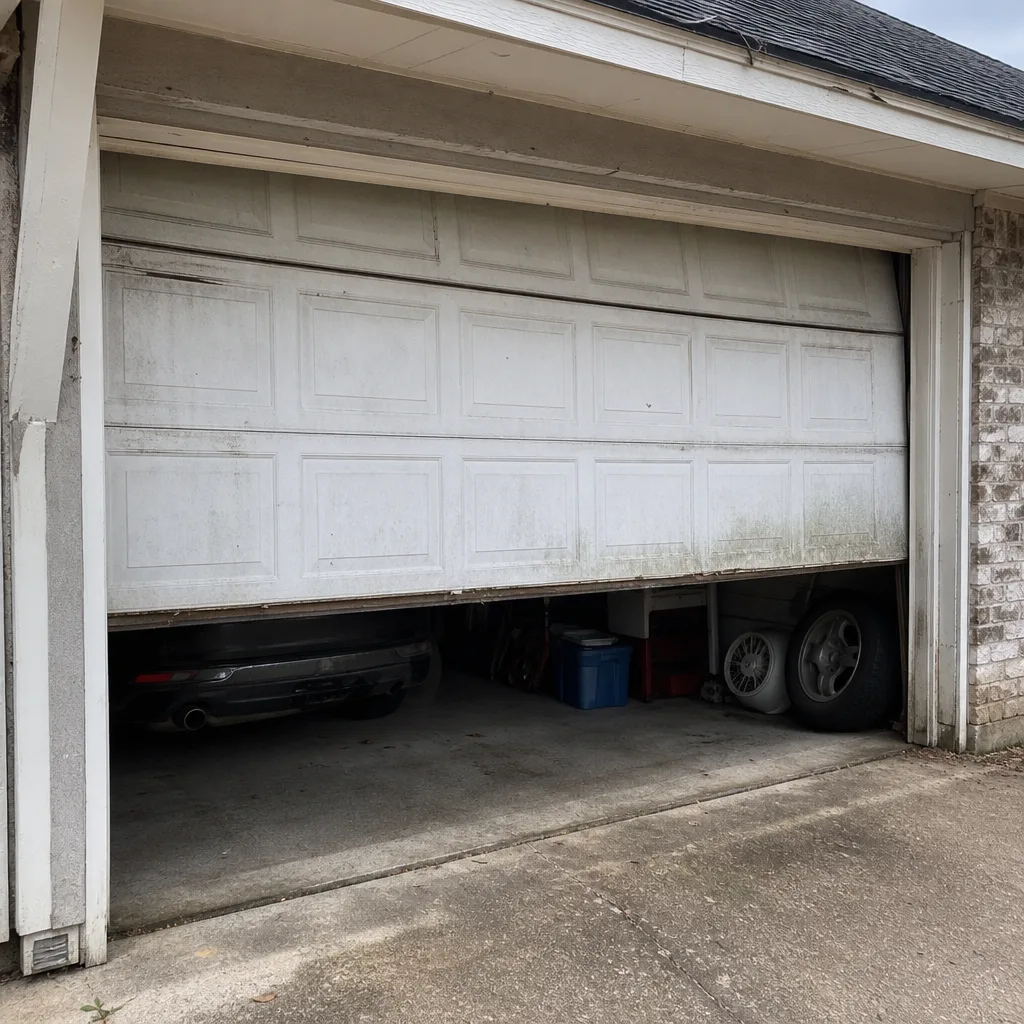
Call a technician when the repair involves stored energy, when the diagnosis is uncertain, or when the cost of error exceeds the cost of professional service. Specific scenarios: a broken spring or cable, a door that has come off its tracks, an opener that hums but doesn’t move the door, or any situation where the door is stuck partially open and your vehicle is trapped inside.
Garage Door Installation in Stafford and repair services from Servo Garage Doors Stafford include free estimates with written pricing before any work begins. Call (346) 421-5125. A live person answers, including overnight and on holidays. You’ll receive a named technician, an on-the-way text with arrival tracking, and the documented photo record that traces back to our founding rule: you see the failed part before anyone quotes a replacement.
Frequently Asked Questions
Standard torsion spring replacement for a residential door in Stafford typically runs $180-$340, including both springs, labor, and balance adjustment. Extension spring systems, found on older doors, range $140-$260. The exact price depends on door weight, spring cycle rating, and whether additional components like cables or bearings need replacement. Call (346) 421-5125 for a written estimate with no obligation.
No. Even if you have the mechanical skill and proper winding bars, replacing a single spring in a pair is false economy. The unbroken spring has endured identical cycle loading and will fail soon. Professional practice is always paired replacement with matching specifications, documented on the invoice.
Humidity expansion, particularly in Stafford’s subtropical climate, swells wood-composite door panels and increases friction in the track system. The opener’s force settings, calibrated for winter conditions, may be insufficient for summer drag. A technician can distinguish between normal seasonal variation and a developing mechanical problem requiring adjustment.
At Servo Garage Doors Stafford, the price quoted is the price charged. Clause 1 of The Haven Standard requires a flat, written price and written scope before any work starts. If additional issues are discovered, a new written amendment is presented for your approval. No surprises, no verbal add-ons.
Yes. Service trucks stock torsion springs in common wire diameters and lengths for Stafford’s typical residential door sizes, along with cables, rollers, hinges, and logic boards for LiftMaster, Chamberlain, and other major brands. Most standard repairs are completed in a single visit. Specialty or oversized components are ordered with next-day availability.
Check the diagnostic LED pattern first. One flash indicates a safety sensor issue, often fixable with alignment or cleaning. Five flashes typically signals a logic board failure, which may justify replacement on openers over 10 years old. If the opener hums but the door doesn’t move, the trolley carriage or drive gear may have failed. A technician can assess whether repair economics favor fixing the existing unit or installing a new opener with modern safety features and battery backup. Browse our more guides & resources for additional troubleshooting help.
The Bottom Line
The DIY-vs.-professional decision for Stafford homeowners isn’t about mechanical pride or tool ownership. It’s about stored energy. Below the boundary, lubrication, weatherstrip replacement, sensor alignment, and battery swaps save money and build familiarity with your system. Above it, torsion springs, cables, and loaded hardware create injury risks that skill cannot eliminate. The financial comparison favors professional service for stored-energy tasks, particularly when you account for the secondary failures that DIY attempts often create. Wherever you draw your personal line, demand documentation: photos of failed parts, part numbers on invoices, and written warranty terms. Evidence outlasts assurances.
Written by Marcus Deller, Owner at Servo Garage Doors Stafford, serving Stafford since 2015.