
Last updated September 22, 2026
Full 25-point door and opener safety check with every visit - springs, cables, rollers, tracks, and your LiftMaster or Chamberlain opener included
You get a price before we start. It does not change when the truck arrives.
 Before
 After
After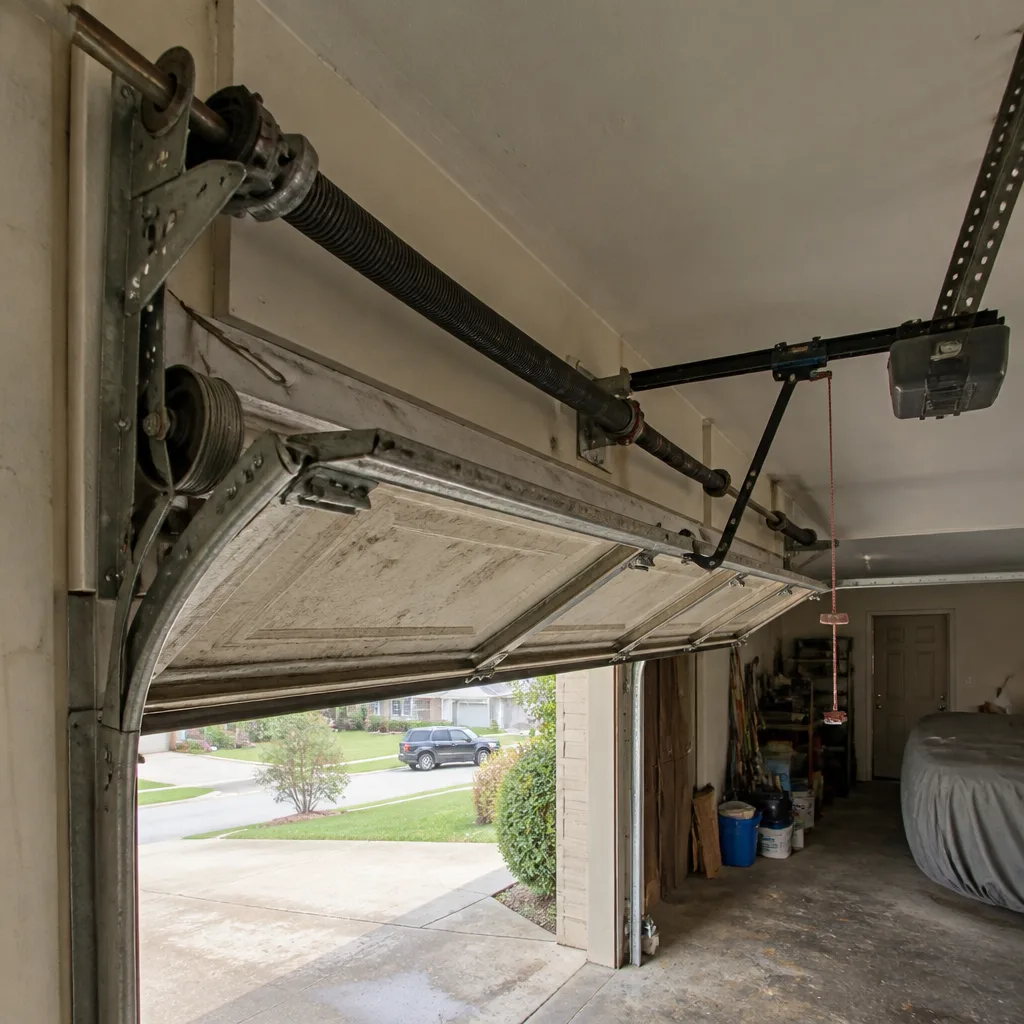 Before
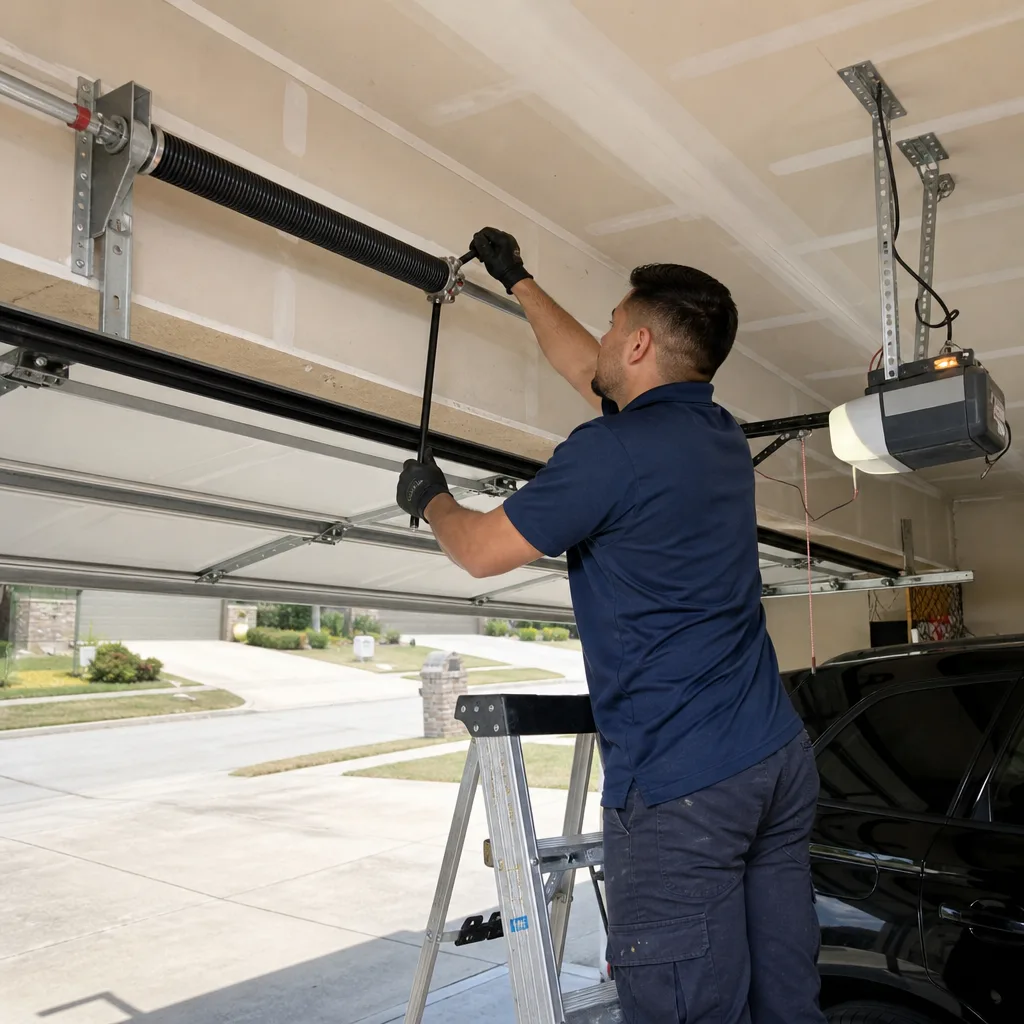 After
After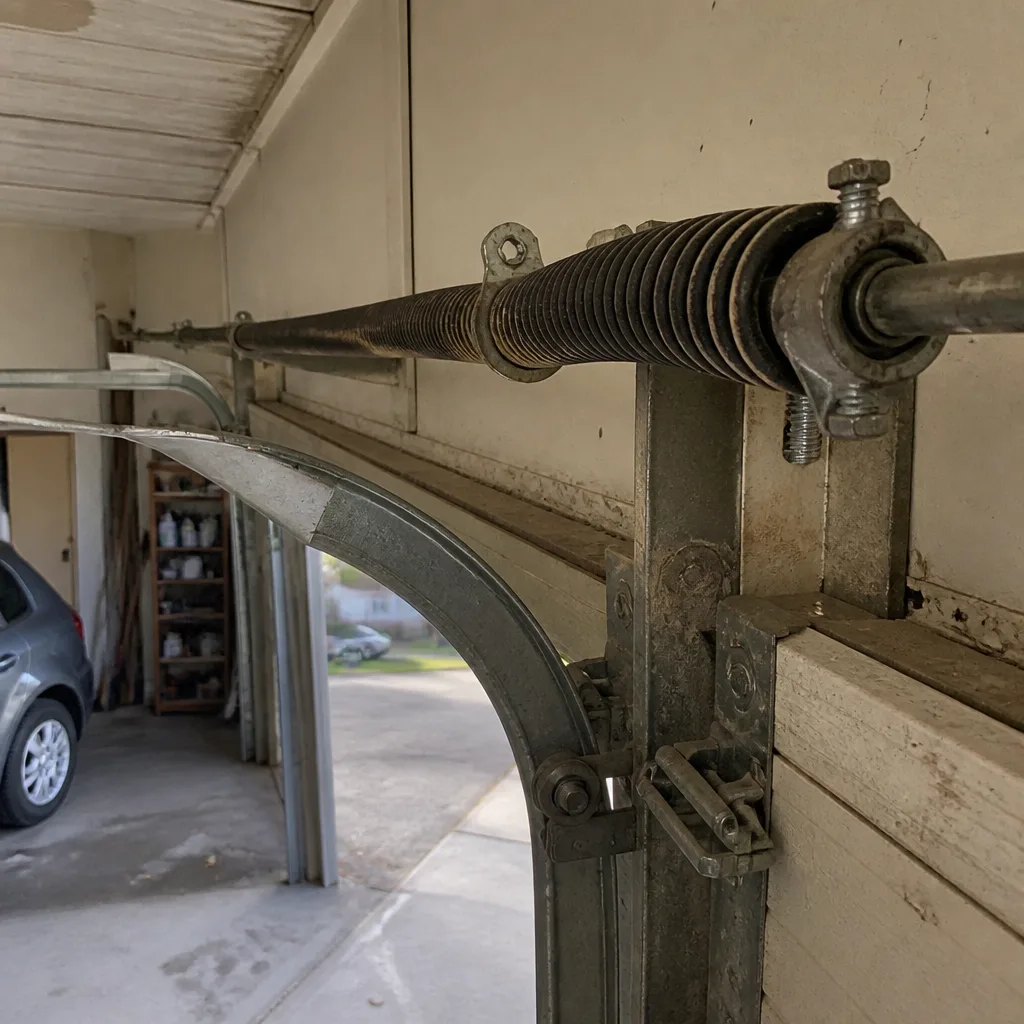 Before
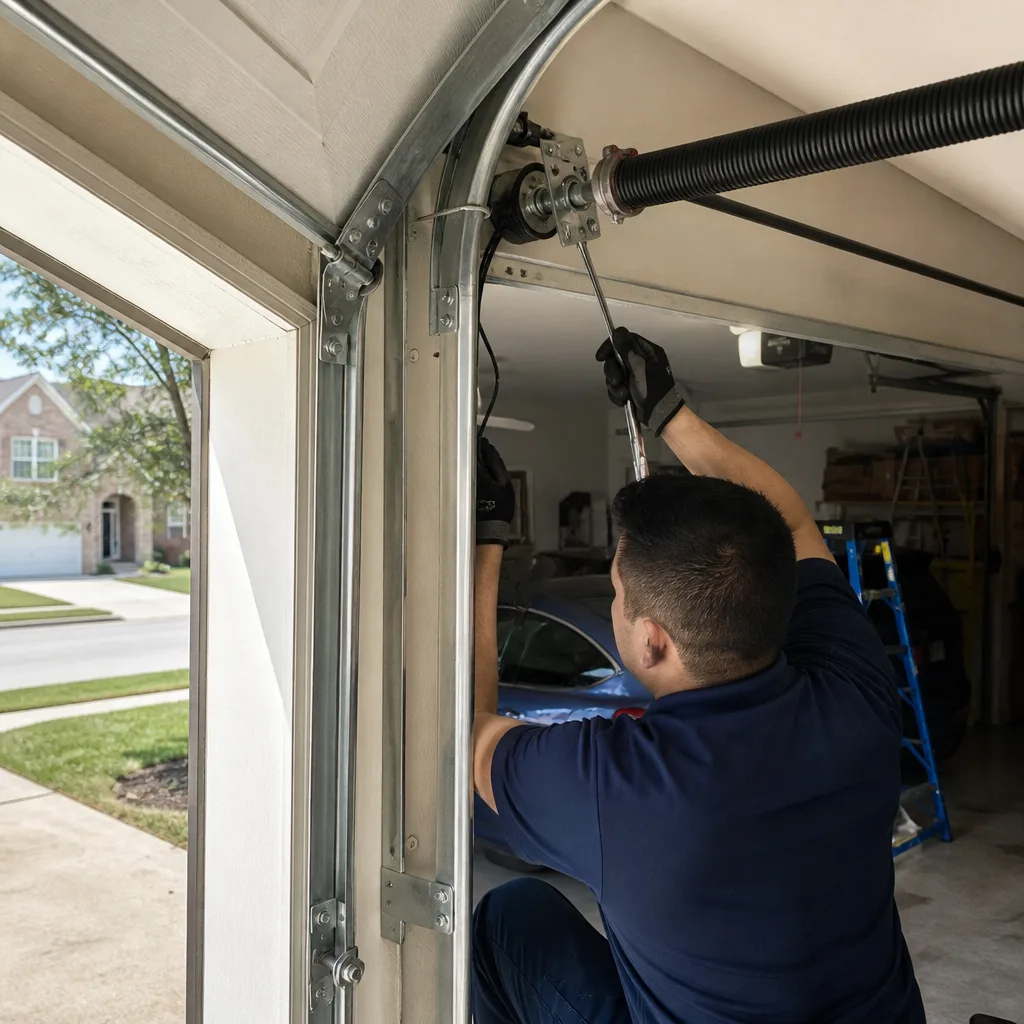 After
AfterGarage Door Repair Maintenance Checklist for Stafford Homeowners
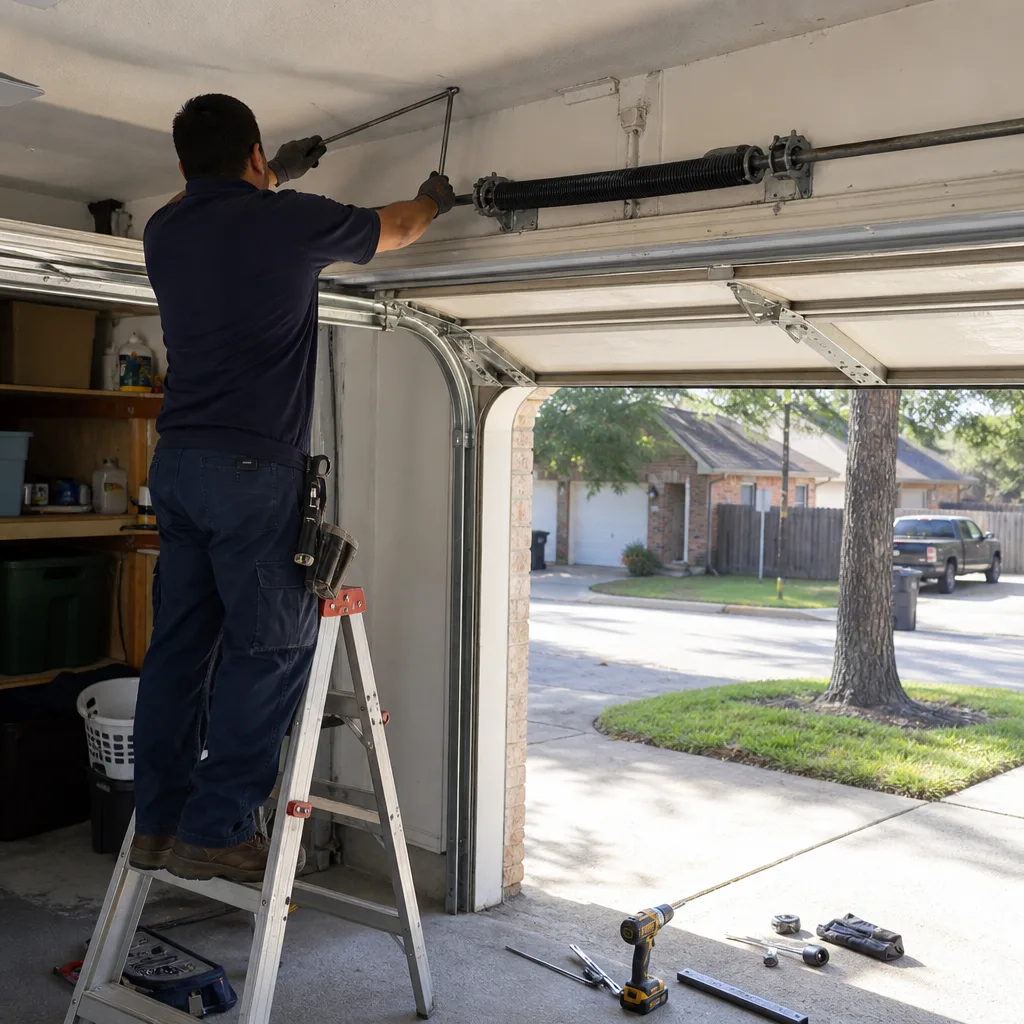
Torsion spring life is rated in cycles, not years. A typical 10,000-cycle spring in a Stafford household that opens the door four times daily reaches its rated limit in roughly six years and ten months, regardless of how pristine the tracks look or how recently the rollers were lubricated. Most maintenance checklists fail because they treat garage door repair and care as a calendar exercise rather than a mechanical one. This guide gives Stafford homeowners measurable pass-fail criteria for every inspection point, real-world cycle-to-year conversions based on actual use patterns, and a dated log format that creates a paper trail for warranty claims and resale documentation.
Quick Answer
A proper garage door maintenance checklist for Stafford homeowners includes monthly visual inspection of cables and rollers, quarterly lubrication with silicone-based products, semiannual balance and reversal testing, and annual professional inspection of spring tension and hardware torque. For related reading, see our Garage Door Warning Signs: A Stafford Homeowner’s Reference Guide. Tasks break cleanly into homeowner-safe work (lubrication, visual checks, balance tests) and technician-only work (spring adjustment, cable replacement, track realignment). Measured against manufacturer specifications, a well-maintained door in Stafford’s climate should operate within 2 inches of neutral balance, show zero cable fraying beyond one broken strand, and run with roller noise below conversational volume.
Table of Contents
- Understanding Cycle Life: Why Years Don’t Matter
- Monthly Visual Inspection: What to Look For
- Quarterly Lubrication: Products and Procedures
- Semiannual Balance and Reversal Testing
- Annual Professional Inspection: Scope and Standards
- Stafford-Specific Conditions: Heat, Humidity, and Soil
- Maintenance Log Template: Building Your Paper Trail
- DIY vs. Technician: The Safety Boundary
 Before
 After
AfterUnderstanding Cycle Life: Why Years Don’t Matter
Every garage door spring carries a cycle rating stamped or tagged by the manufacturer. Standard torsion springs are rated at 10,000 cycles. High-cycle springs run 25,000 to 50,000. A cycle is one complete open-and-close sequence. The math is unforgiving.
Here’s how daily use translates to calendar life in a typical Stafford home:
| Daily Cycles | 10,000-Cycle Spring | 25,000-Cycle Spring | 50,000-Cycle Spring |
|---|---|---|---|
| 2 (single commuter, weekend use) | 13.7 years | 34.2 years | 68.5 years |
| 4 (two working adults, school drop-offs) | 6.8 years | 17.1 years | 34.2 years |
| 6 (active household, frequent errands) | 4.6 years | 11.4 years | 22.8 years |
| 8+ (home business, teen drivers, multi-generational) | 3.4 years | 8.6 years | 17.1 years |
The Stafford market skews toward the 4-to-6 cycle range. We’ve measured this across our service records: households in the Quail Run and Meadow Creek areas average 4.2 cycles daily, while homes near Stafford Municipal School District with teen drivers push 6.5. A 10,000-cycle spring installed in 2018 is living on borrowed time in 2025 if the household is active.
This matters because maintenance cannot extend cycle life indefinitely. Lubrication reduces friction and prevents corrosion, but it does not change the metallurgical fatigue limit of the wire. What maintenance does is prevent secondary failures: a dry, corroded spring breaks sooner than a lubricated one, and a poorly maintained door imposes uneven load that accelerates wear on cables, rollers, and the opener’s trolley carriage.
The checklist that follows assumes you know your spring’s cycle rating and your household’s daily use pattern. If you don’t, a technician can measure wire diameter, coil count, and inner diameter to calculate the existing spring’s rating, or you can check for a color code tag on the stationary cone. Garage Door Repair in Stafford services include spring specification verification as part of any inspection.
Monthly Visual Inspection: What to Look For
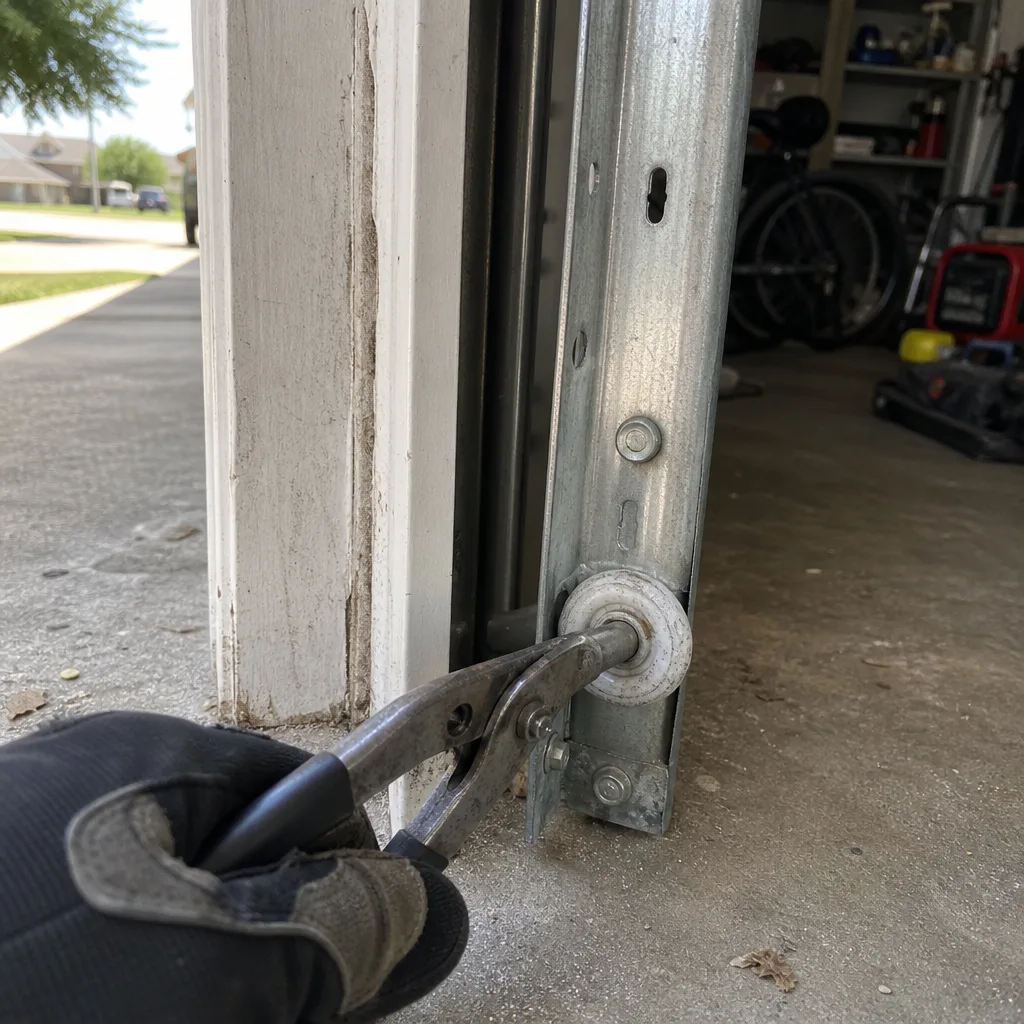
Spend ten minutes once a month with the door closed and the opener disconnected. Use a flashlight. You’re looking for measurable degradation, not vague “wear.”
Cables: The Fraying Threshold
Lift cables are braided steel, typically 7×19 construction (seven strands of nineteen wires each). Inspect the full length, paying special attention to the bottom bracket attachment and the drum wrap area where the cable bends sharply.
- Pass: Uniform dark color, no visible broken wires, no rust blooming at strand intersections.
- Monitor: One broken wire visible anywhere in the braid. Document with photo and date; recheck in 30 days.
- Fail / Call technician: Two or more broken wires, any rust scaling that flakes when touched, or any cable flattening or kinking. A cable with two broken strands has lost roughly 15% of its rated strength and is operating below safety margin.
We’ve replaced cables in Stafford’s Sweetbriar neighborhood where homeowners monitored a single broken strand for eight months without progression, and we’ve seen cables with three broken strands fail catastrophically during a routine open cycle. The threshold is not negotiable.
Rollers: Wear Indicators Without Tools
Steel rollers run on a stem with a wheel containing ball bearings. Nylon rollers are quieter but the wheel material itself wears.
- Steel roller fail: Visible wobble in the wheel when the door moves, grinding noise, or rust weeping from the bearing seal. A healthy steel roller spins freely by hand with no grittiness.
- Nylon roller fail: Cracking in the wheel material, flat spots where the wheel has stopped rotating and slid instead, or any visible wear that has reduced wheel diameter by more than 1/16 inch.
- Stem condition: Bent stem, loose fit in the hinge bracket, or any sign the roller has popped out of track.
Most doors have ten to twelve rollers. You don’t need to replace one failing roller; replace the full set or at minimum the paired rollers on any given section. Mismatched roller diameters create binding.
Track and Hardware
- Check track mounting brackets for loose bolts. The vertical track should have no gap between the jamb bracket and the door frame.
- Inspect hinges for cracks, especially at the knuckle where the pin passes through. A cracked hinge places shear load on the door section and will eventually tear the panel.
- Look for rust on bottom sections, particularly if the door faces prevailing rain or sprinkler spray. Stafford’s clay-heavy soils can hold moisture against the bottom seal.
Weather Seal
The bottom seal should contact the floor continuously with no gaps. In Stafford, where summer thunderstorms drop heavy rain in short bursts, a compromised seal allows water intrusion that rusts bottom hardware and delaminates wood-composite door sections. Press the seal with your finger; it should rebound to shape. If it stays compressed or shows cracking, replacement is straightforward homeowner work.
Quarterly Lubrication: Products and Procedures
The wrong lubricant is worse than none. WD-40 is a water displacement formula, not a lubricant, and in Stafford’s humidity it evaporates within weeks leaving a gummy residue that collects grit. We specify silicone-based spray or lithium grease for all applications.
Product Selection for Stafford’s Climate
Stafford’s average relative humidity runs 75% in summer mornings, dropping to 55% by afternoon. This swing condenses moisture on metal surfaces. Silicone spray with Teflon additive (DuPont, Blaster, or equivalent) adheres to metal and repels water. Lithium NLGI #2 grease works for screw-drive opener rails and high-load pivot points.
Never use petroleum-based grease on plastic components. It degrades nylon rollers and PVC weather seal. If you’re unsure of a component’s material, default to silicone spray.
Lubrication Points and Procedure
- Disconnect the opener. Pull the emergency release cord and verify the door moves freely by hand.
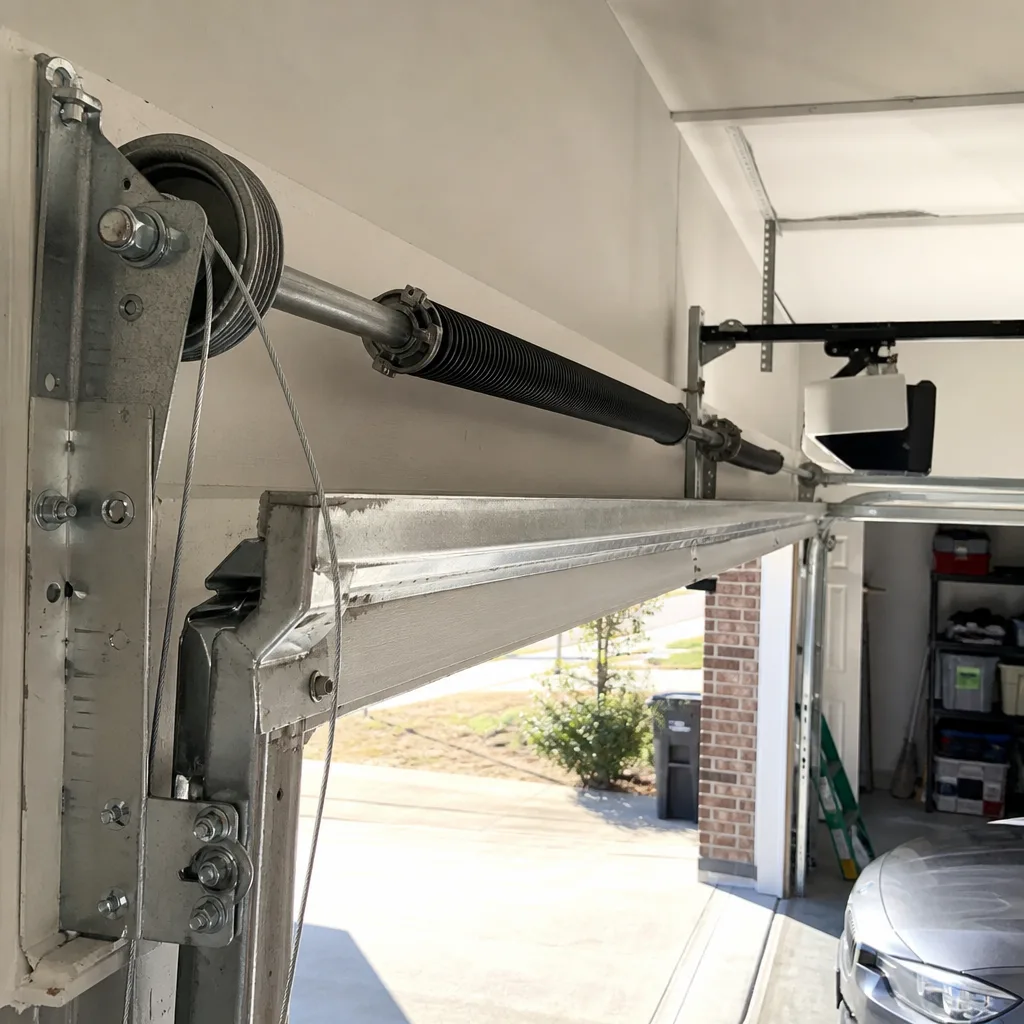
- Torsion spring. Spray lightly across the full coil length. Wipe excess with a rag. You’re lubricating to prevent inter-coil corrosion, not to make the spring slippery.
- Rollers. Spray the bearing area where the wheel meets the stem. Spin the wheel to work lubricant in. For steel rollers, a single short burst suffices. For nylon rollers, use even less; excess attracts dust.
- Hinges and pivot points. Spray the pin bore and the hinge knuckle. Open and close the door manually to distribute.
- Track interior. Lightest application of all. A thin film reduces friction; excess collects debris and can cause roller slip. Wipe the track with a clean rag after spraying.
- Lock mechanism. If your door has a manual lock, spray the bolt and keyway. Stafford’s humidity causes lock corrosion that seizes the mechanism when you need it most.
- Opener rail or screw. For chain-drive openers, lubricate the full chain length with lithium grease. For screw-drive, apply manufacturer-specified grease to the screw threads. Belt-drive openers require no rail lubrication.
After lubrication, run the door through three complete cycles by hand, then reconnect the opener and run two powered cycles. Listen for noise reduction. If grinding or squealing persists, a component needs replacement, not more lubricant.
Semiannual Balance and Reversal Testing
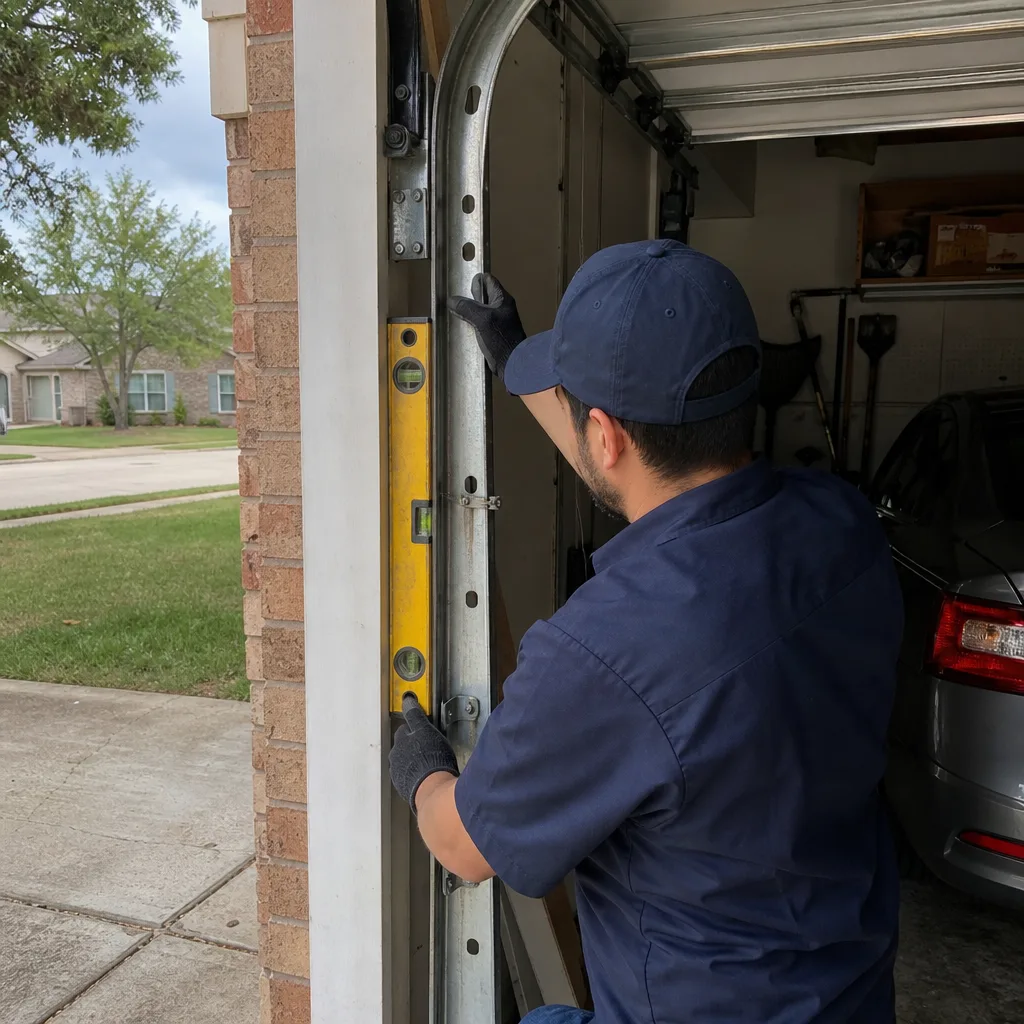
These two tests measure whether the door is safe to operate and whether the opener’s safety systems function. Both take under five minutes. Perform them in April and October, before summer heat and winter cold stress the system.
The Balance Test: The 2-Inch Rule
A properly balanced door stays in place when stopped at any position. Spring tension exactly offsets the door’s weight.
- Close the door and disconnect the opener.
- Raise the door manually to waist height and release it.
- Observe:
- Pass: Door remains within 2 inches of the release point, either direction.
- Monitor: Door drifts 2 to 6 inches. Spring tension is changing; schedule professional inspection within 30 days.
- Fail: Door falls rapidly or rises on its own. Do not operate. Call for service. An unbalanced door imposes dangerous load on the opener and can cause uncontrolled descent.
The 2-inch rule comes from DASMA (Door and Access Systems Manufacturers Association) technical data sheet #167. We’ve found it holds across all major brands we service in Stafford, including Wayne Dalton and Amarr systems with their proprietary spring configurations.
The Reversal Test: Force and Obstruction
All openers manufactured after 1993 must reverse on contact with an obstruction. The test has two parts.
Force setting test: Place a 2×4 flat on the floor centered under the door path. Close the door using the opener. The door must reverse within 2 seconds of contact. If it does not, the force setting is excessive. Adjust per manufacturer procedure or call a technician.
Photo-eye test: With the door opening, pass a leg through the beam path. The door must reverse immediately. Clean the photo-eye lenses with a dry cloth; Stafford’s dust and pollen coat them seasonally. Verify alignment: both units should show steady indicator lights, not blinking.
Safety note: Do not use your body to test reversal. Use the 2×4 method or a roll of paper towels. The force required to injure a hand is well below the opener’s stall torque.
Annual Professional Inspection: Scope and Standards
Some maintenance requires tools and training a homeowner should not acquire for a once-a-year task. The annual professional inspection covers what monthly and quarterly work cannot reach.
What a Technician Measures
- Spring tension with winding bars: Torsion springs are adjusted with solid steel winding bars inserted in the cone cogs. Extension springs require equalization of cable tension. Both operations store lethal energy. Clause 4 of The Haven Standard requires our technicians to photograph spring condition before quoting replacement, so the customer sees the evidence.
- Cable drum set and wrap: Cables must wrap on the drum in a single layer with no overlap or gap. Improper set causes uneven lift and door binding.
- Track plumb and level: Vertical tracks must be plumb within 1/4 inch over their full height. Horizontal tracks must slope 1/4 inch back toward the opener for proper roller engagement.
- Opener force and limit settings: Travel limits are adjusted so the door seals at bottom without over-travel that stresses the opener. Force settings are verified with a calibrated load cell, not guesswork.
- Hardware torque: All bolts and lags are checked to manufacturer specification. A loose track bolt allows movement that enlarges the hole and requires re-drilling.
At Servo Garage Doors Stafford home, the annual inspection closes with a documented photo record delivered to the customer: spring condition, cable wear points, roller status, and any hardware requiring attention. This traces to our founding rule from 2015, now Clause 4 of The Haven Standard. The customer sees what we found before we quote, and sees what was done after we leave.
The inspection also verifies cycle count against rated life. If your spring is approaching its limit, we quote replacement with a written price and scope before any work begins, per Clause 1. No surprises, no “while we’re here” additions.
Stafford-Specific Conditions: Heat, Humidity, and Soil
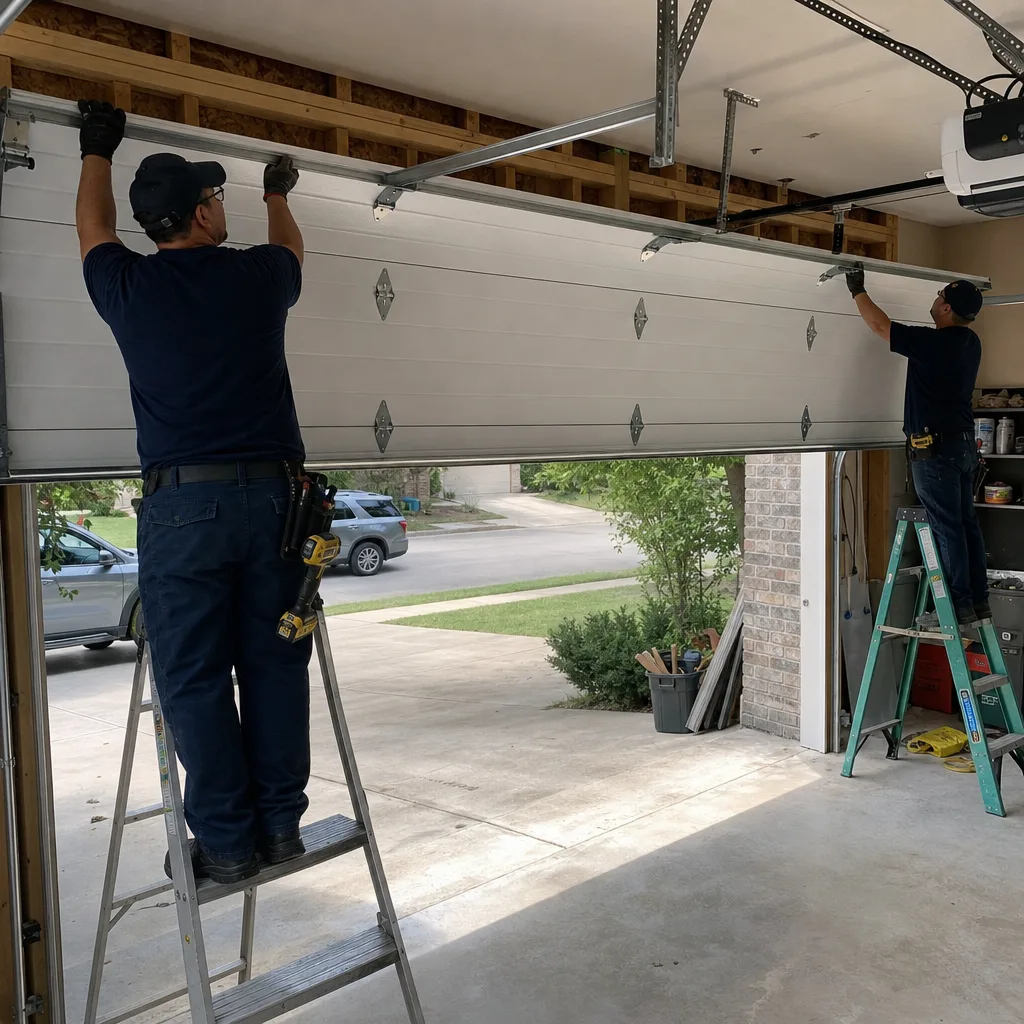
Garage doors in Stafford face conditions that alter maintenance intervals and product selection.
Summer Heat and Opener Electronics
Garage interior temperatures in Stafford exceed 110°F regularly in July and August. Opener logic boards, the circuit boards that control motor operation and safety inputs, are rated for ambient temperatures to 140°F but suffer accelerated capacitor aging above 120°F. We’ve replaced more logic boards in August than any other month, particularly in west-facing garages with poor ventilation.
Mitigation: ensure your garage has passive ventilation, and consider a logic board with higher temperature rating if replacing an opener. Craftsman and Raynor units we install in Stafford include thermal protection that cycles the motor rather than allowing continuous high-temperature operation.
Humidity and Lubricant Selection
Stafford’s Gulf Coast humidity means morning condensation on all metal surfaces. Petroleum-based lubricants emulsify with this moisture and wash off vertical surfaces. Silicone spray adheres and repels water. Reapply quarterly, not annually, during high-humidity months (May through October).
Clay Soil and Foundation Movement
Stafford sits on expansive clay soils that shrink and swell with moisture. This moves garage slabs and can shift door frames out of square. Signs include:
- Door binds at one side of the header
- Light visible through one jamb but not the other when closed
- Track brackets pulling away from the frame
These are not maintenance items; they’re structural. We document frame shift during inspection and refer to foundation specialists when movement exceeds 1/2 inch. Attempting to adjust tracks to compensate for foundation movement creates binding that destroys rollers and hinges.
Wind Load and Code
Fort Bend County, including Stafford, requires garage doors to meet wind load ratings per the International Residential Code. If you’re replacing a door, the new installation must carry a wind load sticker documenting compliance. This affects insurance claims after storm damage. Our Garage Door Installation in Stafford includes permit pull and inspection scheduling to verify code compliance.
Maintenance Log Template: Building Your Paper Trail
A maintenance log serves three purposes: it reminds you what’s due, it documents condition over time for warranty claims, and it demonstrates care to a buyer if you sell. Browse our more guides & resources for additional homeowner tools. Here’s the format we recommend, derived from The Haven Standard documentation system.
Log Header Information
Record once, update on ownership change:
- Door manufacturer and model
- Opener manufacturer, model, and date of manufacture
- Spring cycle rating and installation date
- Estimated daily cycles
- Technician company and date of last professional inspection
Monthly Entry (Visual Inspection)
| Date | Cable Condition | Roller Condition | Track/Hardware | Weather Seal | Notes |
|---|---|---|---|---|---|
| Example: 4/1/2025 | Pass | Monitor: roller #3 slight wobble | Pass | Pass | Photo of roller #3 saved |
Quarterly Entry (Lubrication)
| Date | Product Used | Points Lubricated | Door Cycles After | Noise Level | Notes |
|---|---|---|---|---|---|
| Example: 4/15/2025 | Silicone spray, DuPont | Spring, rollers, hinges, track, lock | 5 | Quiet | No issues |
Semiannual Entry (Balance and Reversal)
| Date | Balance Test Result | Reversal Test Result | Photo-Eye Status | Action Required |
|---|---|---|---|---|
| Example: 4/15/2025 | Pass: 1 inch drift | Pass: reversed on 2×4 | Aligned, steady green | None |
Annual Entry (Professional Inspection)
| Date | Technician/Company | Spring Tension Reading | Cycles Remaining (est.) | Items Replaced | Next Service Due |
|---|---|---|---|---|---|
| Example: 4/20/2025 | Servo Garage Doors Stafford | Within spec | 4,200 | None | 4/20/2026 |
Store this log with your home maintenance records. If a spring fails within its rated cycle life, the manufacturer may warranty it if you can demonstrate proper maintenance. If you sell your Stafford home, the log shows buyers the door was cared for, not just used.
DIY vs. Technician: The Safety Boundary
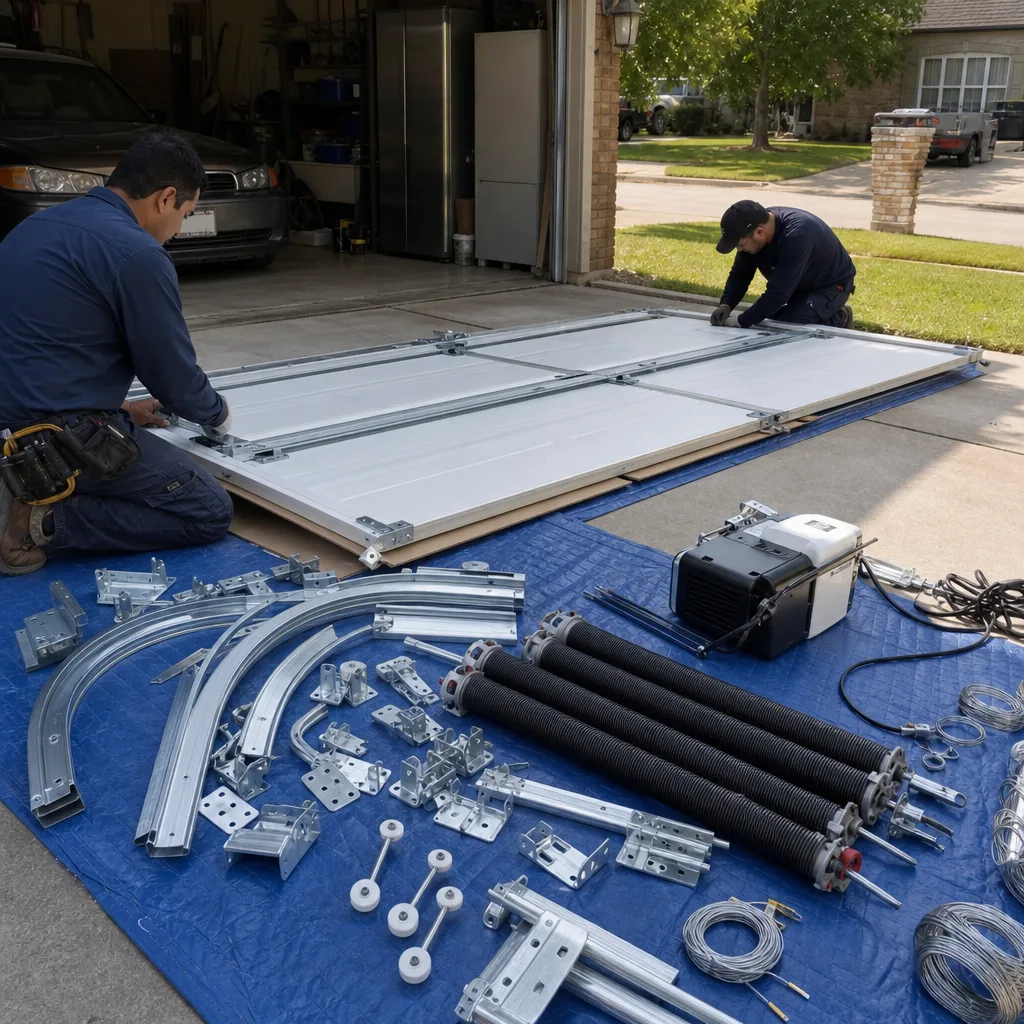
The dividing line is stored energy, not complexity. A homeowner can safely perform any task where a mistake damages property but not people.
Homeowner-Safe Tasks
- Visual inspection of all components
- Lubrication with proper products
- Balance and reversal testing
- Weather seal replacement
- Photo-eye cleaning and alignment
- Remote battery replacement and code programming
Technician-Required Tasks
- Spring adjustment or replacement: Torsion springs store enough torque to cause serious injury or death. Winding bars must be solid steel, precisely sized to the cone, and used with the door fully wound down. Extension springs require containment cables if they fail. We’ve responded to emergency calls in Stafford where homeowners attempted spring work and damaged the door, the vehicle, or themselves.
- Cable replacement: Cables are under full spring tension when the door is closed. Improper release causes uncontrolled spring unwinding.
- Track realignment: Track geometry determines door travel. A track moved without proper tools binds, jumps rollers, or drops the door.
- Opener rail or trolley work: The trolley carriage connects to the door with the opener under tension. Disconnect procedures vary by manufacturer.
Safety caveat: If you discover a broken spring, do not attempt to open the door manually with the opener disconnected. The door weighs 150 to 250 pounds without spring assist, and an uncontrolled drop can crush limbs or destroy the door. Call for service. At Servo Garage Doors Stafford, emergency calls are answered by a live person, 24/7, with a named technician and on-the-way text, not a callback window.
Our Garage Door Opener Repair & Installation in Stafford covers logic board replacement, gear and sprocket service, and full opener replacement when repair is not economical.
Common Mistakes to Avoid
- Using WD-40 as a lubricant. It’s a solvent and water displacer, not a lubricant. In Stafford’s humidity it evaporates and leaves a sticky film that collects grit. Use silicone spray or lithium grease.
- Ignoring a single broken cable strand. One broken strand is a warning. Two is a failure in progress. The threshold is absolute, not approximate.
- Testing reversal with your hand. The 2×4 method or a soft object protects you from the full force of a 1/2-horsepower motor. We’ve treated injuries from homeowners who trusted the safety system without verifying it first.
- Lubricating the chain with grease, then ignoring it. Chain-drive openers need periodic lubrication, but excess grease flings onto the door and floor. Apply sparingly and wipe the chain guard after.
- Assuming a quiet door is a healthy door. Nylon rollers silence a door with worn bearings. The quiet may mask deterioration until the wheel fails completely. Perform visual inspection even when operation seems smooth.
- Skipping maintenance because the door is “new.” A door installed in 2023 with 10,000-cycle springs and 6 daily cycles is already approaching mid-life in 2025. Cycle count, not calendar age, determines service needs.
When to Call a Professional
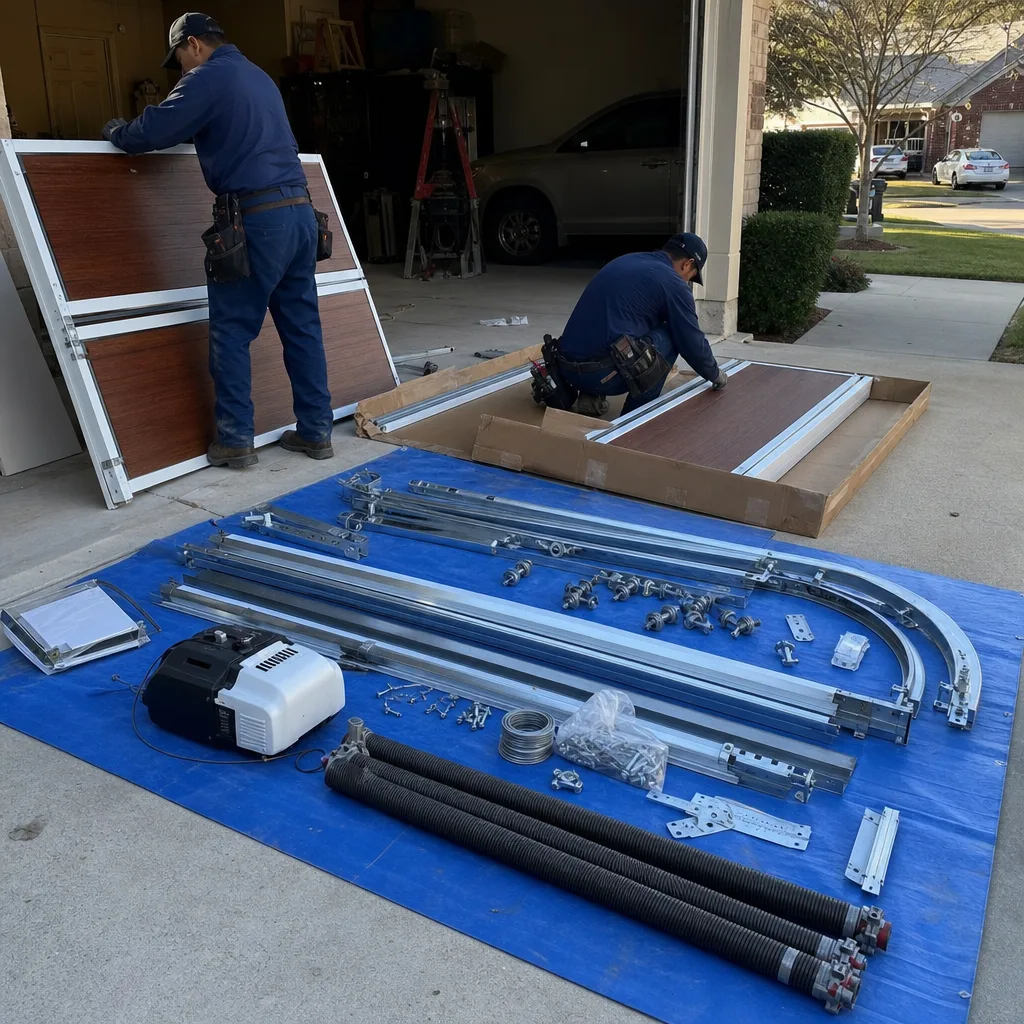
Call a technician when any of these conditions appear: broken spring or cable, door that won’t stay in position during balance test, opener that fails reversal test after photo-eye cleaning and alignment check, track damage or mounting bracket failure, or any grinding or binding that persists after proper lubrication. Also call when your estimated remaining cycle count drops below 2,000, even if operation seems normal. Preventive replacement avoids the emergency call at 6 AM when you’re trying to leave for work.
Servo Garage Doors Stafford offers free estimates in Stafford. Call (346) 421-5125. Every estimate includes a written price and scope before any work begins, per Clause 1 of The Haven Standard, and a documented photo record of findings. We service all major brands including Wayne Dalton and Amarr, and we provide a Free Second Opinion on any written estimate from another company. Bring the paperwork; no coupon or code is required.
Frequently Asked Questions
A professional annual inspection in the Stafford market typically runs $89 to $149, depending on door configuration and accessibility. Lubrication, hardware torque verification, and safety testing are included. If the technician finds worn components, replacement is quoted separately with a flat, written price before any work starts. Call (346) 421-5125 for an exact quote on your door; estimates are free.
Quarterly, using silicone-based spray. Stafford’s humidity swing from morning to afternoon creates condensation cycles that wash off inferior lubricants. Increase to every two months during peak humidity (June through September) if your garage lacks ventilation or faces west.
No. Torsion springs store lethal energy. Proper replacement requires winding bars sized to the cone diameter, knowledge of wind direction (left-wound vs. right-wound), and release of tension in a controlled sequence. We’ve responded to Stafford homes where DIY spring work destroyed the door or caused injury. This is technician-only work under any standard.
It means a properly balanced door, released at waist height, stays within 2 inches of that position. If it drifts more, spring tension has changed. Between 2 and 6 inches indicates monitoring; beyond 6 inches or any rapid movement indicates immediate service need. The rule applies regardless of door weight or spring type.
Warning signs include intermittent operation that worsens in afternoon heat, motor that runs but door doesn’t move (stripped gear or trolley failure), and logic board errors that clear when cooled. If your garage exceeds 120°F regularly, consider upgrading to an opener with thermal protection. Our technicians measure garage ambient temperature during inspection and can recommend appropriate equipment.
No. Clause 1 of The Haven Standard requires a flat, written price and written scope before any work begins. The technician photographs the condition, documents the findings, and presents a single price for the agreed scope. If additional issues are found, they’re documented separately with their own price. You approve each scope independently. No work proceeds without written authorization.
The Bottom Line
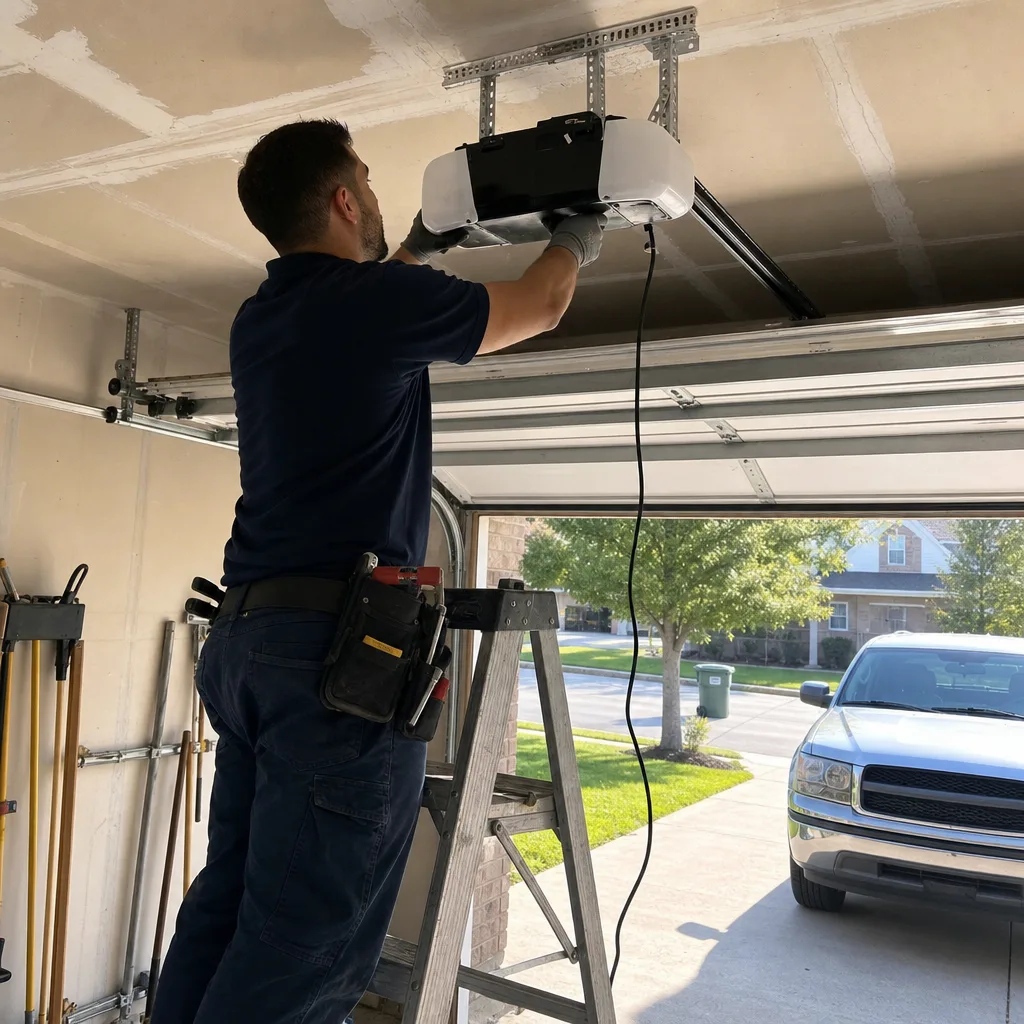
Effective garage door maintenance is measured, not guessed. Know your spring’s cycle rating and your household’s daily use. Inspect monthly with pass-fail criteria, lubricate quarterly with the right product for Stafford’s humidity, test balance and reversal semiannually, and schedule professional inspection annually. Keep a dated log. Replace components before they fail, not after. And respect the safety boundary: stored energy in springs and cables has injured too many homeowners who trusted a YouTube video over physics.
Written by Marcus Deller, Owner at Servo Garage Doors Stafford, serving Stafford since 2015.