
Last updated September 22, 2026
Full 25-point door and opener safety check with every visit - springs, cables, rollers, tracks, and your LiftMaster or Chamberlain opener included
You get a price before we start. It does not change when the truck arrives.
 Before
 After
After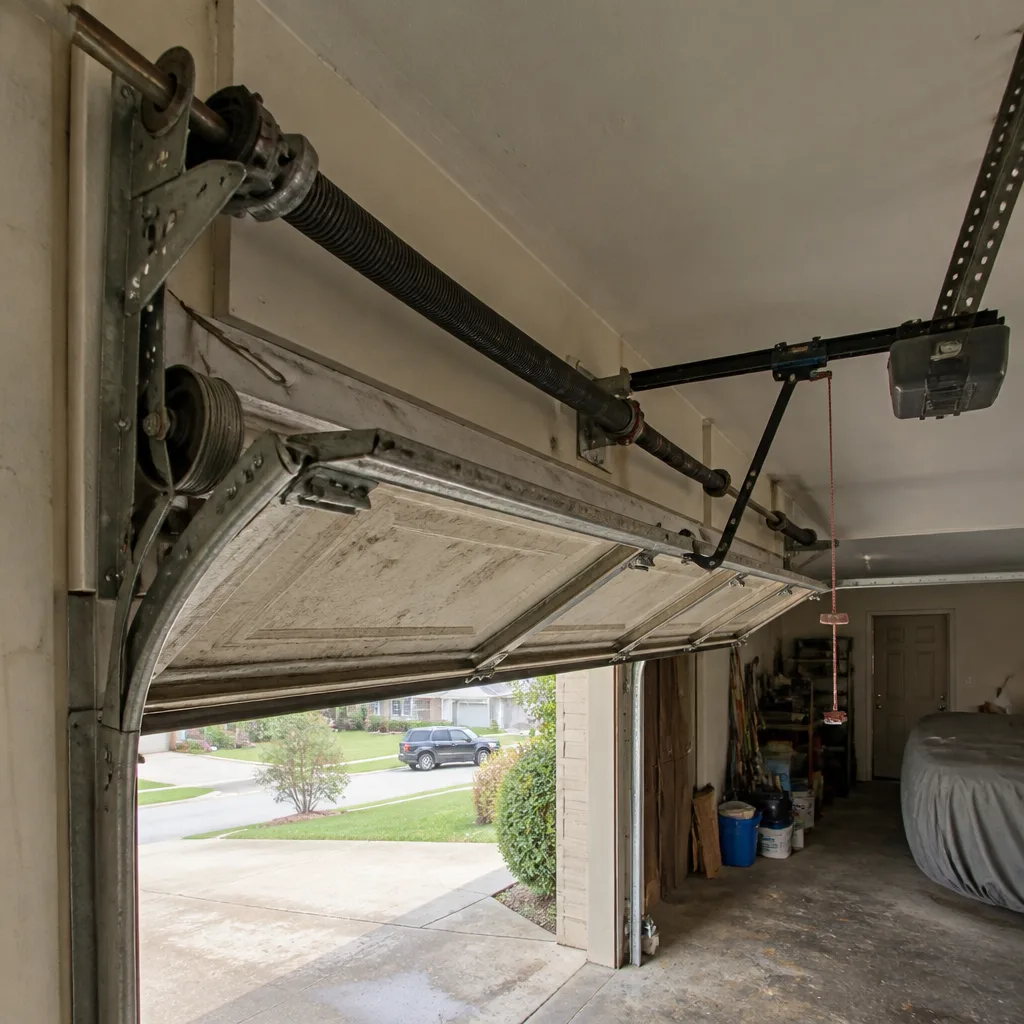 Before
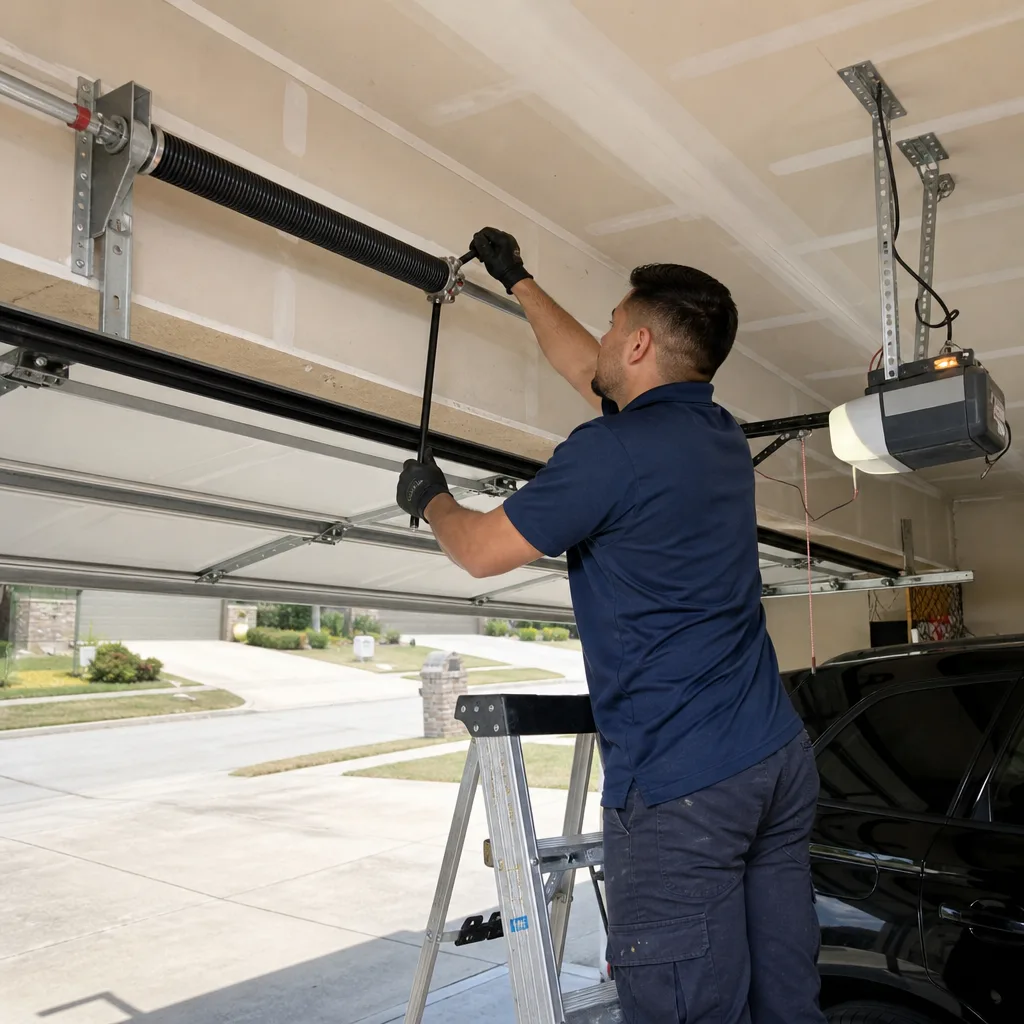 After
After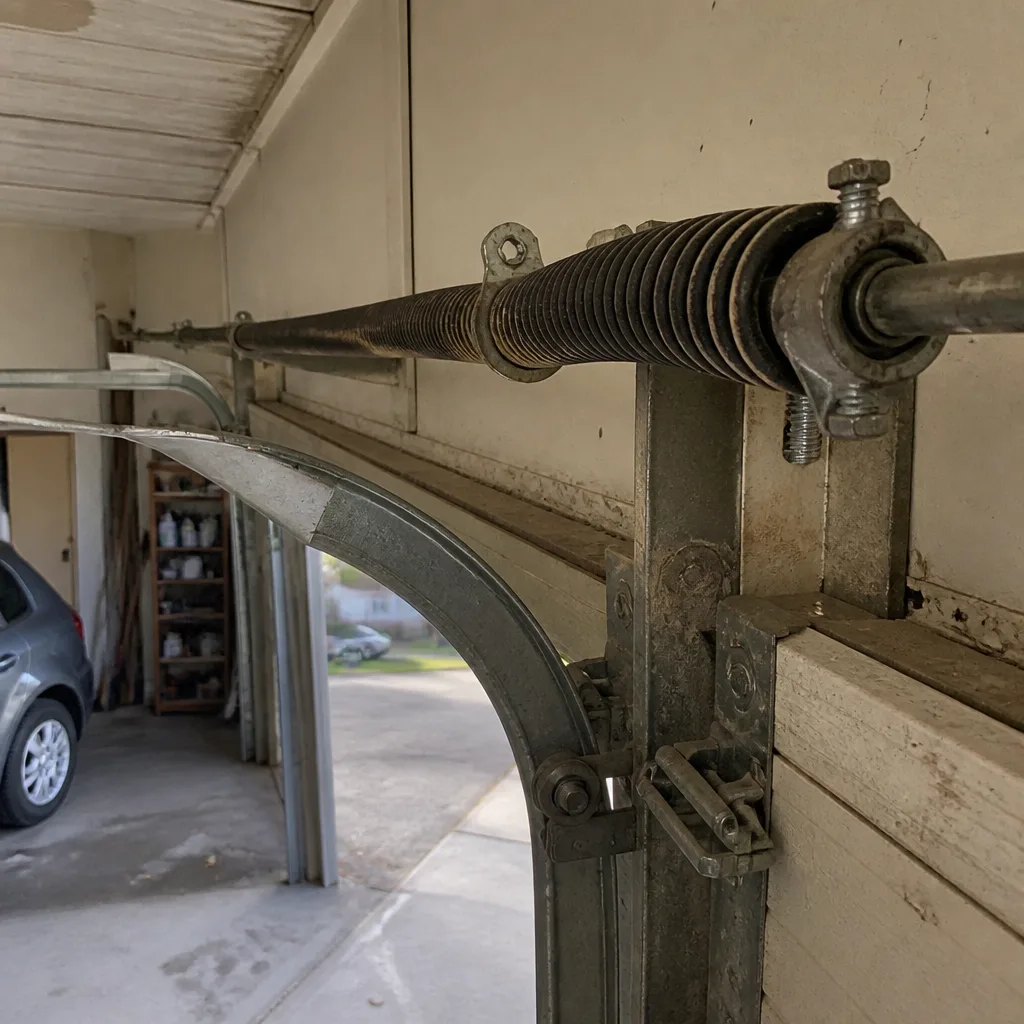 Before
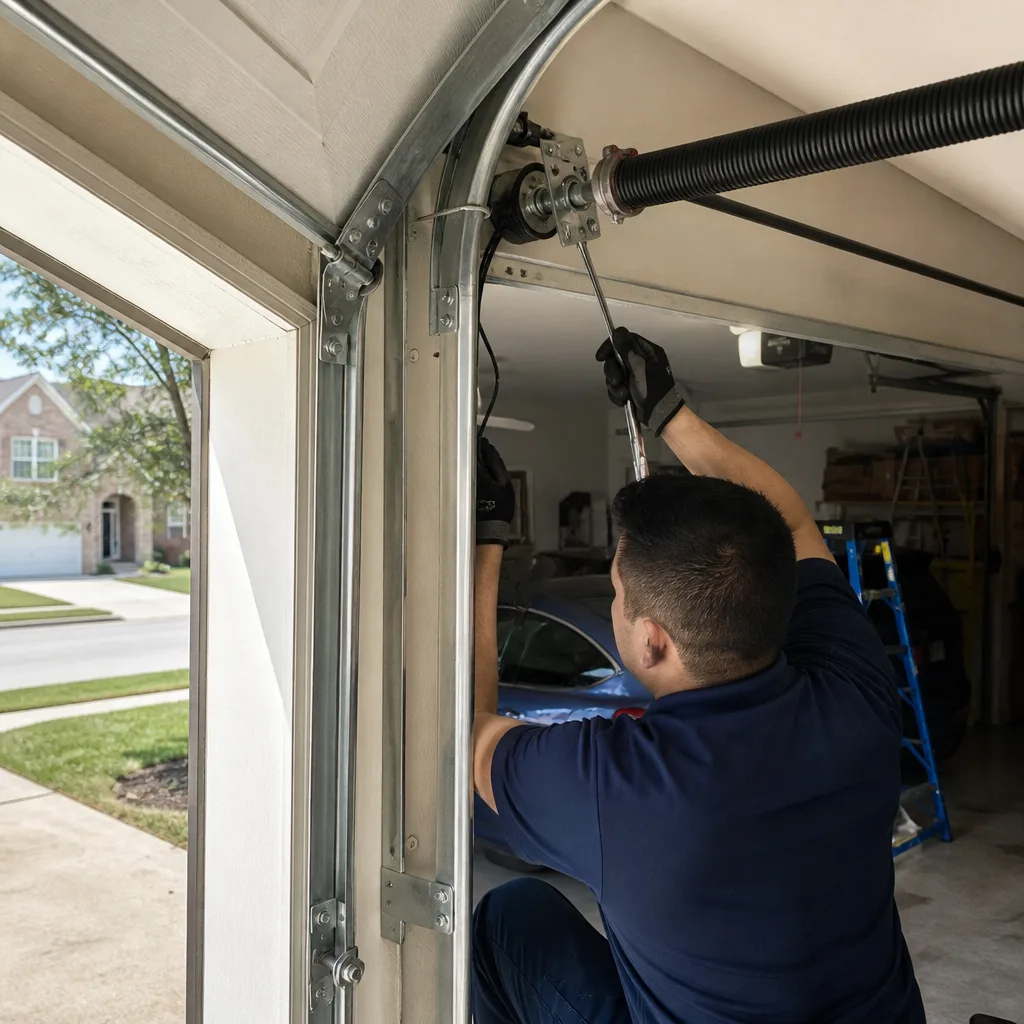 After
AfterThe Complete Guide to Garage Door in Stafford
Industry data suggests roughly 30% of garage door service calls nationwide replace a part that isn’t the root cause. The technician isn’t incompetent; the system incentivizes speed. A visual quote with no photo record rewards the most visible broken part, not the actual failure. In Stafford, where humidity and heat cycling accelerate wear on cables and drums, this problem is worse than the national average suggests. This guide maps the seven interdependent systems that make up every garage door, names their failure modes, and tells you what documentation to demand before anyone touches a wrench. For Garage Door Permits, Codes & Inspections in TX: What You Need to Know, see our compliance overview.
Quick Answer
A garage door is seven interdependent systems: springs, cables, drums, tracks, rollers, opener drive, and weather seal. In Stafford’s climate, cables and drums fail faster than national averages due to humidity and heat cycling. The most common misdiagnosis is replacing a broken spring without inspecting the cables and drums that caused the overload. Before any work begins, demand a written price, a written scope, and a photo record of the failed component.
Table of Contents
- The Seven Systems: What Actually Breaks
- How Stafford’s Climate Destroys Garage Doors Faster
- What a Pre-Quote Photo Record Looks Like (And Why It Matters)
- Repair vs. Replacement: The Five-Year Math
- Three Questions to Ask Any Stafford Contractor
- Brands, Parts, and What Stafford Homes Actually Need
- Common Mistakes to Avoid
- When to Call a Professional
- Frequently Asked Questions
 Before
 After
AfterThe Seven Systems: What Actually Breaks
Most homeowners in Stafford think of their garage door as a single product. It isn’t. It’s seven interdependent systems, and a failure in any one of them cascades into the others when technicians skip inspection and sell the visible symptom.
1. Torsion or Extension Springs
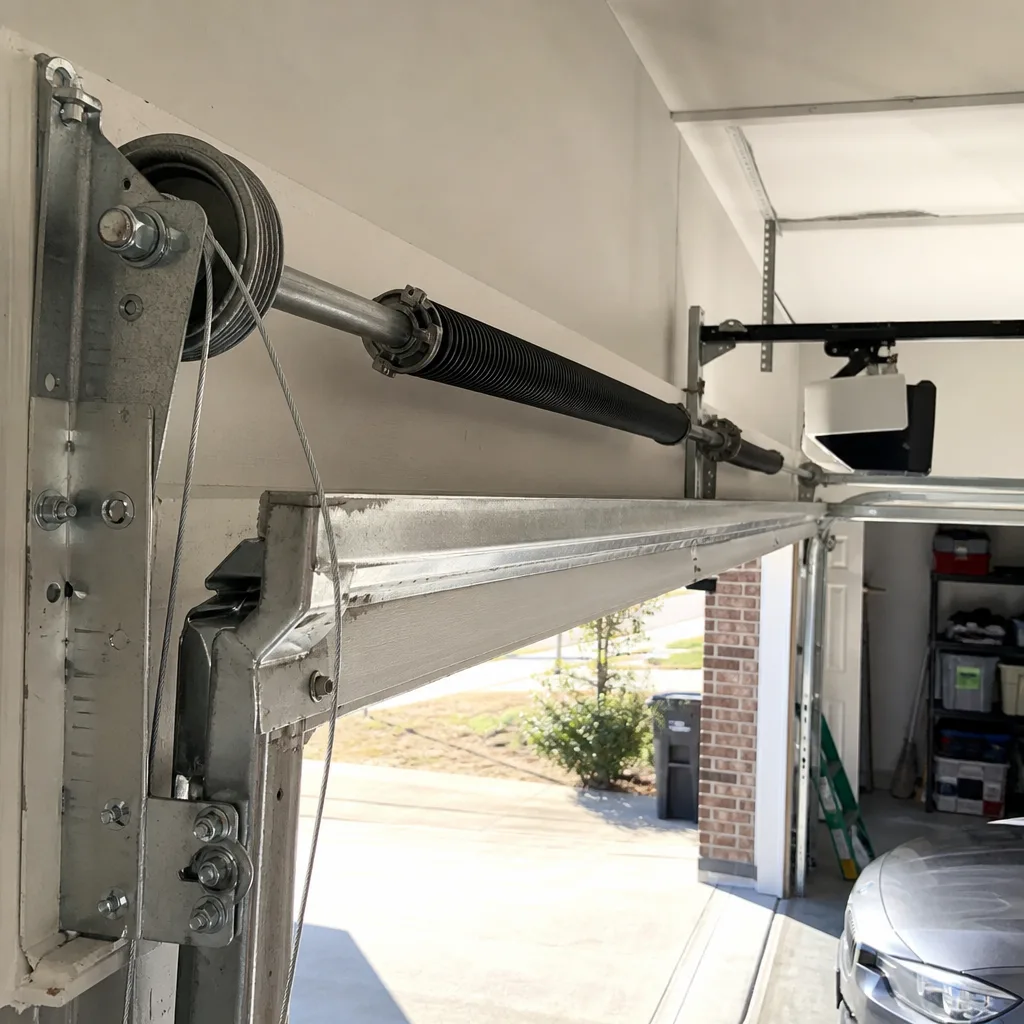
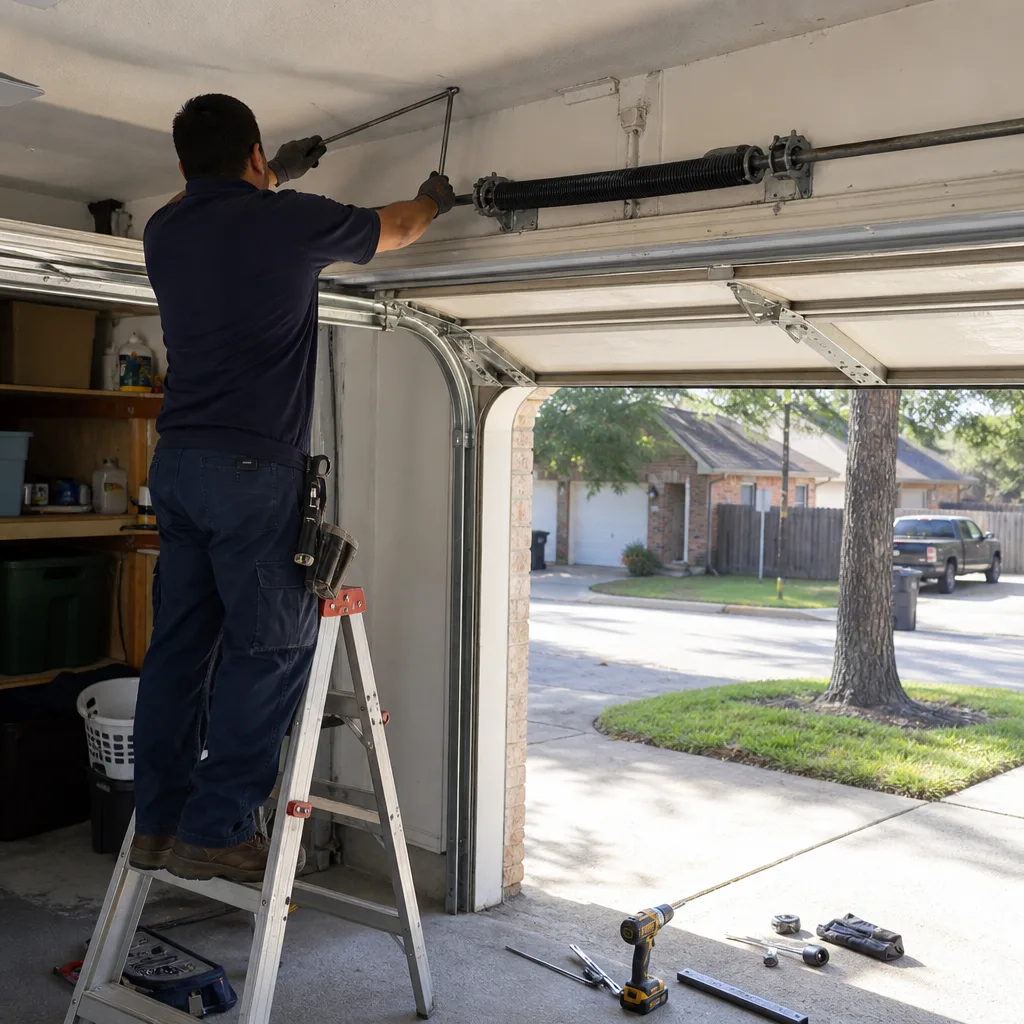
Springs counterbalance the door’s weight, typically 150-250 pounds for a standard 16-foot residential panel. Torsion springs mount above the door on a steel shaft; extension springs run parallel to the horizontal tracks. A torsion spring stores mechanical energy in its coils - when it breaks, you’ll hear a loud bang and the door won’t lift manually.
The failure symptom is unmistakable: a 2-inch gap in the coil where the wire sheared. But here’s what competitors miss: the spring broke because something else changed. Either the door weight increased (water absorption in wooden panels), the cables frayed and threw off balance, or the drums slipped and created unequal tension. Replacing the spring without finding the root cause means the new spring fails in 18 months instead of 7-10 years.
2. Lift Cables
These braided steel lines run from the bottom bracket of each door panel to the drum at the top of the track. They do the actual lifting after the spring provides counterbalance. In Stafford, humidity corrosion attacks cable strands from the inside out. A cable can look intact while 40% of its cross-section has rusted away.
Failure symptom: the door lifts crooked, or one side hangs lower. If both cables fail, the door crashes down. We’ve found cables in Stafford’s First Colony area with internal corrosion so advanced the outer sheath held nothing but rust powder.
3. Cable Drums
Drums are the grooved aluminum or cast-iron wheels at the top of each track that wind and unwind cable as the door moves. The grooves must be clean and dimensionally exact - a worn groove lets cable stack unevenly, which throws off door balance and overloads the spring.
Failure symptom: cable “birdnesting” at the drum, or a door that drifts to one side. Heat cycling in Stafford causes aluminum drums to expand and contract, accelerating groove wear beyond what dry-climate manuals predict.
4. Vertical and Horizontal Tracks
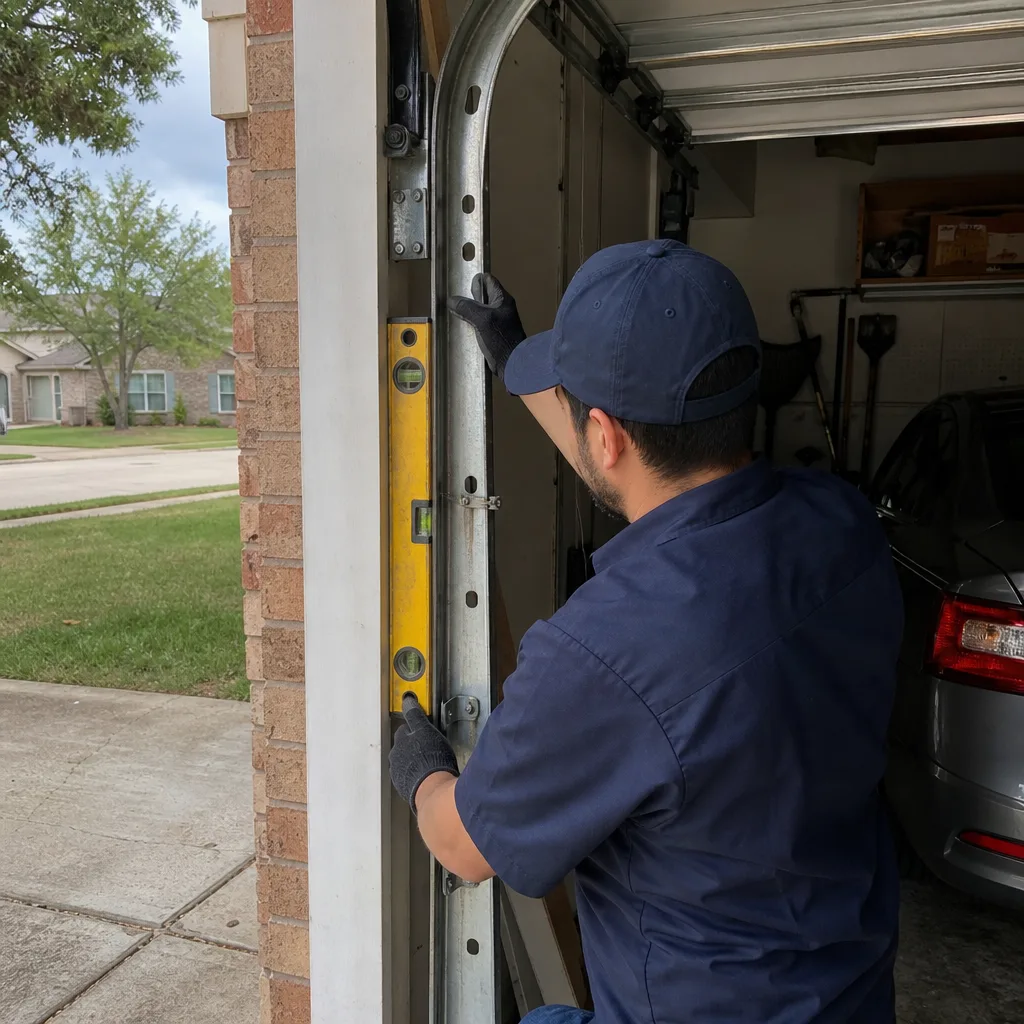
Tracks guide the door’s path. Vertical tracks run from floor to ceiling; horizontal tracks curve back into the garage. They must be plumb within 1/4 inch and parallel within 3/8 inch. A bent track from a minor impact - backing into it with a trailer hitch, common in Stafford’s driveways - creates rolling resistance that burns out the opener motor.
Failure symptom: the door binds at a specific point, or rollers pop out of the track. The root cause is often misdiagnosed as “bad rollers” when the track is the actual problem.
5. Rollers
Rollers are the wheels that ride inside the tracks, typically steel with ball bearings or nylon with no bearings. Nylon rollers are quieter but wear faster; steel rollers last longer but transmit noise. In Stafford, the choice matters because heat degrades nylon faster than the 50,000-cycle rating suggests.
Failure symptom: grinding noise, or the door shuddering at specific points. Worn rollers increase drag, which overloads the opener drive system.
6. Opener Drive System
The opener is not a lifting device - it’s a guidance device. A properly balanced door weighs effectively zero pounds; the opener only controls direction. The drive system includes the motor, the logic board (the computer), the trolley carriage that connects to the door, and the limit switches that tell the opener when to stop.
Failure symptoms vary by component: a logic board failure causes erratic behavior (door reversing for no reason); a stripped trolley carriage causes the motor to run without door movement; bad limit switches cause the door to hit the floor hard or reverse before closing.
We service all major opener brands in Stafford, including LiftMaster, Chamberlain, Genie, and Craftsman. Each uses slightly different limit switch designs and safety sensor protocols.
7. Weather Seal and Perimeter Sealing
The bottom seal and side/top weatherstripping keep water, dust, and pests out. In Stafford, where afternoon thunderstorms drop heavy rain in short bursts, a failed bottom seal channels water directly onto the door’s bottom panel - which is often the first point of rust or rot.
Failure symptom: visible daylight under the closed door, or water pooling inside after rain. The seal is cheap. The panel it destroys is not.
How Stafford’s Climate Destroys Garage Doors Faster
Stafford sits in the Gulf Coast humidity zone with summer highs regularly exceeding 95°F and winter lows dipping near freezing. That temperature swing, combined with 75%+ relative humidity for months at a stretch, creates specific failure modes that national garage door guides don’t address.
Heat Cycling and Metal Fatigue
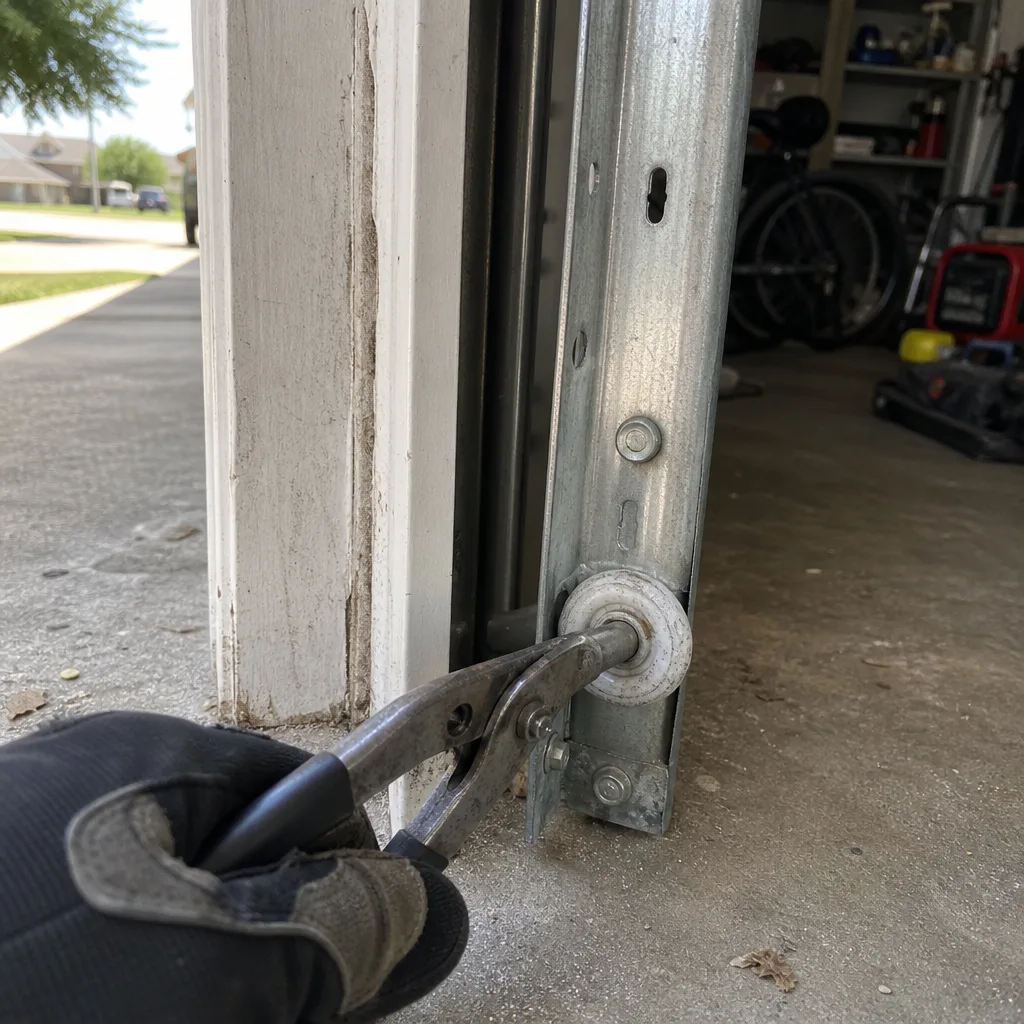
A garage in Stafford can reach 120°F interior temperature in August and drop to 40°F in January. Aluminum drums and steel tracks expand and contract through that range. Each cycle stresses the metal at mounting points and bolt holes. We’ve measured track bracket loosening of 1/8 inch or more after three Stafford summers - enough to throw a door out of plumb and cause binding.
Humidity Corrosion in Cables
Braided steel cables are vulnerable to internal corrosion when humid air penetrates the braid. The outer strands look fine while inner strands turn to rust. In our experience across Stafford neighborhoods from Servo Garage Doors Stafford home service calls, cable replacement frequency runs 40% higher than in drier Texas markets like Amarillo or Lubbock.
Opener Electronics Stress
Logic boards contain capacitors and relays rated for specific temperature ranges. Sustained heat above 105°F degrades capacitor electrolyte, causing voltage irregularities that produce “ghost” behavior - the door opens at 2 AM, or the remote works intermittently. Stafford garages without ventilation fans see this failure mode earlier than the manufacturer’s MTBF (mean time between failures) suggests.
Seal Degradation
Rubber and vinyl weather seals harden and crack faster in UV-plus-heat conditions. A bottom seal rated for 5 years in a Kansas climate may last 2.5-3 years in Stafford. The replacement is inexpensive preventive maintenance; the water damage it prevents is not.
What a Pre-Quote Photo Record Looks Like (And Why It Matters)
This is where Garage Door Repair in Stafford practice diverges from national norms. Servo was built on a founding rule, now Clause 4 of The Haven Standard: the technician photographs the failed component before quoting a replacement. Here’s what that documentation looks like and why it protects you.
What You Should Receive
- Context photograph: wide shot showing the entire door assembly, so you know which door in which garage was inspected.
- Component close-up: the specific failed part, with enough detail to read markings - wire diameter on a spring, part number on a logic board, wear pattern on a drum groove.
- Measurement photograph: the technician’s tape measure or caliper on the component, documenting the dimension that determines replacement specification.
- Written scope: what will be done, what parts will be used, what the flat price covers and what it excludes.
- Written price: the total cost, with no “plus tax and materials” ambiguity.
Why This Protects You From Part Substitution
Without a photo record, you have no evidence of what was actually wrong. A technician can quote you for a “broken torsion spring” and install a used spring, or a spring with fewer cycles than specified, or skip the cable inspection entirely. The photo record creates accountability: you know what was found, and you can verify what was replaced against what was documented.
In Stafford, we’ve seen competitors quote “both springs” when only one failed, or replace a 10,000-cycle spring with a 5,000-cycle unit. The photo record makes this impossible - Clause 4 exists because it happened to customers before The Haven Standard existed.
The documented photo record is included on every visit, not optional. You receive it before the technician leaves. That’s the standard.
Repair vs. Replacement: The Five-Year Math
Homeowners in Stafford often ask whether to repair an aging door or replace it entirely. The decision isn’t emotional; it’s arithmetic with a humidity adjustment.
Repair Extends Useful Life When:
- The door panel is structurally sound - no rust-through, delamination, or impact damage exceeding 6 square inches.
- The track system is original and properly aligned - replacement tracks on a sagging header don’t solve the root problem.
- The repair cost is under 30% of replacement cost, and the door is under 12 years old.
- The opener is functional and has standard safety features (photo eyes, force reversal) - upgrading a functional opener for “smart” features rarely pays back in five years.
Replacement Pencils Out Cheaper When:
- The door has already had two major repairs (spring plus cables, or track plus opener, or panel plus seal).
- The panel material is failing - steel doors with rust-through, wood doors with rot, or fiberglass doors with UV degradation.
- The opener lacks safety eyes or force reversal - these are legally required for replacement installations in Texas, and retrofitting an obsolete opener costs nearly as much as replacement.
- Energy costs matter: an insulated replacement door (R-12 to R-18) reduces garage temperature swing, which extends opener life and reduces HVAC load if the garage shares a wall with conditioned space.
The Stafford Humidity Adjustment
In dry climates, a steel door with surface rust can be sanded and repainted. In Stafford’s humidity, rust accelerates once it penetrates the galvanizing layer. We’ve seen doors that looked salvageable in March require full replacement by September. The threshold for “repairable rust” is lower here. Factor that into your five-year projection.
For Garage Door Installation in Stafford, we measure the opening, discuss insulation and wind-load requirements, and provide a written price before any order is placed. Installation is scheduled, not same-day - the door is measured, ordered to specification, and installed when it arrives.
Three Questions to Ask Any Stafford Contractor
Before any technician enters your garage, ask these three questions. The answers tell you whether you’re getting evidence-based service or a sales pitch.
1. “Will I receive a written price and written scope before any work starts?”
If the answer is “we’ll quote after we look” or “our technician will explain the options,” you’re not getting Clause 1 protection. The price and scope must be in writing, on paper or in text, before tools touch the door. This is non-negotiable. Verbal quotes create ambiguity that always favors the contractor.
2. “Do you photograph the failed component and share it with me before quoting replacement?”
This is Clause 4. Without it, you have no verification that the quoted part is actually failed, or that the part installed matches the part described. Ask to see an example photo record from a previous call. A contractor with nothing to hide will show you.
3. “What does your warranty cover, and where is it written?”
The 365-Day Done Right Promise means if it’s not done right, we make it right - backed by a terms page, not a handshake. Ask where the terms live. If the answer is “we stand behind our work” with no written document, you have no recourse when the repair fails. The Haven Standard terms are published and referenceable.
Also ask: Is the business independently owned and operated under its own license and insurance? Or is it a referral network dispatching subcontractors with no local accountability? In Stafford, we’ve encountered both models. Only one provides the documentation chain described above.
Brands, Parts, and What Stafford Homes Actually Need
Brand loyalty in garage doors is mostly misplaced. The component quality matters more than the logo on the panel. That said, compatibility and parts availability matter for repairs, and some brands have specific quirks in Stafford’s climate.
Opener Brands We Service
LiftMaster and Chamberlain share parent company and most internal components. LiftMaster’s Contractor Series uses belt drives that run quieter in attached garages - relevant in Stafford’s dense neighborhoods like Sugar Land adjacent areas where bedroom walls share garage structure. Chamberlain’s retail units are functionally similar but use different rail designs that aren’t always cross-compatible.
Genie screw-drive openers are durable but loud; their direct-drive models eliminate the rail entirely. Craftsman openers are rebadged Chamberlain units with Sears-specific rail lengths - parts are available but require verification.
Panel Brands and Local Considerations
Wayne Dalton doors use proprietary pinch-resistant hinge designs that require specific replacement parts - not a problem if your technician stocks them, but a delay if they don’t. Raynor doors have strong distribution in Texas and good wind-load ratings for areas near the coast. Clopay and Amarr are the volume leaders; their standard hardware is widely available and their insulated models perform well in Stafford’s temperature swings.
What to Actually Specify
For a new Garage Door Opener Repair & Installation in Stafford or full door replacement, specify:
- Wind-load rating: W2 minimum for inland Stafford, higher if you’re in a designated wind-borne debris region.
- Cycle rating on springs: 10,000 cycles minimum for standard use, 25,000+ if the door cycles more than 4 times daily.
- Cable diameter: 1/8 inch minimum for standard doors, 3/16 inch for heavy or oversized doors.
- Roller type: sealed-bearing steel for longevity, or nylon with ball bearings for quiet operation in attached garages.
Don’t pay extra for “premium” hardware that merely changes finish color. Do pay for upgraded cycle springs if you use the garage as primary home entry - the cost difference is $40-$80 and the life extension is 2.5x.
Common Mistakes to Avoid
- Ignoring a single loud pop: A torsion spring breaking sounds like a gunshot. If you hear it, stop using the door immediately. Operating with one spring overloads the cables, drums, and opener - turning a $220 repair into a $600+ cascade failure. We’ve seen this in Stafford’s Colony Lakes and Meadow Creek neighborhoods after homeowners “just wanted to get the car out.”
- DIY spring replacement: Torsion springs store lethal energy. A standard 16-foot door spring holds roughly 10,000 foot-pounds of torque. Winding bars slip. Improperly secured cones launch. This is not a YouTube project. The safety caveat is simple: call a trained professional.
- Accepting “both springs” replacement when one failed: Unless the door is new and both springs are the same age with identical cycle count, replacing both is often unnecessary upselling. The photo record shows whether the second spring has meaningful wear. Demand evidence.
- Neglecting the bottom seal until water damage appears: A $35 seal prevents $400 panel replacement. In Stafford’s thunderstorm pattern, water intrusion is sudden and concentrated. Check the seal seasonally.
- Assuming all openers are compatible with all doors: A 3/4-horsepower opener on an improperly balanced door burns out the motor in 18 months. The door balance must be verified before opener specification. This is a measurement, not a guess.
- Choosing a contractor who can’t name their license: In Texas, garage door contractors must hold a valid contractor license. The number should be on the website, not buried in fine print. Ask for it. Verify it with the Texas Department of Licensing and Regulation.
When to Call a Professional
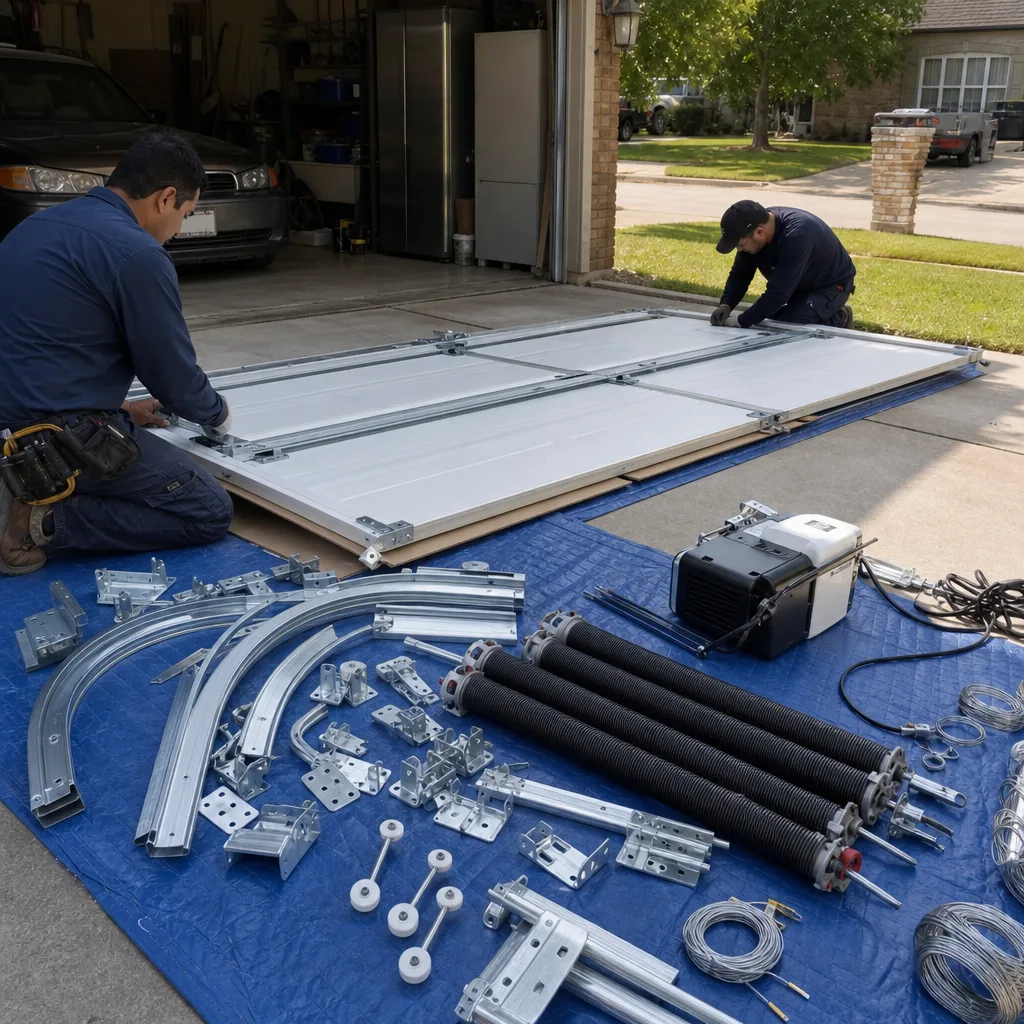
Call when the door won’t open or close, makes grinding or binding noises, reverses unexpectedly, hangs crooked, or shows visible damage to springs, cables, or panels. Call before the minor symptom becomes a major failure - the cost difference is typically 3x.
Call immediately if a spring is broken, a cable is frayed, or the door is off-track. These are safety hazards, not convenience issues. A door off-track can fall without warning. A frayed cable can snap under load.
Servo Garage Doors Stafford offers free estimates in Stafford. Every estimate includes the documented photo record, the written scope, and the flat written price before any work begins. Call (346) 421-5125 to schedule. Emergency calls are answered by a live person, 24/7, with a named technician and an on-the-way text - not a callback window.
Frequently Asked Questions
Most standard repairs in Stafford range from $180 for a cable replacement to $340 for a torsion spring replacement, with opener repairs typically between $220 and $450 depending on component. Full door replacement starts around $1,200 for a standard steel insulated panel and can exceed $3,500 for custom wood or oversized doors. We provide a flat, written price before any work starts - no exceptions. Call (346) 421-5125 for an exact quote; estimates are free.
Same-day repair is available for most spring, cable, and opener failures when parts are in stock. We carry torsion springs, cables, drums, rollers, and common opener components on every truck. Installation and replacement are scheduled, not same-day - the door is measured, ordered to specification, and installed when it arrives. For emergency repair, call (346) 421-5125; a live person answers 24/7.
No. The written price is the price. Clause 1 of The Haven Standard requires a flat, written price and written scope before any work begins. If our technician finds additional issues during inspection, we document them with photographs, explain them, and provide a separate written scope and price for your approval. Nothing happens without your explicit sign-off on the specific work and specific price.
Yes. Every Servo truck carries torsion and extension springs in common wire diameters and lengths, lift cables, cable drums, rollers, track hardware, weather seal, and common opener components including logic boards, trolley carriages, and safety sensors. For specialty items like Wayne Dalton proprietary hinges or specific Raynor hardware, we verify stock before dispatch or schedule next-day installation. Call (346) 421-5125 to confirm availability for your specific door.
A quality steel door with standard use should last 20-25 years in Stafford, but the hardware cycle life is shorter. Springs typically last 7-10 years or 10,000 cycles; cables 5-8 years; rollers 8-12 years; openers 10-15 years. Humidity and heat cycling accelerate the lower end of these ranges. Preventive inspection every 2 years extends component life by catching corrosion and wear before failure.
Chain drive uses a metal chain on a sprocket - durable, loud, inexpensive. Belt drive uses a reinforced rubber belt - quieter, slightly more expensive, same motor and logic components. For attached garages in Stafford where bedroom walls share structure, belt drive is worth the $80-$120 premium. For detached garages, chain drive is fine. Both are available from LiftMaster and Chamberlain in contractor-grade models we install and service.
The Bottom Line
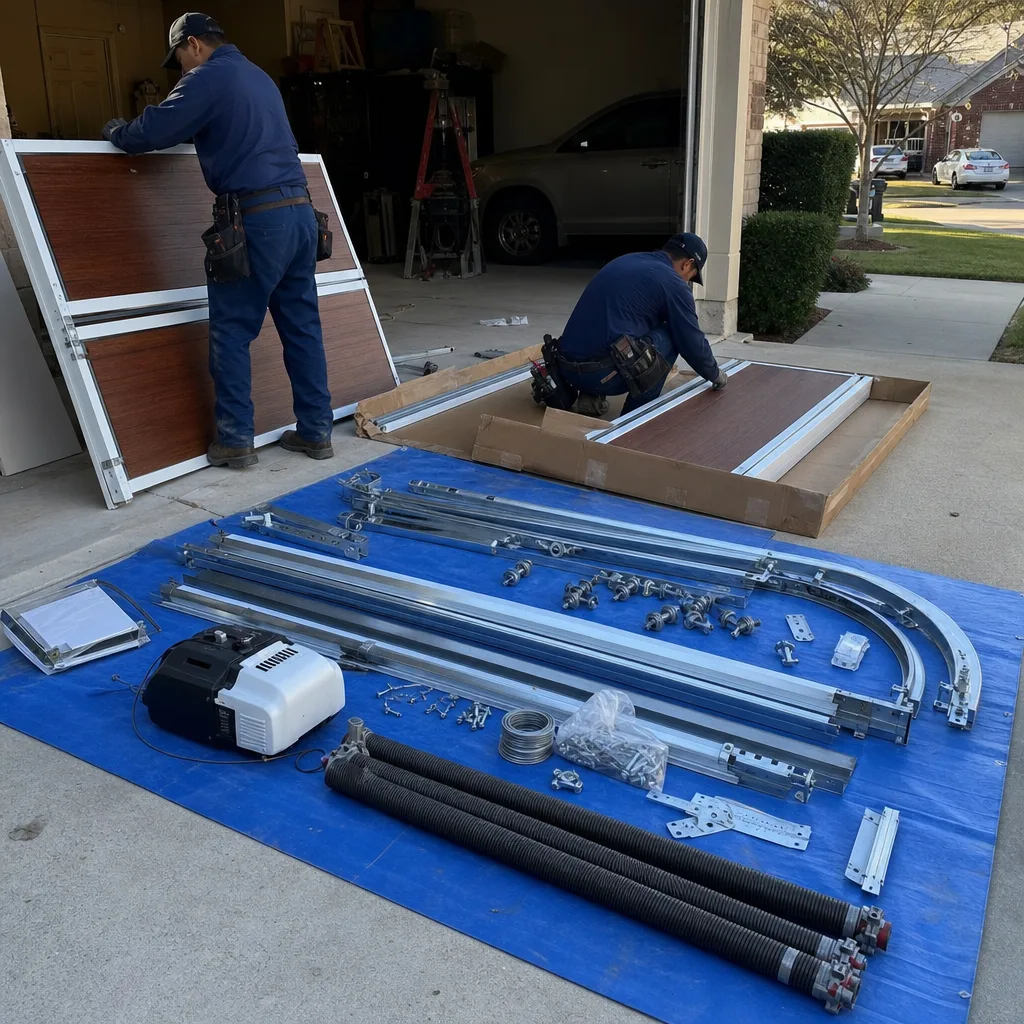
A garage door is seven systems, not one product. In Stafford’s humidity and heat, cables and drums fail faster than national averages predict. The most expensive mistake is replacing the visible broken part without inspecting the systems that caused the failure. Demand a written price, a written scope, and a photo record before any work begins - this is the documentation that separates evidence-based service from guesswork. The 18,000+ garage doors we’ve made right since 2015 all share one trait: every one had a written price before work started and a documented record when the technician left.
Written by Marcus Deller, Owner at Servo Garage Doors Stafford, serving Stafford since 2015.