
Last updated September 22, 2026
Full 25-point door and opener safety check with every visit - springs, cables, rollers, tracks, and your LiftMaster or Chamberlain opener included
You get a price before we start. It does not change when the truck arrives.
 Before
 After
After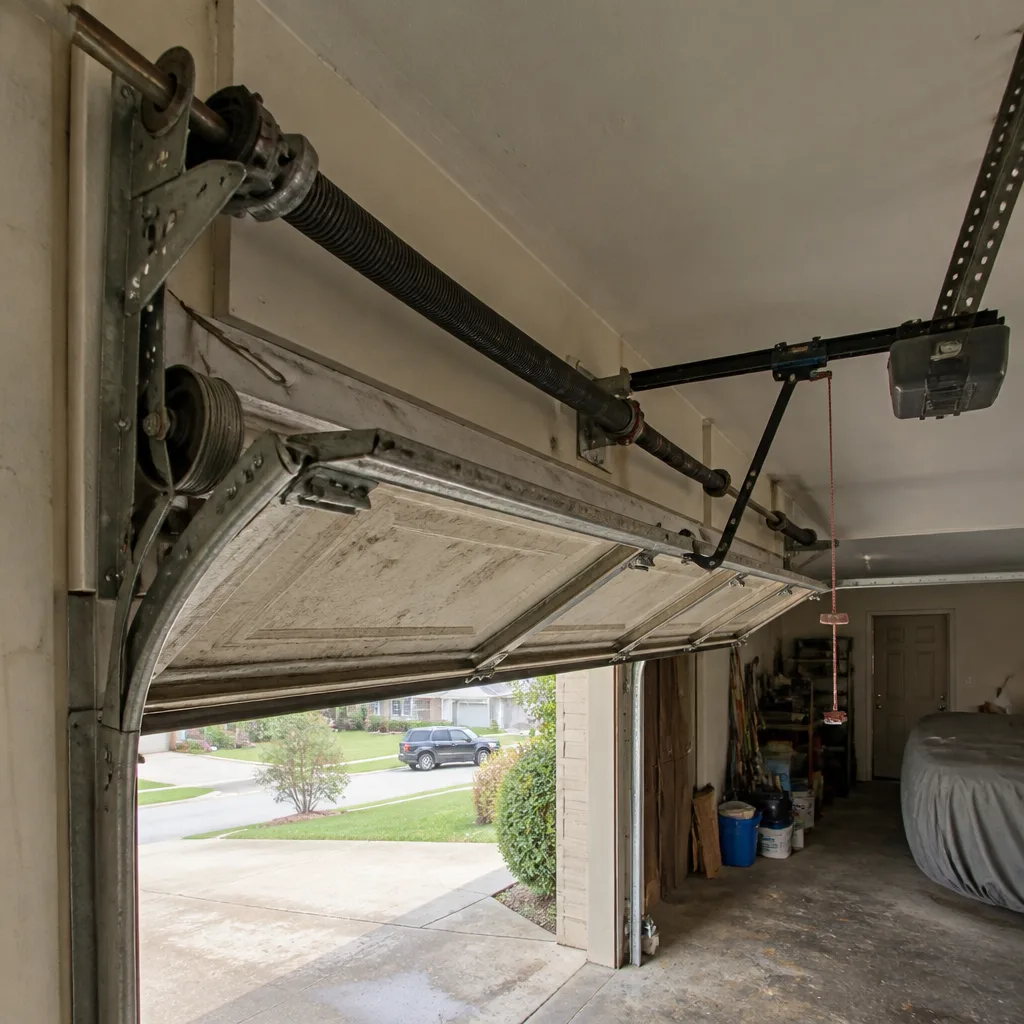 Before
 After
After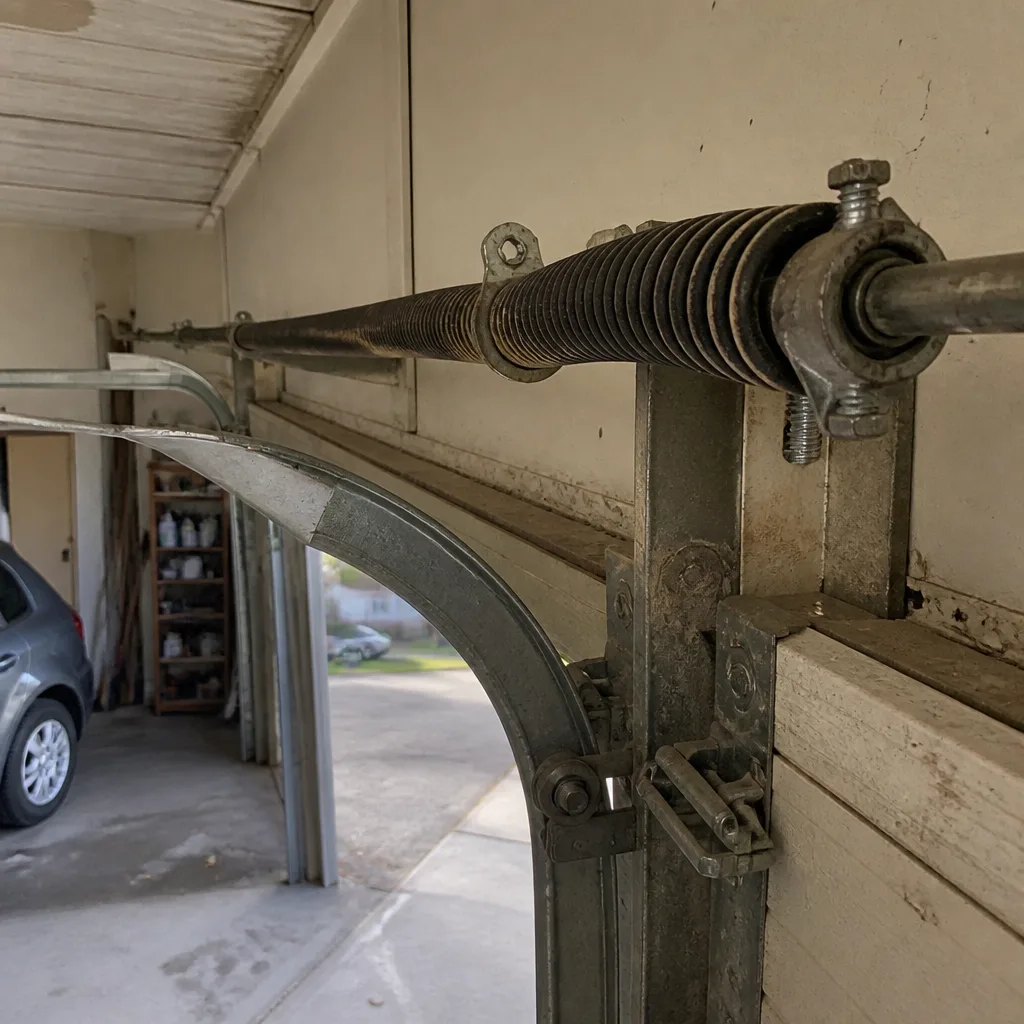 Before
 After
AfterGarage Door Warning Signs: A Stafford Homeowner’s Reference Guide
Most garage door failure guides start with the noise, the shaking, or the door that won’t open. By then, the component has been failing for weeks. A torsion spring that pops loud enough to wake the house has already lost thousands of cycles of tension through micro-fractures. A cable that snaps mid-travel showed kinking and rust blistering at the drum anchor long before it let go. In Stafford, where summer garage temperatures climb past 110°F and winter humidity swings buckle weatherstripping, these early indicators accelerate faster than homeowners expect. This guide maps the quieter, earlier warning signs by subsystem - springs, cables, rollers, and opener - so you have time to schedule repair before emergency service becomes your only option. For more guides & resources, see our blog.
Quick Answer
The earliest garage door warning signs appear before obvious symptoms like noise or failure: a door that drifts more than 2 inches from mid-height in 60 seconds indicates spring tension loss; cables showing kinking, fraying at the drum anchor, or rust blistering precede snapping by weeks; rollers developing flat spots or bearing grit cause grinding before the door shakes; and opener gear slippage produces a humming, non-lifting condition before the motor fails entirely. In Stafford’s heat-cycling climate, weatherstripping adhesion from softened vinyl can mimic spring problems by sticking the door on the upstroke. For seasonal maintenance tips, see our Seasonal Garage Door Care for Stafford: Year-Round Homeowner’s Guide.
Table of Contents
- Spring Tension Loss: The Silent Counterbalance Failure
- Cable Wear and Deterioration: Before the Snap
- Roller Degradation: From Grit to Grind
- Opener Gear and Drive Failure: The Humming Non-Starter
- Stafford Heat and Weatherstripping Adhesion: The Misdiagnosed Sticking Point
- The Balance Test: A Pass/Fail Measurement Every Homeowner Can Perform
- Sound Signatures: What Each Failure Mode Sounds Like
- Common Mistakes to Avoid
- When to Call a Professional
- Frequently Asked Questions
 Before
 After
AfterSpring Tension Loss: The Silent Counterbalance Failure
A garage door that slams down faster than it rises isn’t broken - it has already lost spring tension to the point where the counterbalance is failing, and within a few hundred cycles it will either break mid-travel or snap the cable. This is the warning sign almost every homeowner misses because the door still moves.
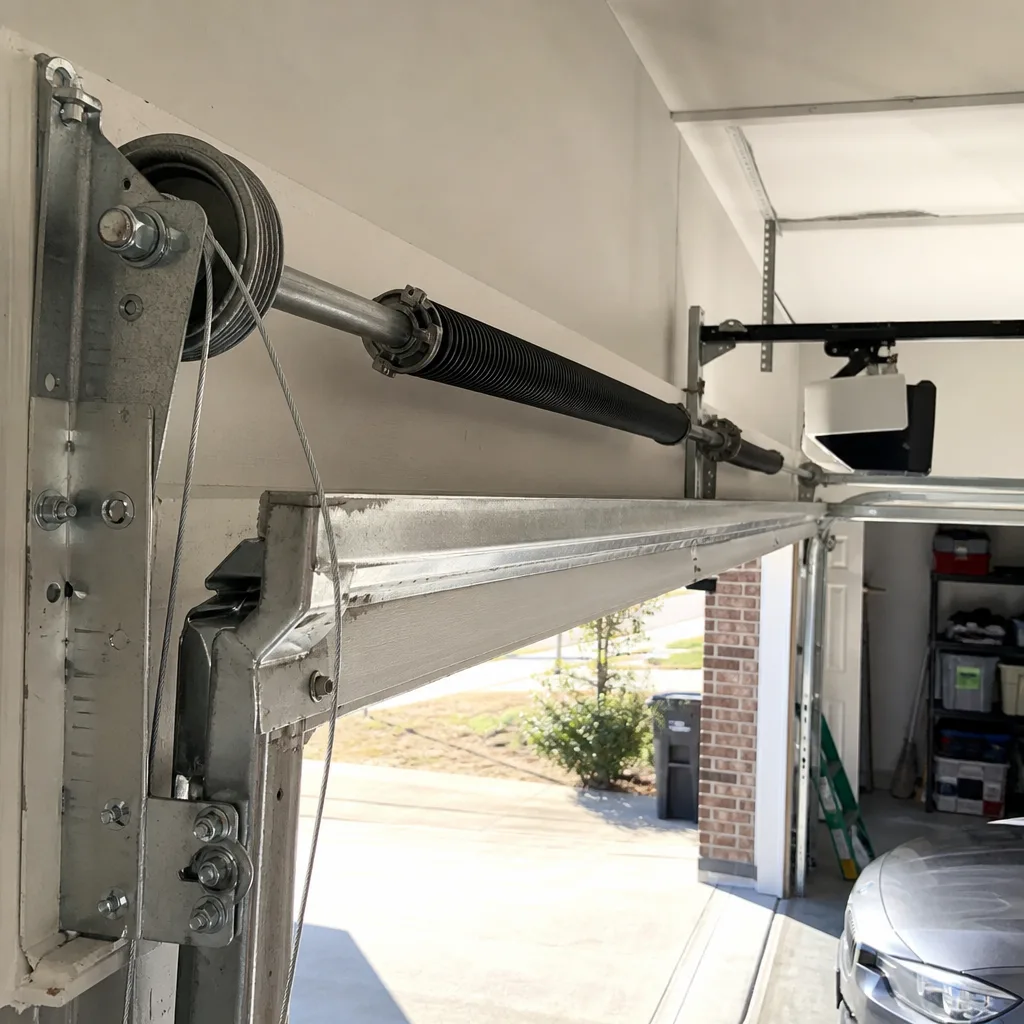
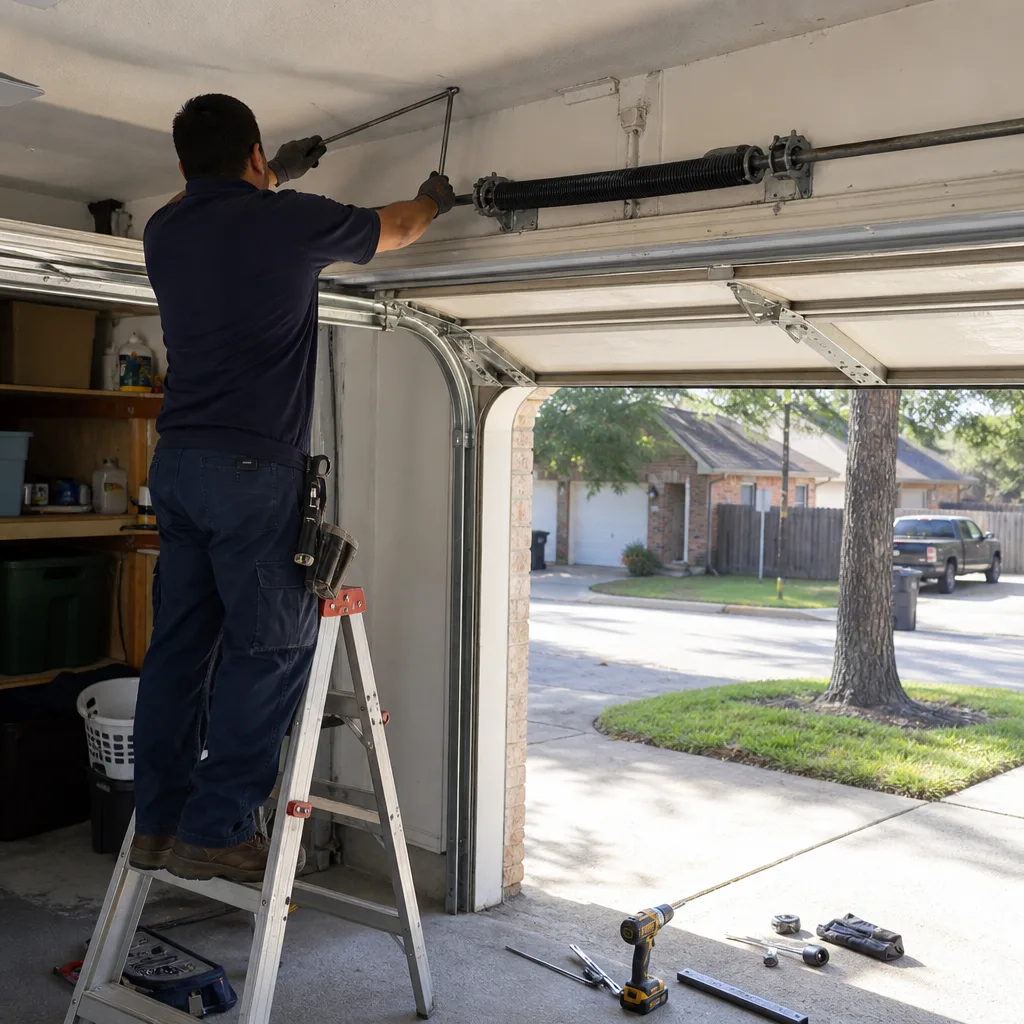
Torsion springs, the coiled steel components mounted above the door on a steel shaft, store mechanical energy that offsets the door’s weight. A standard 16-foot wide, 200-pound steel door in a Stafford home requires roughly 10,000 cycles of spring tension to operate smoothly. Each open-close pair counts as one cycle. At 4 cycles per day, that’s about 7 years. But heat accelerates metal fatigue, and uninsulated Stafford garages see temperature swings of 60°F or more between summer afternoon and conditioned interior air.
The early indicator precedes the obvious symptom by weeks or months:
- Early: The door feels heavier to lift manually, or the opener strains audibly on the upstroke. You may notice the opener’s trolley carriage, the moving arm that connects to the door, lagging slightly behind the motor’s lead screw or chain.
- Late: The door slams closed, reverses unexpectedly, or the spring breaks with a loud pop, leaving the door immobilized and the cables slack.
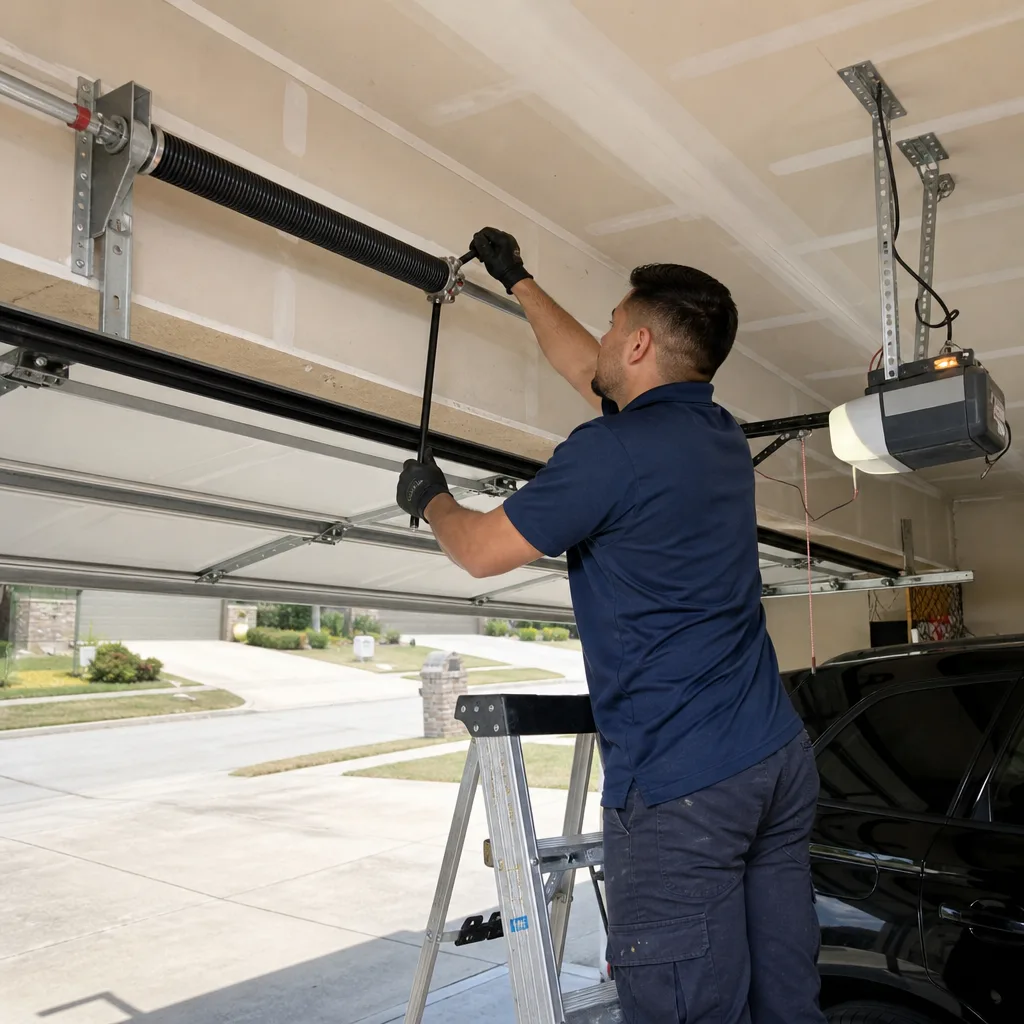
We measure spring tension with a winding bar and gauge, but homeowners can detect early loss through the balance test described later in this guide. When we find a spring measuring below 80% of its original torque specification, we quote replacement under Clause 1 of The Haven Standard - a flat, written price and written scope before any work starts. Clause 4 is why the technician photographs the failed part before quoting a replacement. The customer sees the micro-fractures and coil gap evidence before anyone names a dollar figure.
In Stafford’s Meadow Creek and Colony Lakes subdivisions, we’ve documented higher-than-expected spring fatigue in homes built 2015-2019, where builders often spec’d 10,000-cycle springs on heavy insulated doors. The math doesn’t work: the door weight exceeds the spring rating, and tension loss begins within 4-5 years instead of 7-8.
Cable Wear and Deterioration: Before the Snap
Garage door cables, the braided steel lines that run from the bottom bracket of each door panel to the drum at the end of the torsion shaft, carry the full spring tension to the door. When a spring breaks, the cables prevent the door from crashing down. When a cable breaks, the door goes crooked, jams in the tracks, or falls.
The visual indicators that precede snapping are specific and inspectable:
- Kinking: A sharp bend or dog-leg in the cable, usually where it wraps around the drum or passes through the bottom bracket. Kinked strands have already exceeded their elastic limit and will not return to shape. The cable is compromised.
- Fraying at the drum anchor: The cable terminates in a loop or stop sleeve at the drum. Repeated rubbing against the drum edge, especially if the cable is tracking off-center, frays individual wires. Five or more broken wires visible at this point means replacement is due.
- Rust blistering: Stafford’s humidity, particularly in spring and after tropical system remnants, causes surface oxidation. Small rust blisters on the cable exterior indicate internal corrosion. The cable may look intact but has lost cross-sectional strength.
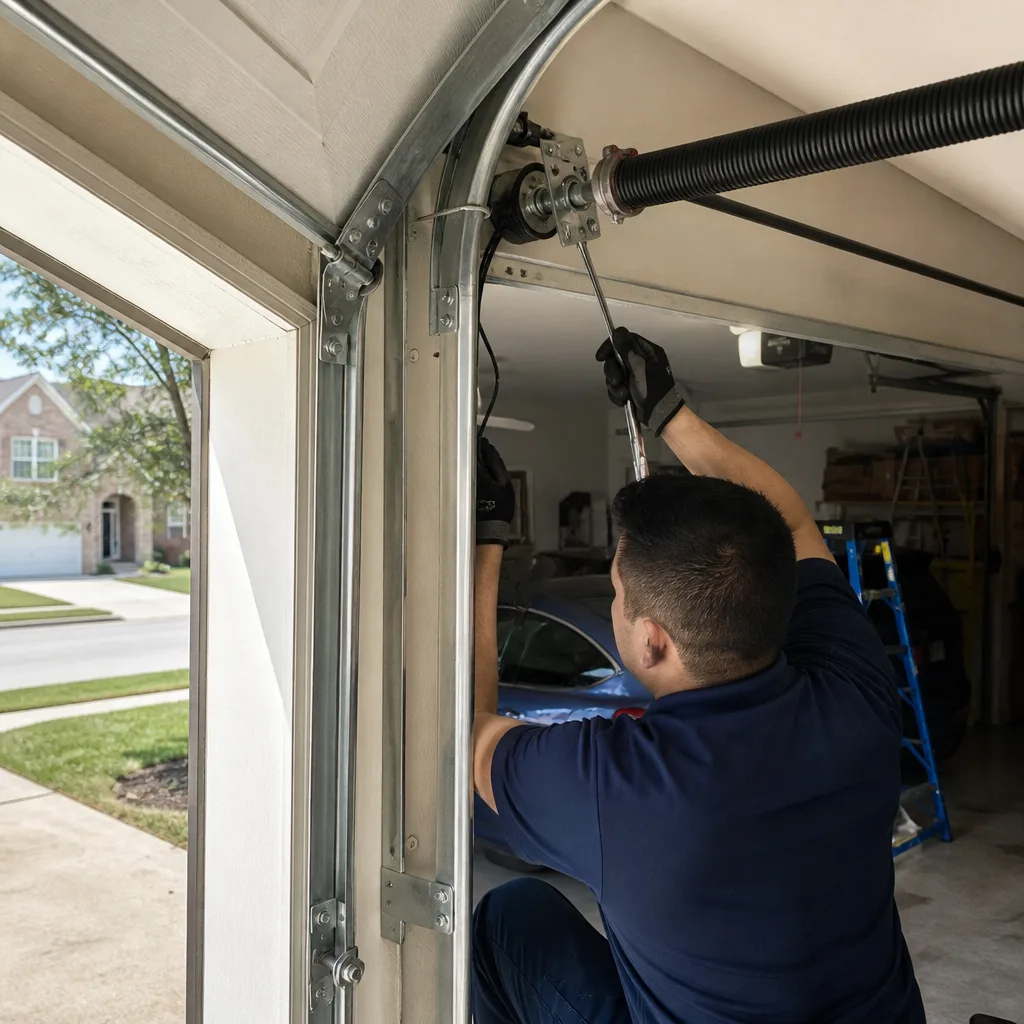
A cable with any of these three conditions can snap under load. The snap itself is dangerous - the cable whips with spring energy - and the door becomes unbalanced immediately. We do not recommend operating a door with visible cable damage. The repair involves replacing both cables as a matched pair, inspecting the drums for wear that caused the tracking issue, and verifying spring tension before re-engagement. Our Garage Door Repair in Stafford service includes this full sequence, with the documented photo record showing the old cables’ condition and the new installation.
We’ve replaced cables in Stafford’s Quail Run and The Commons neighborhoods where homeowners reported “the door started going crooked last week” - a late symptom of cable fraying that began months earlier. The door had been operating with one cable carrying disproportionate load, accelerating wear on the remaining cable and the opener’s drive system.
Roller Degradation: From Grit to Grind
Rollers are the small wheels that ride inside the vertical and horizontal tracks on each side of the door. They carry the door’s weight and guide its path. Most residential doors use steel rollers with unsealed ball bearings, or nylon rollers with sealed bearings. The type matters for maintenance interval and failure mode.
The early indicator of roller degradation is not noise - it’s resistance. A door that requires more force to start moving, or that pauses at the transition from vertical to horizontal track, often has rollers with bearing contamination or flat spots on the wheel.
- Steel rollers with unsealed bearings: Dust and garage debris enter the bearing race. The lubricant becomes gritty paste. The roller still rolls, but with increasing friction. Eventually the bearing seizes, and the roller slides rather than rolls, producing the grinding sound homeowners notice.
- Nylon rollers with sealed bearings: The nylon wheel itself wears flat where it contacts the track. The bearing may still be good, but the wheel geometry is wrong. The door shimmies in the tracks. In Stafford’s heat, nylon softens and wears faster; we’ve measured 30% faster flat-spot development in uninsulated garages.
The sound signature progression: first, a slight scrape at the track transition (early). Then, a rhythmic grinding that matches door speed (moderate). Finally, a violent shaking as rollers bind and release (late). Replacement before the grinding stage prevents track damage and opener strain.
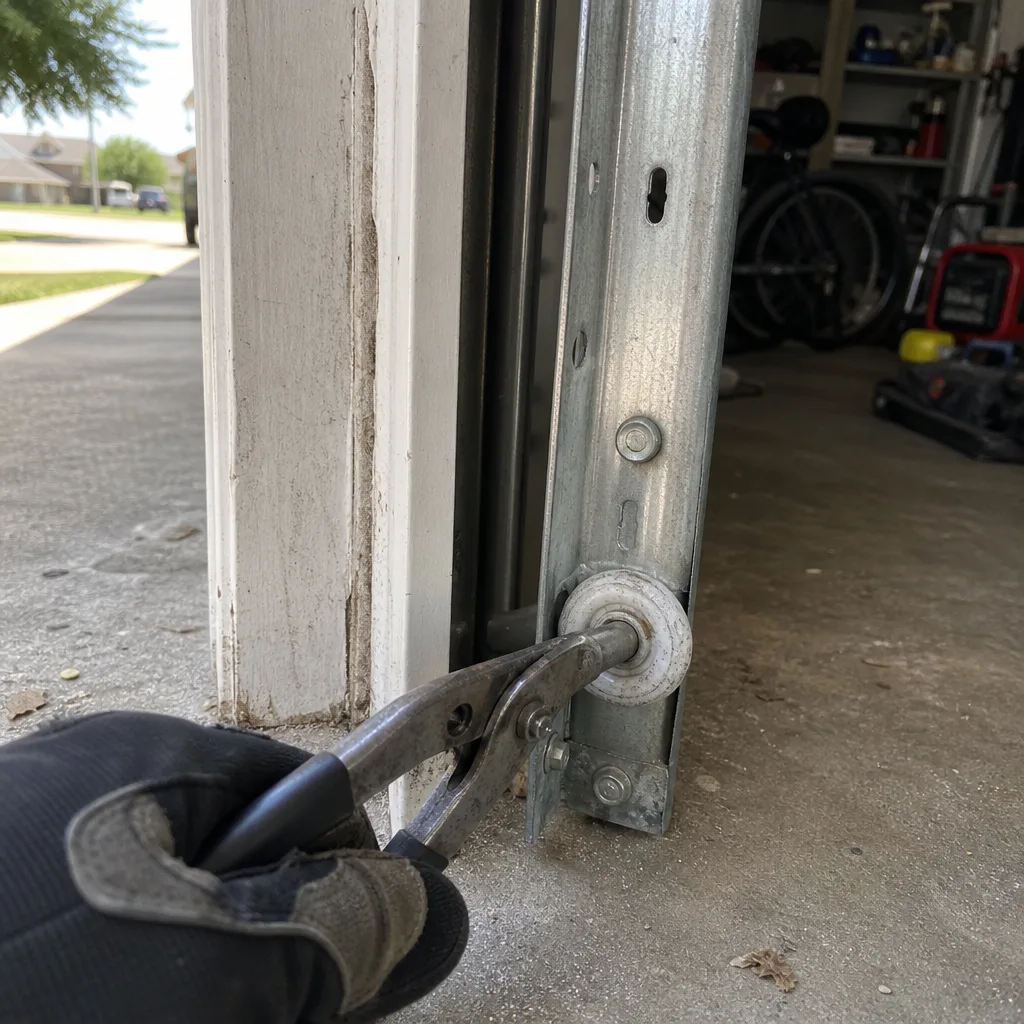
When we replace rollers, we document the old set’s condition per Clause 4, quote the replacement count and type under Clause 1, and verify track alignment before the door returns to service. A door with damaged rollers left in operation will eventually warp the track or strip the opener gear.
Opener Gear and Drive Failure: The Humming Non-Starter
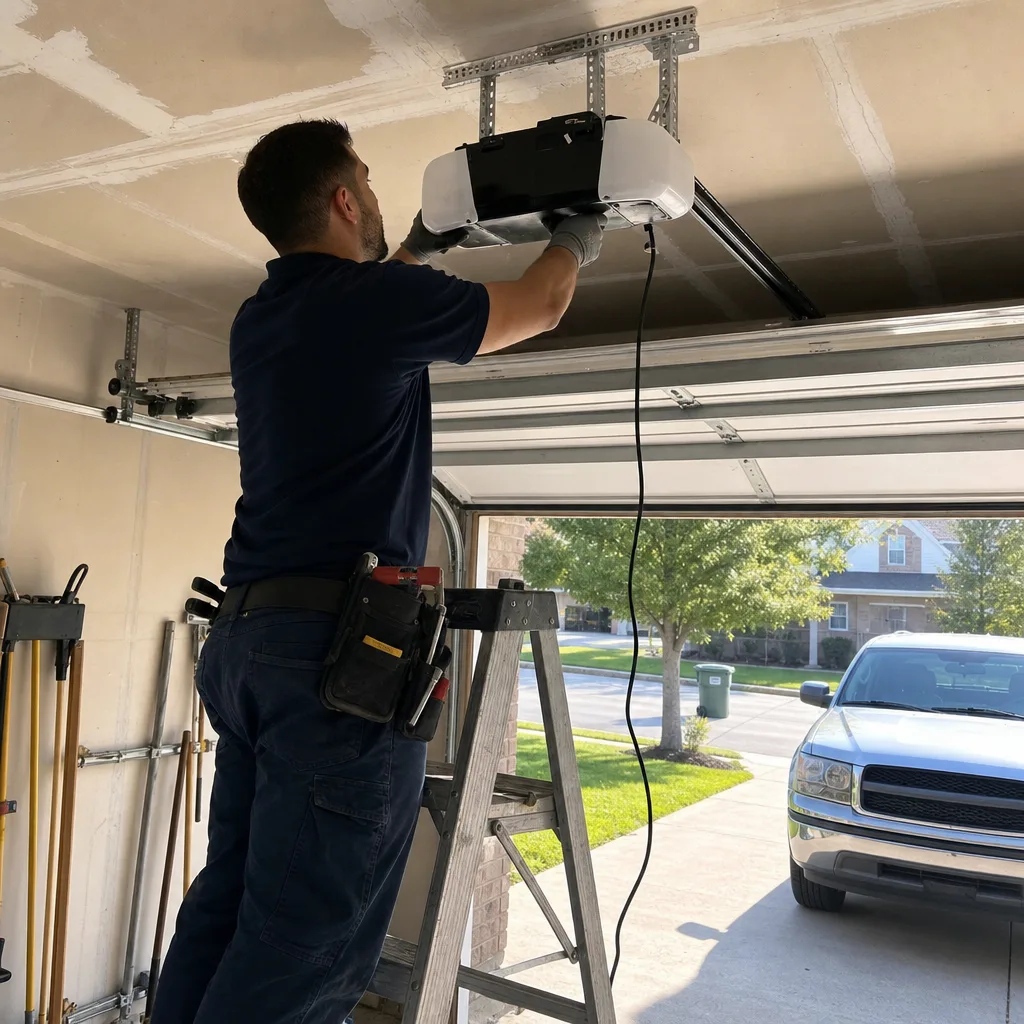
The garage door opener is not a lift device - it’s a guidance and control system. A properly balanced door should open with 10 pounds of force or less. The opener adds convenience and safety controls, not muscle. When the opener strains, it’s often compensating for a mechanical problem elsewhere.
But opener components do fail on their own, and the early signs are distinct from the late ones:
- Logic board relay chatter: The opener clicks repeatedly without starting the motor. This is the circuit board attempting to engage a failing relay. The door may start on the third or fourth try. The logic board needs replacement before it fails entirely and leaves the door unpowered.
- Trolley carriage slippage: The motor runs, the chain or belt moves, but the trolley - the arm that connects to the door - doesn’t travel with it. The drive gear inside the opener housing is stripping. A humming sound without door movement is the hallmark.
- Limit switch drift: The door stops short of fully open or closed, or reverses unexpectedly. The limit switches, which tell the opener where the door is, have shifted or failed. In Stafford’s voltage-fluctuation season (summer AC load), we’ve seen more limit switch issues due to power sag affecting the control board’s reference voltage.
The sound signature distinction matters for accurate diagnosis before a technician arrives. A grinding roller produces a mechanical, metallic noise that varies with door position. A popping spring is a single sharp report. A slipping opener gear produces a consistent hum from the motor housing with no corresponding door movement.
Our Garage Door Opener Repair & Installation in Stafford service includes testing the force and travel limits, inspecting the drive gear, and verifying that the door’s mechanical systems aren’t causing the opener’s distress. We service all major brands including Chamberlain, Genie, and the commercial-grade units increasingly found in newer Stafford homes.
Stafford Heat and Weatherstripping Adhesion: The Misdiagnosed Sticking Point
This is the Stafford-specific accelerant that trips up homeowners and some technicians. Summer garage temperatures in Stafford routinely exceed 110°F. The vinyl or rubber weatherstripping along the bottom and sides of the door softens, becomes tacky, and adheres to the door frame or concrete threshold. On the upstroke, the door sticks, releases with a jerk, and the homeowner assumes spring tension loss or opener strain.
The diagnostic distinction: a weatherstripping adhesion problem occurs at the same point in the travel every time, usually the first 6-12 inches of opening. A spring tension problem worsens progressively through the full travel. An opener gear problem produces motor sound without movement.
To check for adhesion: open the door manually (disconnect the opener trolley first). If it sticks at the same low point, inspect the weatherstripping. Softened vinyl will show compression set - a permanent flat spot where it contacted the frame. In extreme cases, the stripping tears away from the retainer channel when the door breaks free.
Replacement weatherstripping for Stafford’s climate should be silicone-based or EPDM rubber, rated for high-UV and temperature cycling. We document the old stripping’s material and condition, quote the replacement under Clause 1, and verify the door’s travel is smooth before reconnecting the opener. This is a common call in Stafford’s Sienna Plantation-adjacent areas and other developments with south-facing garage exposures.
The Balance Test: A Pass/Fail Measurement Every Homeowner Can Perform
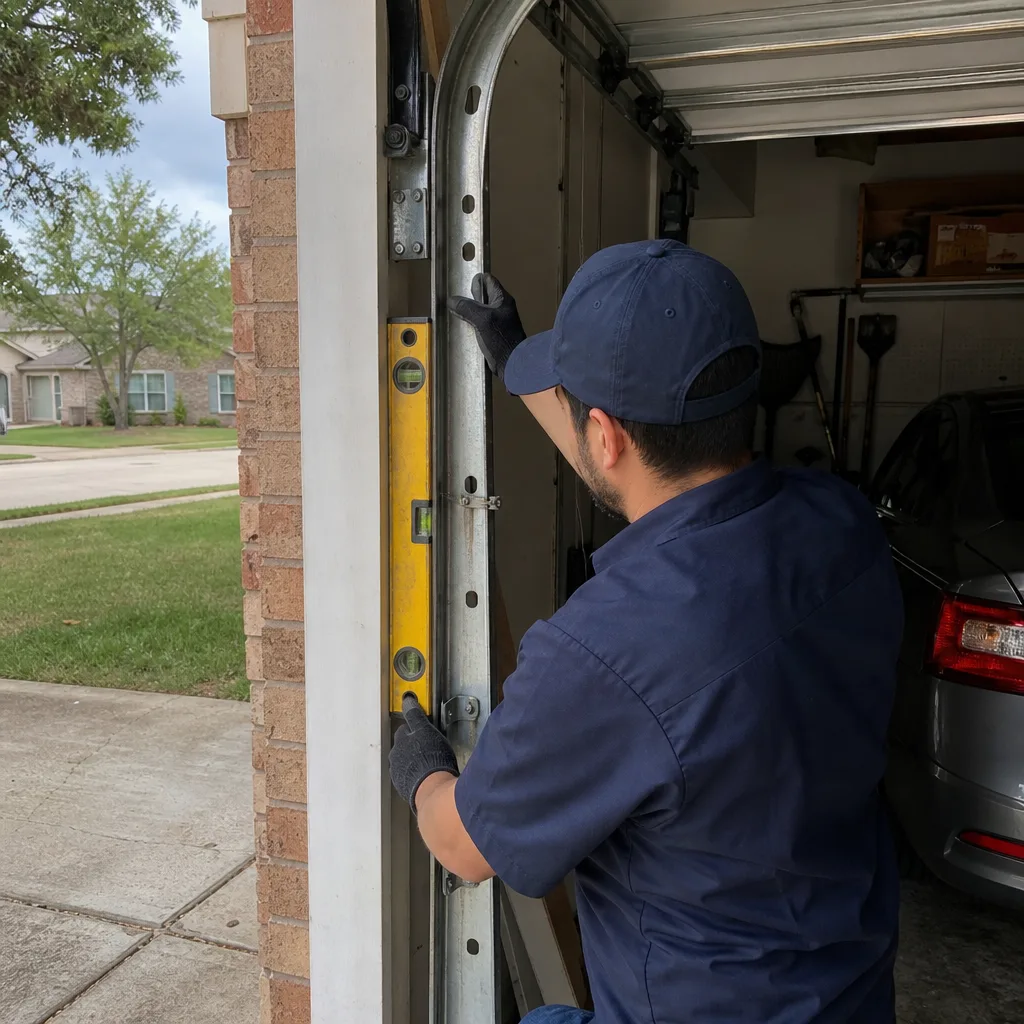
The balance test is the single most useful diagnostic a homeowner can perform. It requires no tools and takes two minutes. It reveals spring tension loss before the door slams or the spring breaks.
- Close the door fully.
- Pull the emergency release cord to disconnect the opener trolley from the door arm.
- Lift the door manually to waist height, approximately mid-travel.
- Release the door smoothly.
- Observe for 60 seconds.
Pass: The door stays within 2 inches of the release height, moving neither up nor down. The springs are properly balanced.
Fail - drifts down: The door descends more than 2 inches. Spring tension is insufficient to counterbalance the door weight. The opener is working harder than designed, and the spring is approaching failure.
Fail - drifts up: The door rises more than 2 inches. Spring tension is excessive, which stresses cables, brackets, and the opener. Less common but equally problematic.
Fail - won’t stay at mid-height: The door races to full open or full closed. Severe imbalance. Do not operate; call for service.
In Stafford, we recommend this test quarterly, and monthly during summer when heat cycling accelerates spring fatigue. A door that passed in March and fails in July has lost tension through thermal stress. The repair is spring replacement or tension adjustment, quoted under Clause 1 with the photo record showing the measured torque before and after.
Our Garage Door Installation in Stafford service includes spring sizing calculations that account for door weight, cycle life, and local temperature range - not just the builder’s spec sheet.
Sound Signatures: What Each Failure Mode Sounds Like
Accurate description of a sound helps technicians arrive with the right parts and reduces diagnostic time. These are the distinct acoustic signatures of each failure mode:
- Torsion spring micro-fracture (early): A faint ticking or pinging as the door moves, caused by cracked coils rubbing. Often heard only in quiet conditions.
- Torsion spring break (late): A loud bang or pop, sometimes described as a gunshot. The door stops immediately or crashes down. The sound comes from above the door.
- Cable fraying against drum (early to moderate): A rhythmic scraping that matches door speed, localized to one side. The pitch rises and falls with cable wrap diameter.
- Cable snap (late): A sharp whip-crack sound, followed by the door going crooked or slamming.
- Roller bearing contamination (moderate): A continuous grinding, metallic, that varies with door position. Loudest at track transitions.
- Roller flat spot (moderate to late): A thumping or rumbling, regular in rhythm, matching roller rotation speed.
- Opener drive gear stripping (moderate to late): A humming or whirring from the motor housing with no door movement. The motor runs; the door doesn’t.
- Opener logic board relay chatter (early): Rapid clicking from the opener unit, sometimes with no motor response, sometimes with delayed start.
- Weatherstripping adhesion (context-dependent): A sucking or peeling sound at the start of opening, followed by a jerk. The sound comes from the door perimeter, not the mechanism.
When you call with a sound description, we note it in the work order. The technician arrives expecting the corresponding subsystem, though we still perform full inspection and documentation per The Haven Standard.
Common Mistakes to Avoid
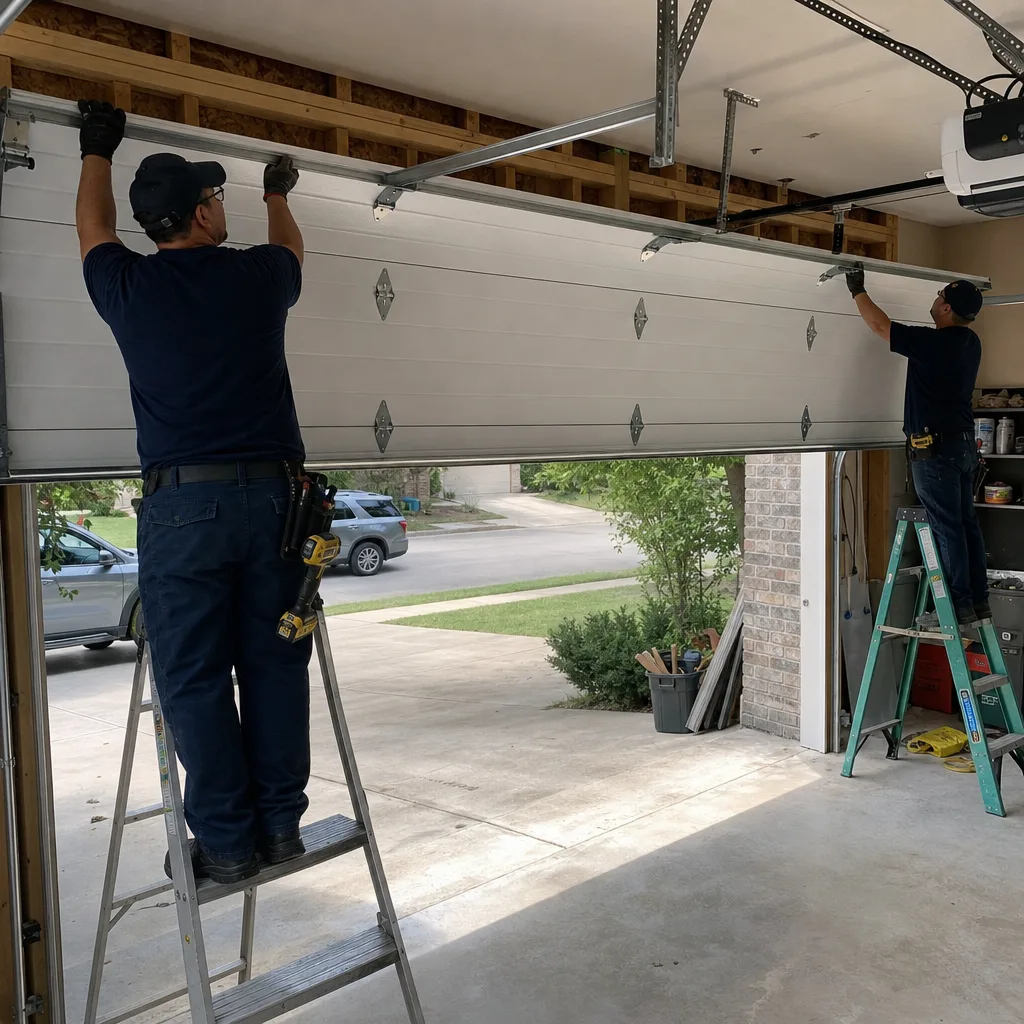
- Ignoring a door that “just needs a little help” to open. Manual assistance masks spring tension loss. The opener compensates until its drive gear strips, turning a spring replacement into a spring-plus-opener repair.
- Applying WD-40 to rollers or tracks. WD-40 is a solvent and water displacer, not a lubricant. It attracts dust and accelerates bearing contamination. Use a lithium-based grease on metal-to-metal contact points only.
- Replacing only one spring on a two-spring door. Springs age in matched pairs. A new spring paired with an old spring creates imbalance, stresses the new spring, and voids any meaningful warranty. We replace torsion springs as matched sets, documented in the photo record.
- Diagnosing weatherstripping adhesion as spring failure. In Stafford’s summer heat, this misdiagnosis leads to unnecessary spring service while the real problem persists. The balance test distinguishes them in two minutes.
- Continuing to operate a door with visible cable damage. A frayed or kinked cable is a snapped cable waiting for the wrong cycle. The safety risk includes uncontrolled door drop and cable whip.
- Assuming a noisy opener needs replacement. Many opener noises are symptoms of door mechanical problems. Replacing a good opener because the springs are failing is expensive and unnecessary. We diagnose first, quote second, per Clause 1.
- Skipping the balance test after any repair. A door that was “fixed” but still fails the balance test wasn’t fixed. The Haven Standard requires balance verification before we close the job and deliver the photo record.
When to Call a Professional
Call for same-day service when: a spring is broken (door won’t stay up, cables are slack, or you heard the pop); a cable is frayed, kinked, or rust-blistered; the door is crooked in the tracks; or the opener hums without lifting. These conditions risk injury, property damage, or secondary system failure.
Schedule within the week when: the balance test shows drift beyond 2 inches; rollers are grinding or the door shakes; the opener shows relay chatter or limit drift; or weatherstripping adhesion is recurring. These are repairable before they become emergencies.
Servo Garage Doors Stafford offers free estimates in Stafford - call (346) 421-5125. Every estimate includes a full inspection, the balance test, and a written, flat-price quote with scope before any work starts. Emergency calls are answered by a live person, 24/7, with a named technician and an on-the-way text.
Frequently Asked Questions
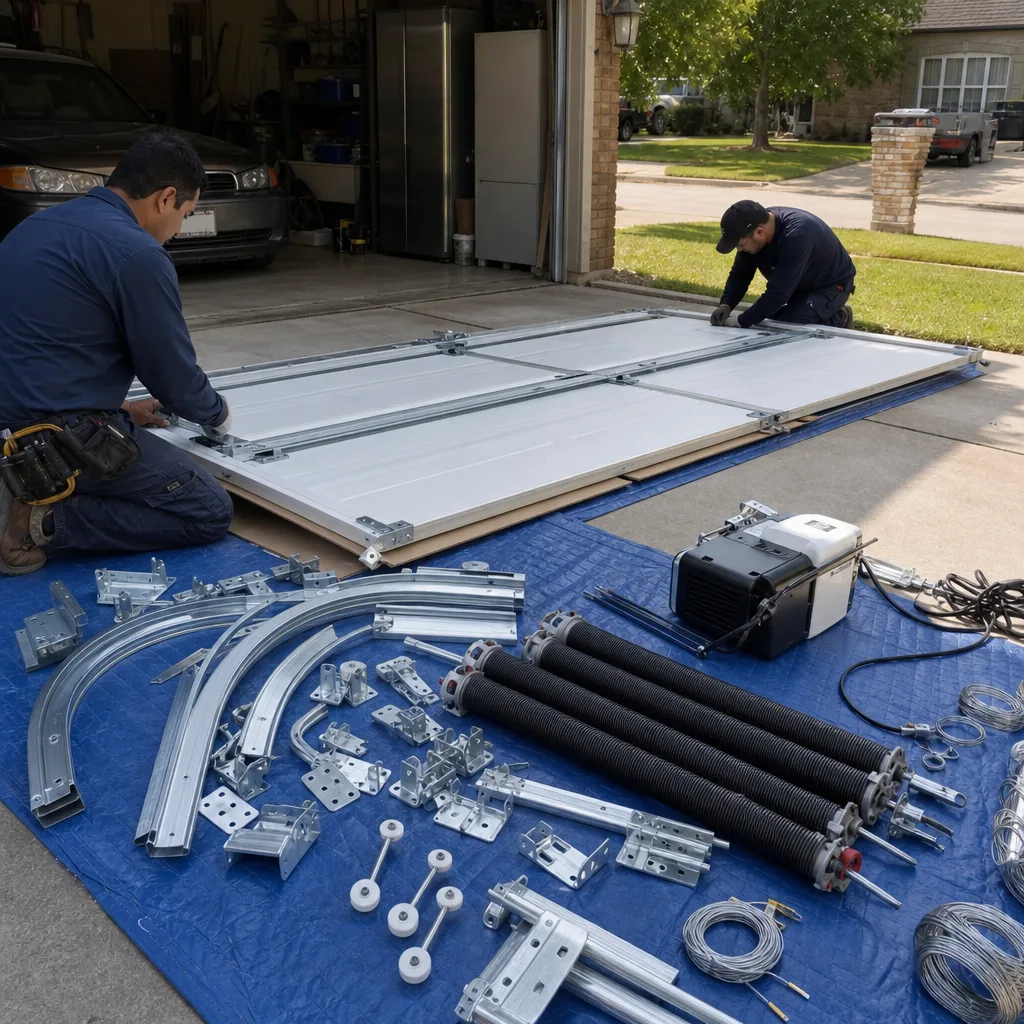
Torsion spring replacement in Stafford typically ranges from $220 to $380 for a standard residential door, depending on spring size, cycle rating, and whether one or both springs require replacement. We quote a flat, written price before any work starts - Clause 1 of The Haven Standard - and that price includes the springs, labor, balance test, safety inspection, and documented photo record. Call (346) 421-5125 for an exact quote; estimates are free.
We do not recommend DIY torsion spring replacement. The springs store lethal energy - a standard 16-foot door spring holds enough torque to cause serious injury or death if released improperly. Winding bars must be used correctly, and the wrong size or installation technique creates immediate safety hazards. Our technicians are trained, background-checked, and uniformed, and we carry the full range of spring sizes for Stafford’s common door configurations.
Quarterly, and monthly during summer. Stafford’s heat cycling accelerates spring fatigue compared to cooler climates. A door that passed in spring may fail by August. The test takes two minutes and requires no tools.
Softened weatherstripping adheres to the frame or threshold in high temperatures. This is common in Stafford from June through September, especially on south-facing garages. The diagnostic check: disconnect the opener and open manually. If it sticks at the same low point every time, inspect the weatherstripping for compression set or tearing. Silicone-based replacement stripping resists this adhesion.
No. Our written, flat price is agreed before any work starts. The only exception is if you authorize additional work beyond the quoted scope - for example, adding roller replacement to a spring job. Even then, we quote the addition in writing before proceeding. This is Clause 1 of The Haven Standard, and it’s how we’ve operated since 2015.
Yes. Our service trucks stock torsion springs in the sizes common to Stafford homes, cables, rollers, logic boards for major opener brands including Chamberlain and Genie, and weatherstripping. For Clopay and Amarr door-specific components, we can typically source within 24 hours. We arrive with what the described problem suggests, then confirm with inspection.
The Bottom Line
The warning signs that matter appear before the obvious symptoms. A door that drifts in the balance test, cables showing early wear, rollers transitioning from grit to grind, and opener gear slippage all announce themselves quietly. In Stafford’s demanding climate, these early indicators accelerate faster than in milder regions. The homeowner who recognizes them gains the leverage of time: scheduled repair, flat upfront pricing, and documentation of what was found and fixed. The homeowner who waits for the bang, the snap, or the immobilized door pays the premium of emergency service and risks secondary damage. Test quarterly, inspect visually monthly, and call when early signs appear - not when the door fails.
Written by Marcus Deller, Owner at Servo Garage Doors Stafford, serving Stafford since 2015.